





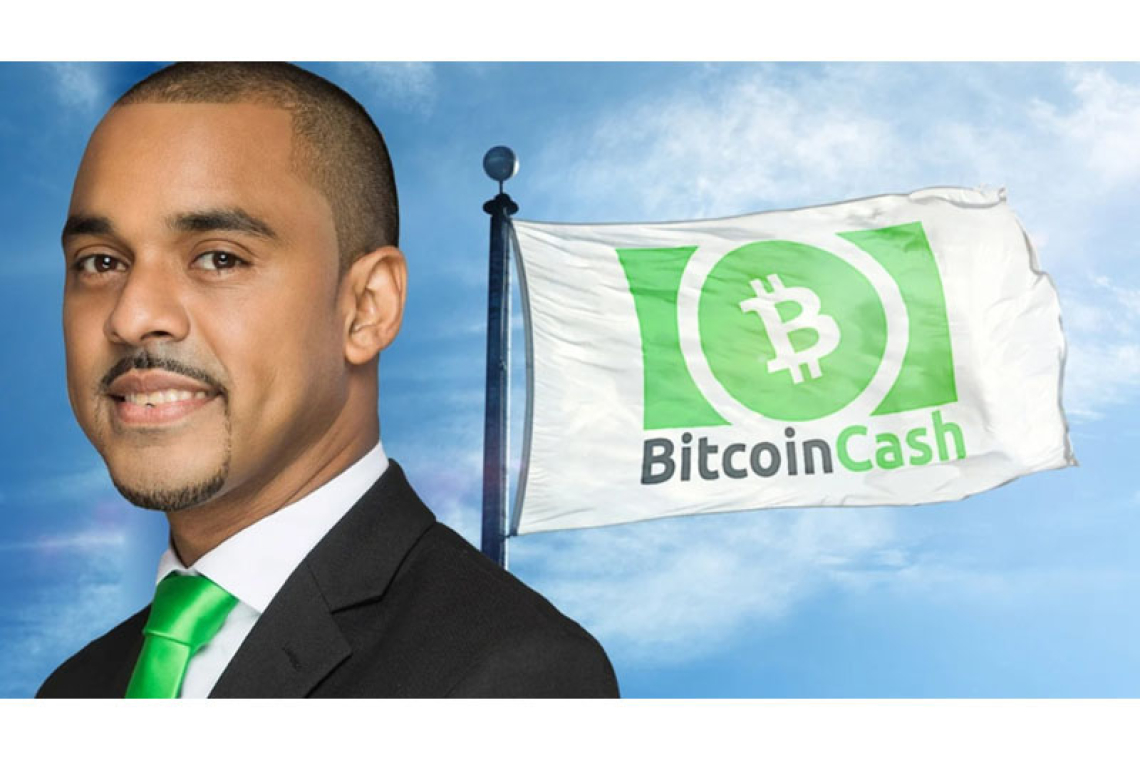
Former MP Rolando Brison, lottery boss Robbie dos Santos and businessman Sunil Gehani have been acquitted of crypto bribery
PHILIPSBURG — A central pillar of the prosecution’s case against former Member of Parliament (MP) Rolando Brison (United People’s Party) collapsed in court on Wednesday, as the judge ruled that cryptocurrency-related transactions cited as evidence of bribery could not be linked to any criminal activity.
In a detailed judgment delivered via videolink from Aruba, the Court of First Instance made clear that while large sums of money moved through digital wallets and informal financial channels, the prosecution failed to prove that those transactions constituted bribes rather than legitimate crypto exchanges.
The prosecution had argued that thousands of dollars transferred to Brison through a digital wallet platform were not legitimate financial dealings, but rather disguised payments intended to influence his actions as a public official.
Two individuals featured prominently in these allegations: lottery boss Robbie dos Santos and businessman Sunil Gehani.
According to prosecutors, transactions totaling more than US $22,000—combined with additional alleged cash payments and promises of further funds—were part of a broader scheme to secure political favors, including support for cryptocurrency legislation and broader financial reforms.
The Court rejected that narrative. Both Dos Santos and Gehani were fully acquitted of the criminal charges filed by the Prosecutor.
Plausible alternative explanation
At the core of the Court’s reasoning was a fundamental principle of criminal law: if a plausible alternative explanation exists and cannot be disproven beyond reasonable doubt, a conviction cannot follow.
Both Brison and the individuals involved consistently maintained that the transactions were part of cryptocurrency exchange activity. In simple terms, dollars were transferred to Brison, and he provided cryptocurrency of equivalent value in return.
The Court found that this explanation was not only plausible — but supported by evidence.
Investigators had uncovered chat messages discussing Bitcoin and Bitcoin Cash transactions, as well as communication with a digital platform operator linked to crypto exchange services.
Additionally, materials found during the investigation showed that Brison had been actively involved in cryptocurrency trading and promotion over an extended period.
“The scenario presented by the defense has not been refuted,” the Court concluded in essence, emphasizing that the burden lies with the prosecution—not the defendant—to disprove alternative explanations.
Prosecutors also attempted to argue that—even if the transactions were technically exchanges—they still constituted a “service” that benefited Brison in a way that could amount to bribery.
That argument was also rejected. The Court found no evidence that Brison gained any special or illicit advantage from conducting crypto transactions outside traditional banking systems. In fact, the judgment pointed to indications that the counterparties—particularly Dos Santos—may have had more to gain, given that he has no access to formal banking channels.
This finding further weakened the prosecution’s theory that the transactions were inherently suspicious or corrupt.
In the allegations involving Gehani, prosecutors sought to link financial transfers to Brison’s public advocacy for cryptocurrency, including efforts to promote Bitcoin Cash and explore its legal status in St. Maarten. But the Court found the timeline problematic. Evidence showed that Brison had already been actively promoting cryptocurrency well before the transactions in question took place.
Timeline undermines allegations
As early as 2022, then MP Rolando Brison had already positioned himself as an active advocate within the cryptocurrency space, engaging with prominent international figures in the industry while simultaneously promoting digital assets at home. He went so far as to propose receiving his parliamentary salary in Bitcoin Cash, publicly signaling his commitment to alternative financial systems.
In addition, he participated in campaigns, conferences, and media appearances aimed at encouraging wider crypto adoption, while also exploring legislative initiatives that could pave the way for digital currencies to gain formal recognition within St. Maarten’s financial and legal framework.
Given this context, the Court ruled that it could not be established that payments made in 2023 were intended to influence actions that had already begun independently. In short, the prosecution failed to prove cause and effect.
The judgment makes a clear distinction between unusual financial activity and criminal conduct. Even if the Court were to assume that some payments or transfers could be considered gifts, it emphasized that bribery requires more than that. There must be a demonstrable link between the benefit received and a specific action taken—or to be taken—by a public official. That link was missing.
“Even if gifts or services are assumed, that alone is insufficient,” the Court reasoned, noting that intent to influence official conduct must be proven beyond reasonable doubt. In the absence of such proof, the crypto-related allegations could not stand.
Contrast with proven bribery
While the prosecution failed to establish wrongdoing in the crypto-related allegations, the Court did convict Rolando Brison on separate bribery charges involving local businessman Johan ‘Alex’ Dijkhoffz.
That conviction was based on clear evidence of a quid pro quo arrangement, supported by extensive communication records showing a direct exchange of favors for benefits.
The prosecution had demanded a two-year prison sentence in the case. However, the Court imposed a significantly lower penalty, sentencing Brison to six months in prison and barring him from holding public office or standing for election for five years.