





By Colin Michie, Penka Ivanova Petkova (artist), Ras Mosera (artist)
Advice on model diets, squeaky-clean lifestyles and magical supplements can benefit our health, but conscious thoughts and feelings – even our dreams – often yearn for something different. Living our best lives often needs more than nutrition and press-ups – perhaps a brain massage?! Crucially, brain functions are influenced by visual feasting.
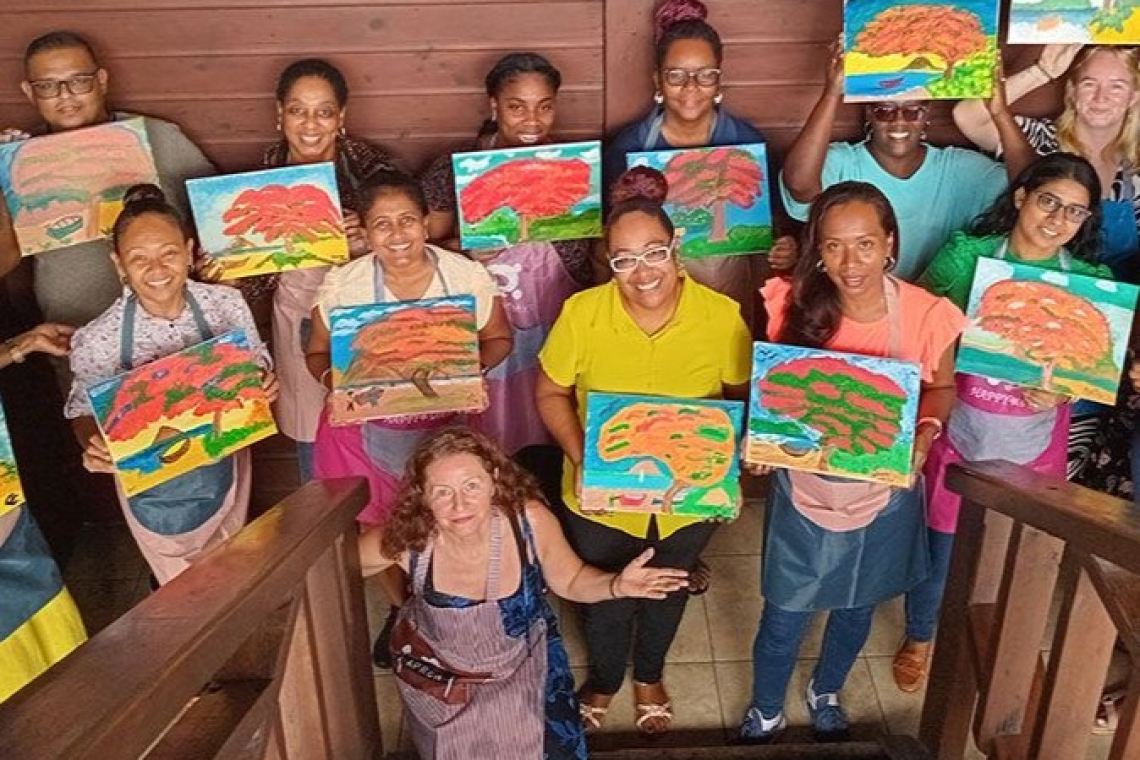
On St. Maarten, the blessings of the stunning beauty of sky, island and sea surround us – the way they change with time, weather or season is amazing. Standing in front of a canvas by Ras Mosera or joining a painting class with Pentka Ivanova opens the mind too, bringing pleasure, connecting our thoughts, delivering new marvels.
“Is we are all creators doing art.
It becomes a therapy to our soul and mind,
creating emotions and energy.”––Penka Ivanova
These are the powers of neuroarts. Visual art is powerful in delivering new experiences and emotions. Examining images, sculptures or designs can reach deep, extending our understanding and thoughts. When we reflect on works of art and how they make us feel, we might experience hopes, perhaps sadness, sometimes excitement. Joining others in drawing or painting, trying to create our own canvas extends this process, linking body and mind. It is enjoyable; it can stimulate, protect and help us empathise.
Blood tests show that engaging with an art project for just under an hour reduces stress hormones including cortisol. Repeated art classes have the potential to extend one’s lifespan. Visual arts have another unusual feature too – their impacts and influences persist. Neuroarts do not work like a coffee-break; they change personal growth and development.
Connections can be measured between areas of the brain using scanners and electrodes. Neuronal links become richer, more complex and busier in small children as they encounter new visual and auditory experiences and social interactions. These are their “exposome”. Their brains become wired for art, even if they are not “visual” learners. And these connections remain, becoming part of routine brain activities. A combination of smartphones and videos is very attractive to brains too – both young and old. These can have negative effects on developmental processes in children. A balance has to be struck with supervision, ensuring strict limits on screen time!
Perhaps you too recall your early attempts to sculpt, sketch or paint during art lessons at school. From pre-school ages, children can recognise the design and sometimes symbols within an artist’s image. Generations of teachers have found art sessions educational and particularly helpful for youngsters challenged by difficulties with their concentration, communication or internal emotions. Progress through school improves once such young people become engaged in creative processes.
Art as an educational support can be an employed outlet, settling pupils who are upset or fidgeting. Positive behavioural outcomes are seen in young people from marginalised communities as they become involved in visual art. Graffiti is an example of this. Although there are legal obstacles to graffiti in some environments, it provides democratic outdoor visual landscapes with fierce, bold, original designs. These can pull diverse communities together and contribute to urban planning.
In older individuals, cognitive decline is a growing challenge in many communities. Brain connectivity and memory can be improved, however. Visual arts are effective – and more powerful than auditory ones – in promoting skill recovery. Healing from within is usually possible because areas of the brain remain neuroplastic. New nerve connections can be established by engaging with drawing and painting – including graffiti-style techniques! Hospital settings for art sessions can grow collaborations between patients, their near-ones and their nurses. This artistry works as a “neurobalm”, relieving symptoms, promoting self-confidence and independence.
Painting-based art activities have positive effects on mental health, particularly for older individuals with depressive illnesses. These have been developed over several centuries as supportive treatments in residential psychiatric Hospitals. Bringing together art and more formal therapies, individuals find greater capacity to design and explore. These are practical, too, for those who do not find talking-based therapies of assistance. Art therapies often improve attention, memory and visuo-spatial abilities, as well as psychological wellbeing – just as they do with youngsters in education.
Creating visual art is one of several methods that help nerve cells connect in the brain. As with children, our exposomes are important and each of us is different. There are therapeutic benefits to be derived from gardening, walking among trees, making models, joining a choir or watching fractal patterns in the seas. These alternative activities support brain activities, too, and for some, they are preferable to engaging with art in a class or spending time in a gallery. However, as St. Maarten’s artists have found, drawing and painting easily become social activities that ignite creative energies and fire up imaginations like no other. Effective brain massage!
Useful resource: www.rasmosera.com