





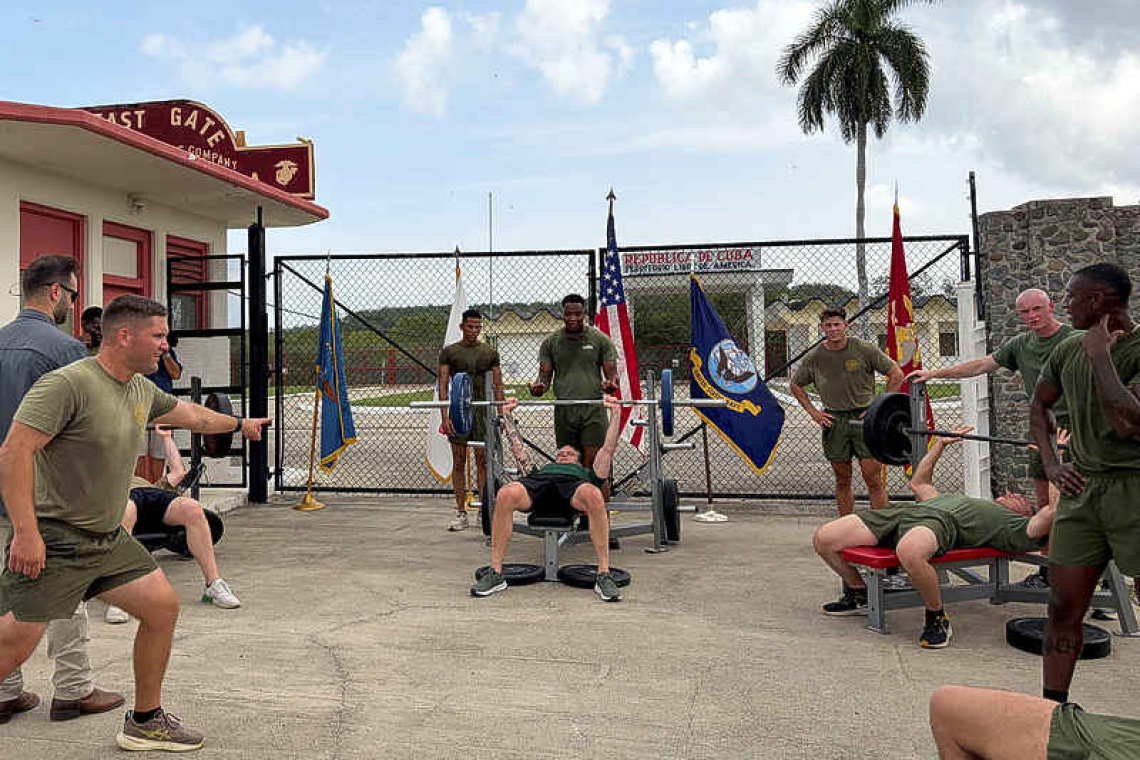
U.S. NAVAL STATION GUANTANAMO BAY, Cuba--U.S. Defense Secretary Pete Hegseth warned the government of Cuba on Wednesday against seeking weapons that could strike the U.S. homeland or the U.S. naval base at Guantanamo Bay, saying it would invite a confrontation Havana could not withstand.
Hegseth, speaking to U.S. troops during a visit to the U.S. base, said he still hoped for a positive relationship with Cuba.
"It would be unwise of the government of Cuba to try to procure or get access to the types of weapons that could reach this base or the American homeland," Hegseth said, without offering more specifics about the weaponry in question. "They would be inviting the kind of confrontation not only do they not want but they could not stand. No country on Earth can match the capabilities of the United States of America."
Hegseth's visit is the latest high-profile trip to the communist-ruled island by a senior American official as President Donald Trump steps up pressure on Havana.It came less than two weeks after the top U.S. commander for Latin America, General Francis Donovan, visited Naval Station Guantanamo Bay, and held discussions with a senior Cuban general at its perimeter. It also followed a rare visit to Havana by CIA Director John Ratcliffe in May.
Hegseth, standing near the base's perimeter, said the U.S. hoped "soon we could be a friend of the leadership of the government of Cuba."
"For now, let’s see what happens. But the Department of War will give the commander-in-chief every single option he needs within that contingency,” Hegseth said.
Trump has often cited political change in Cuba among the foreign policy goals of his second term.Michael Bustamante, head of the Cuban studies programme at the University of Miami, said the visit could signal U.S. resolve amid growing concerns in Cuba of a possible U.S. military attack on the island.
"Perhaps Hegseth's visit is intended to yet again reinforce the message that the cost of not coming to the table could be use of a military option, even as observers increasingly warn of such an operation's potential complications," he said.
Cuba has been a U.S. antagonist since Fidel Castro's 1959 revolution.Trump is strongly supported by hardline Cuban Americans in Florida who have pushed for U.S.-instigated regime change for decades, and his administration has been steadily ramping up pressure on Havana.On May 20, the U.S. formally charged former Cuban President Raul Castro with four counts of murder for the 1996 downing of civilian aircraft operated by Miami-based exiles. The indictment was the latest example of the Trump administration's efforts to assert U.S. influence in the Western Hemisphere.