




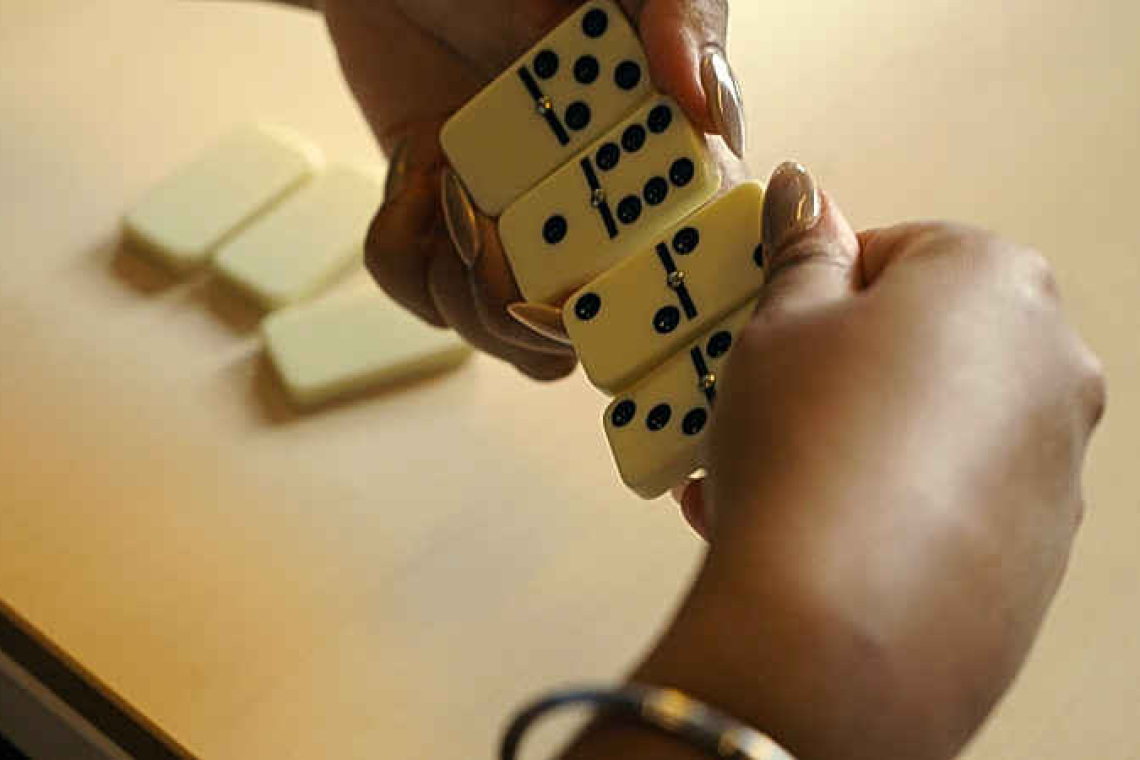
AMSTERDAM--The film “Double Play”, also known as “Changá”, offers an intimate look into the lives of Dutch Caribbean communities in the Netherlands, using the game of dominoes as a guiding philosophy for navigating identity, choice, and belonging. The film will be available for viewing from early January 2026.
Through personal stories and artistic expression, the film invites viewers to reflect on how people respond to the “hand” they are dealt in life. The recurring message in “Changá” is simple yet profound: “Everybody comes to the game of life, gets a hand, and has to play it.” The domino metaphor frames the choices individuals make, the possibilities available to them, and the paths those decisions create.
The film features a diverse group of artists whose work reflects different facets of the Caribbean experience in the Netherlands. Among them are Juny Martina, a rapper and visual artist from Curaçao; Amy Miyú, an artist and content creator with roots in Curaçao and St. Maarten; and Ray Fuego, a poet, punk vocalist with the band Ploegendienst, and a member of Rotterdam’s brass band Earthquake.
Through music, poetry, and visual art, the artists explore themes of identity, language, and belonging. Their performances serve as reflections on how Caribbean heritage, including the use of Papiamentu, shapes experiences of home and cultural connection in Dutch society.
“Changá” is an initiative of Francio Guadeloupe, professor of Public Anthropology of Kingdom Affairs, a chair established in 2024 by the Ministry of Home Affairs and Kingdom Relations and affiliated with KITLV-KNAW and University of Amsterdam. The film was made by Manpreet Brar, Francio Guadeloupe, and Ian Bodo of Big Dawg Productions.
Guadeloupe describes the film as a way to deepen understanding beyond academic research. “Through ‘Changá’, we discuss the sense of belonging of Antilleans in the Netherlands, and to what extent the Netherlands is also their home,” he said.
The film highlights differing experiences within the Caribbean diaspora. Ray Fuego, who grew up in Amsterdam-Southeast, contrasts his perspective with that of artists who migrated later, pointing to language and upbringing as key factors. Reflecting on identity, Fuego argues that rigid categories can be limiting. “People should realize that they are everything,” he says.
Changá has a running time of approximately 50 minutes and features dialogue in Dutch, English, and Papiamentu, with English subtitles. From January 19 to 25, Guadeloupe will travel to Aruba and Curaçao for public screenings, followed by showings in Rotterdam and Amsterdam in April. Several screenings will include discussions with film-makers Manpreet Brar and Ian Bodo, alongside Guadeloupe.