





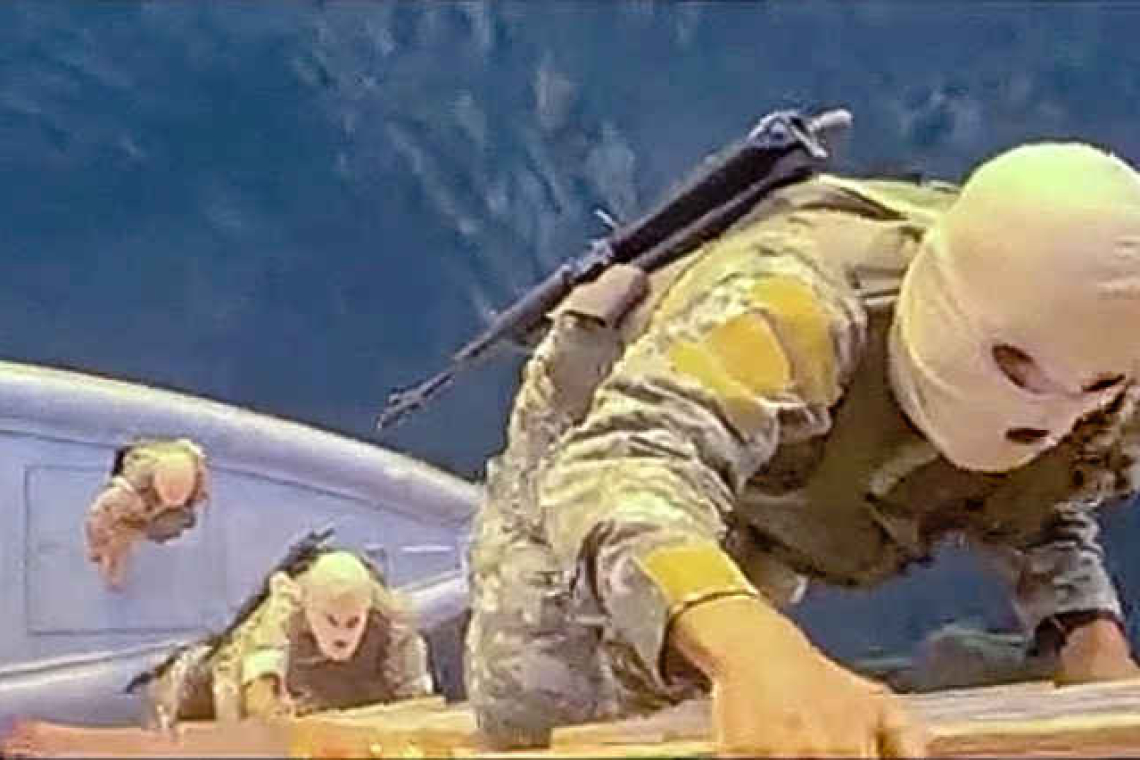
WASHINGTON/DUBAI/ISLAMABAD--Iran seized two ships in the Strait of Hormuz on Wednesday, tightening its grip on the strategic waterway after U.S. President Donald Trump called off attacks with no sign of peace talks restarting.
Trump maintained the U.S. Navy blockade of Iran's trade by sea, and Iran's parliament speaker and top negotiator Mohammad Baqer Qalibaf said a full ceasefire only made sense if it was lifted. Reopening the strait was impossible with such a "flagrant breach of the ceasefire," Qalibaf said in a post on X.
"You did not achieve your goals through military aggression and you will not achieve them by bullying either. The only way is recognizing the Iranian people's rights," he said in his first response to Trump's ceasefire extension.
Trump has backed away from recent threats to bomb critical Iranian infrastructure, but little progress has been made in resolving issues key to ending the war that started with joint U.S.-Israeli strikes on February 28. That leaves the two sides in a holding pattern with the crucial Strait of Hormuz still effectively shut, stranding about one-fifth of the world's oil and gas supplies, straining economies across the world.
Iran's semi-official Tasnim news agency earlier said the Revolutionary Guards had seized two vessels for maritime violations and escorted them to Iranian shores. It was the first time Iran has seized ships since the war began at the end of February.
The Revolutionary Guards also warned that any disruption to order and safety in the strait would be considered a "red line", Tasnim said.
Brent, the international crude oil benchmark, closed above $100 a barrel for the first time in two weeks. The ongoing blockade of the strait is driving up costs for businesses while major economies run down reserves and restrict consumption with millions of oil barrels cut off from key markets.
Trump said on social media late on Tuesday that the U.S. had agreed to a request by Pakistani mediators "to hold our Attack on the Country of Iran until such time as their leaders and representatives can come up with a unified proposal ... and discussions are concluded, one way or the other."
Trumphas not set a new end date for the extended ceasefire, White House press secretary Karoline Leavitt told reporters.Leavitt said Trump wants to see a "unified" response from Iran's leadership to his proposals to end hostilities. U.S. officials believe Iran's actions suggest it is internally divided on how to respond.
Pakistan, which has acted as a mediator, was still trying to bring the sides together after both failed to show up for talks on Tuesday before the two-week-old ceasefire had been due to expire."We were all prepared for the talks," a Pakistani official briefed on the preparations told Reuters. "If you ask me honestly, it was a setback we were not expecting, because the Iranians never refused, they were up to come and join, and they still are."
In a show of defiance, Iran showcased some of its ballistic weapons at a parade in Tehran on Tuesday evening, with images on state TV showing large crowds waving Iranian flags and a banner in the background with a fist choking off the strait.Captions read: "Indefinitely under Iran's Control" and "Trump could not do a damn thing", referring to the strait, which Iran has effectively shut to ships other than its own by attacking vessels that attempt to transit without its permission.