




OAKLAND, California--A U.S. jury on Monday ruled against Elon Musk in his lawsuit against OpenAI, finding the artificial intelligence company not liable to the world's richest person for having allegedly strayed from its original mission to benefit humanity.
In a unanimous verdict, the jury in Oakland, California, federal court said Musk brought his case too late. The jury deliberated less than two hours.
The three-week trial had widely been seen as a critical moment for the future of OpenAI and artificial intelligence generally, both in how it should be used and who should benefit from it. The verdict simplifies the path for OpenAI to proceed with a possible initial public offering that could value the business at $1 trillion.
But OpenAI's public face, Chief Executive Sam Altman, must also address the challenges to his reputation from some extremely personal testimony during the trial, including multiple witnesses describing him as a liar. Musk said he will appeal, repeating his claim that Altman and OpenAI President Greg Brockman viewed OpenAI as a means to great wealth.
"Altman & Brockman did in fact enrich themselves by stealing a charity. The only question is WHEN they did it!" Musk posted on X. "Creating a precedent to loot charities is incredibly destructive to charitable giving in America."
U.S. District Judge Yvonne Gonzalez Rogers, who oversaw the trial, said in court after the verdict that Musk may face an uphill battle in an appeal, because whether the statute of limitations ran out before he sued was a factual issue."There's a substantial amount of evidence to support the jury's finding, which is why I was prepared to dismiss on the spot," the judge said.
In his lawsuit, Musk accused OpenAI, Altman and Brockman of manipulating him into giving $38 million, then going behind his back by attaching a for-profit business to its original nonprofit and accepting tens of billions of dollars from Microsoft and other investors.
Marc Toberoff, a lawyer for Musk, said the verdict could encourage other startups that begin as nonprofits but have greater ambitions to raise money, create for-profit entities to scale, and make their officers and directors rich. "It's a brand new formula for Silicon Valley," he told reporters.
OpenAI was founded by Altman, Musk and several others in 2015. Musk left its board in 2018, and OpenAI set up a for-profit business the next year. Musk has since founded his own artificial intelligence startup, xAI, which is now part of his SpaceX rocket and satellite company.
OpenAI countered that it was Musk who saw dollar signs, and waited too long to claim OpenAI breached its founding agreement to build safe artificial intelligence to benefit humanity.Musk had a three-year statute of limitations to sue, and OpenAI's lawyers said his August 2024 lawsuit came too late because he knew several years earlier about OpenAI's growth plans.
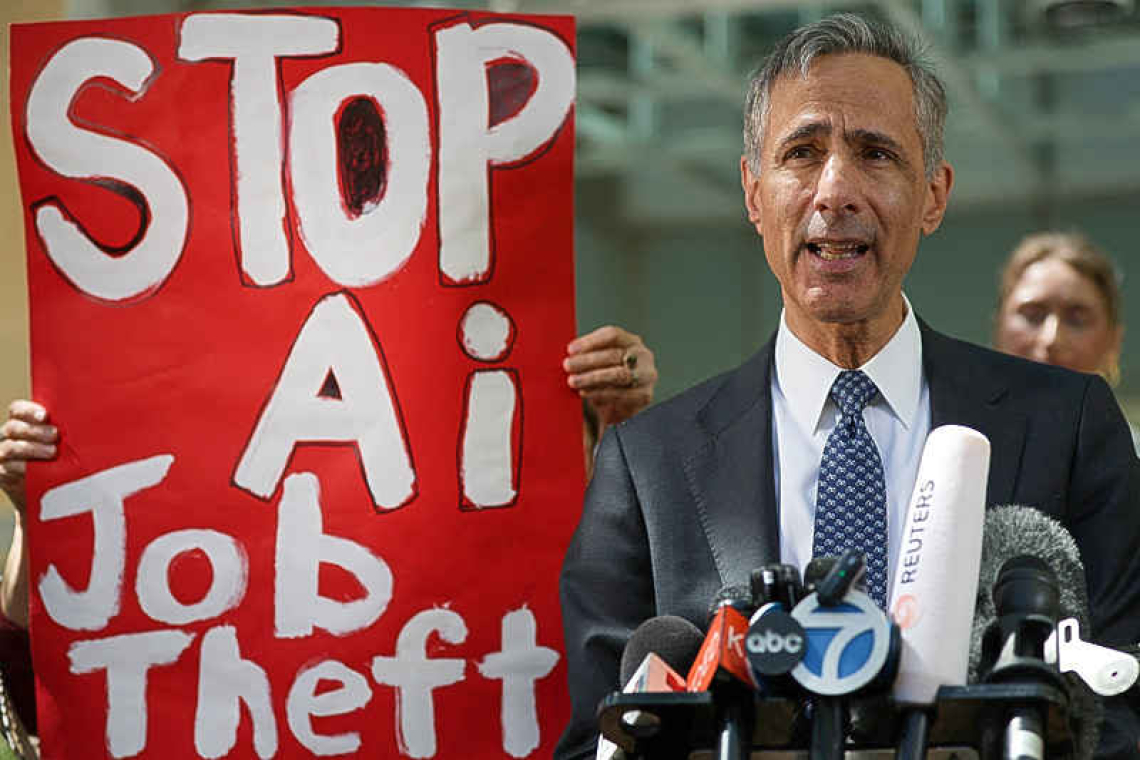
Bill Savitt, a lawyer for OpenAI, told reporters after the verdict that Musk's lawsuit was an "after-the-fact contrivance that bears no relationship to reality," and a "hypocritical attempt to sabotage a competitor."
Jurors, he said, "kicked it exactly where it belongs, which is to the side."
Dan Ives, an analyst at Wedbush, said the verdict removed a significant overhang to a potential OpenAI IPO."This is a huge win for Altman and OpenAI despite the scrapes and bruises on Altman's persona and leadership," he said.
Monday's verdict followed 11 days of testimony and arguments where Musk's and Altman's credibility came under repeated attack. Microsoft had faced an aiding-and-abetting claim. A Microsoft executive testified that the company has spent more than $100 billion on its partnership with OpenAI.
"The facts and the timeline in this case have long been clear and we welcome the jury's decision to dismiss these claims as untimely," a Microsoft spokesperson said.