





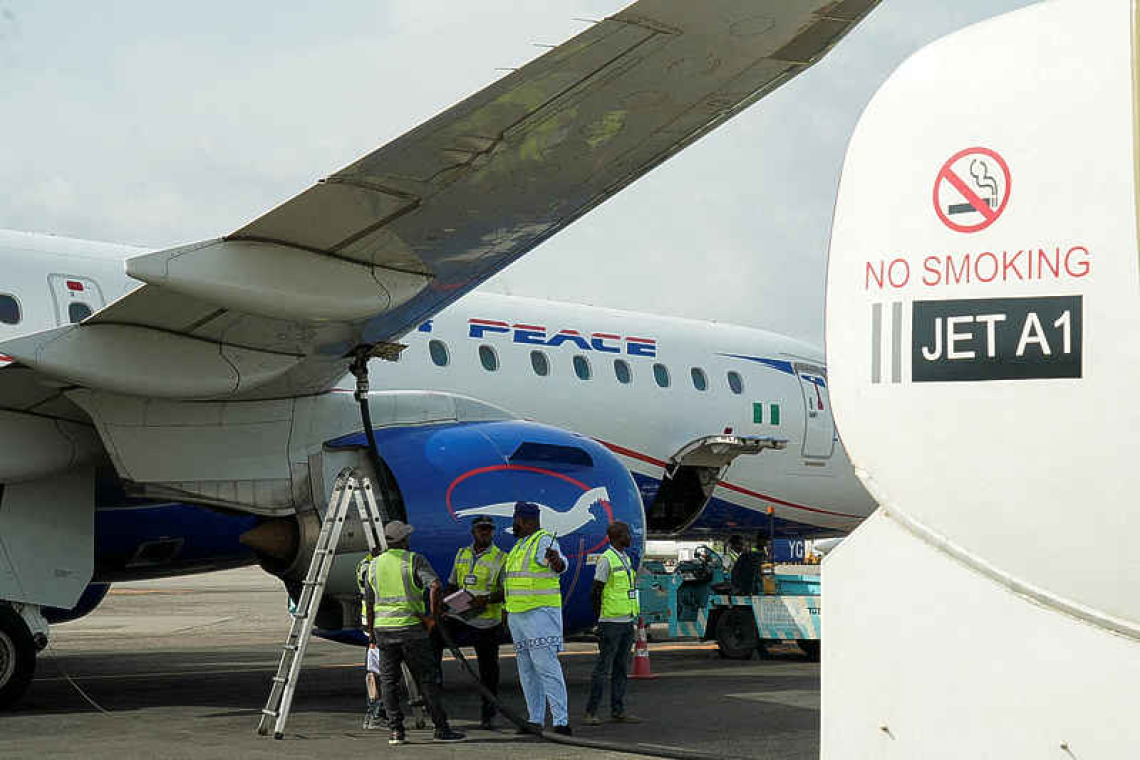
RIO DE JANEIRO--Global airline bosses gathering in Rio de Janeiro this weekend will be searching for answers to the industry's biggest crisis since the pandemic, with the Iran war driving up jet fuel costs, forcing flight detours and testing carriers' ability to raise fares.
The June 6-8 annual meeting of the International Air Transport Association (IATA) is the industry's biggest summit, bringing together hundreds of top executives from airlines, manufacturers, suppliers and financiers.
IATA represents more than 370 airlines accounting for some 85% of global air traffic, giving it a central role in a sector where profits were expected to reach a record $41 billion this year before the Iran war began. Industry executives and analysts expect a downgrade to that forecast at the meeting, where discussions are expected to center on surging fuel prices and supply fears, disruptions to Middle Eastern airspace, deepening aircraft delivery delays and whether airlines are falling further behind on climate goals.
Airlines around the world have already been responding by raising fares, cutting unprofitable routes and conserving cash until pressures ease, raising more questions about whether they can meet IATA's goal of net-zero emissions by 2050 given the high cost and limited supply of sustainable aviation fuel.
Moody's Ratings last week cut its global airline sector outlook to negative from stable, saying fuel costs tied to the Iran war and disruption around the Strait of Hormuz would "materially reduce" operating profit this year. It said profits could fall by more than 35% in 2026 before recovering next year.
IATA data showed global passenger traffic contracted in April for the first time since the post-pandemic recovery, led by a sharp drop at Middle Eastern carriers.Air India's outgoing CEO Campbell Wilson said higher fuel prices and airspace closures were making some routes harder to justify.
"When you take on all those competitive dynamics, the added cost of this extra flying, the added cost to fuel, it just makes some routes uneconomic," he said.
Airlines with stronger demand and greater premium traffic have more room to raise fares, but the ability to recover fuel costs is uneven across markets and business models.Southwest Airlines CEO Bob Jordan, whose carrier joined IATA last year, said U.S. carriers had raised fares on seven occasions since February without seeing demand weaken. But he said fares were still "not close" to covering current fuel costs.
Gulf carriers face a particular test. Emirates and Qatar Airways rely heavily on hubs in Dubai and Doha, while Etihad Airways is expanding again from Abu Dhabi after scaling back earlier global ambitions.The Iran war has not broken the Gulf hub model, but detours have exposed its reliance on accessible airspace and stable routes, lengthening flight times and increasing fuel burn.