





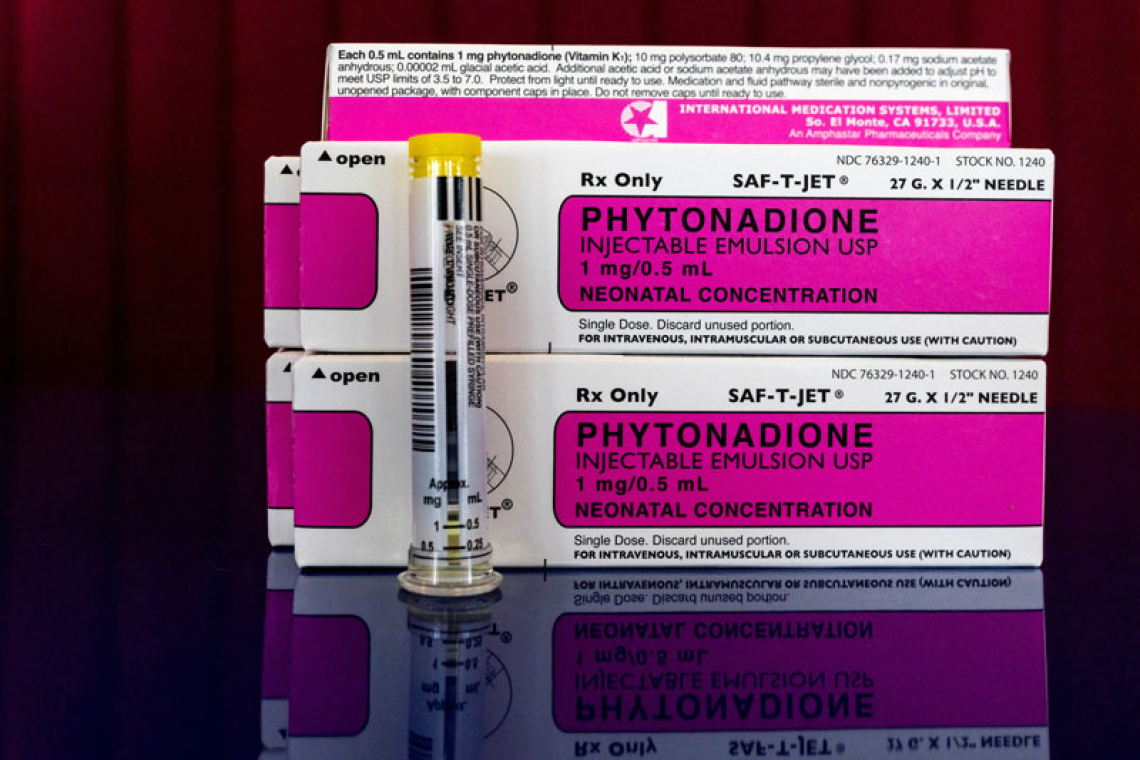
An illustration photo shows Phytonadione, a synthetic version of vitamin K, at a pediatrics clinic in Ann Arbor, Michigan, U.S., August 6, 2026.
CHICAGO--The percentage of parents and caregivers in the United States refusing a standard vitamin K shot for infants at birth has accelerated sharply this year, an exclusive data analysis for Reuters found, putting more newborns at risk of life-threatening bleeding episodes.
The data confirms what a dozen pediatricians, neonatologists and pediatric critical care specialists told Reuters is a top concern: rising refusals of a life-protective shot and a growing wave of mistrust toward vaccines and other newborn interventions.
For decades, Health Secretary Robert F. Kennedy Jr. has stoked that mistrust, sowing doubt about vaccines and other established medicines. The acceleration in vitamin K refusals this year aligns with his January announcement dropping recommendations for the birth dose of the hepatitis B vaccine, and five other standard childhood vaccines, from routine use.
The rate of newborns not receiving the vitamin K shot within a day of birth in hospitals jumped more than 57% from January through June, a review of health records for more than 1 million births nationwide by health data and analytics company Truveta revealed. While vitamin K refusals have been on the rise for years, the Truveta analysis shows that in the first half of 2026, the rate of non-receipt was 2.5 times higher than the average rate from 2019 to 2024. It was 1.4 times higher than in 2025.
Babies are born with very low levels of vitamin K, which helps blood to clot, and are unprotected up until about six months of age, according to the Centers for Disease Control and Prevention, which still recommends the shot. Without the injection, they are 81 times more likely in those first six months to have life-threatening bleeding in the brain or gut, the CDC says.
One out of five infants who experience serious bleeding will die. Without the shot, such bleeding occurs in one out of 59 births.
Dr. Karen Puopolo, chair of the American Academy of Pediatrics' Committee on Fetus and Newborn, said the report reflects what AAP members are dealing with every day as more parents are refusing evidence-based advice from pediatricians often due to inaccurate, misleading information. “It's really terrifying. It's like we're going backwards," Dr. Nia Heard-Garris, pediatric physician-scientist at Lurie Children’s Hospital, Chicago, said of growing refusals. "We’re trying really hard to keep little babies alive."
Pediatricians are on the frontlines, caring for children as parents digest changes in U.S. health policy to align with Kennedy's and President Donald Trump's views, which are often at odds with the medical community. When Kennedy dropped recommendations for the six childhood vaccines, he said American children got too many shots and suggested they were linked to chronic illness, for which there is no evidence.
Those changes are on hold due to a court ruling, but Trump called for them again in an August 10 executive order. Experts say the mixed messages have raised doubts among many parents about routine newborn treatments, including vitamin K.