





HOUSTON--U.S. President Donald Trump signed an order on Friday creating a U.S. Space Academy, billing it as a new military and civilian institution modeled after West Point and other military service academies.
The proposed academy would build on Trump's space agenda, which he and White House officials have described as a key component of his legacy. Trump launched the U.S. Space Force as a sixth branch of the military during his first term, has attended multiple NASA launches and now aims to return Americans to the moon and eventually reach Mars.
An eight-member commission, led by NASA Administrator Jared Isaacman, will advise the president on launching the institution, which Trump's proclamation said would "develop a professional corps of civically grounded leaders prepared to advance American interests within the space domain."
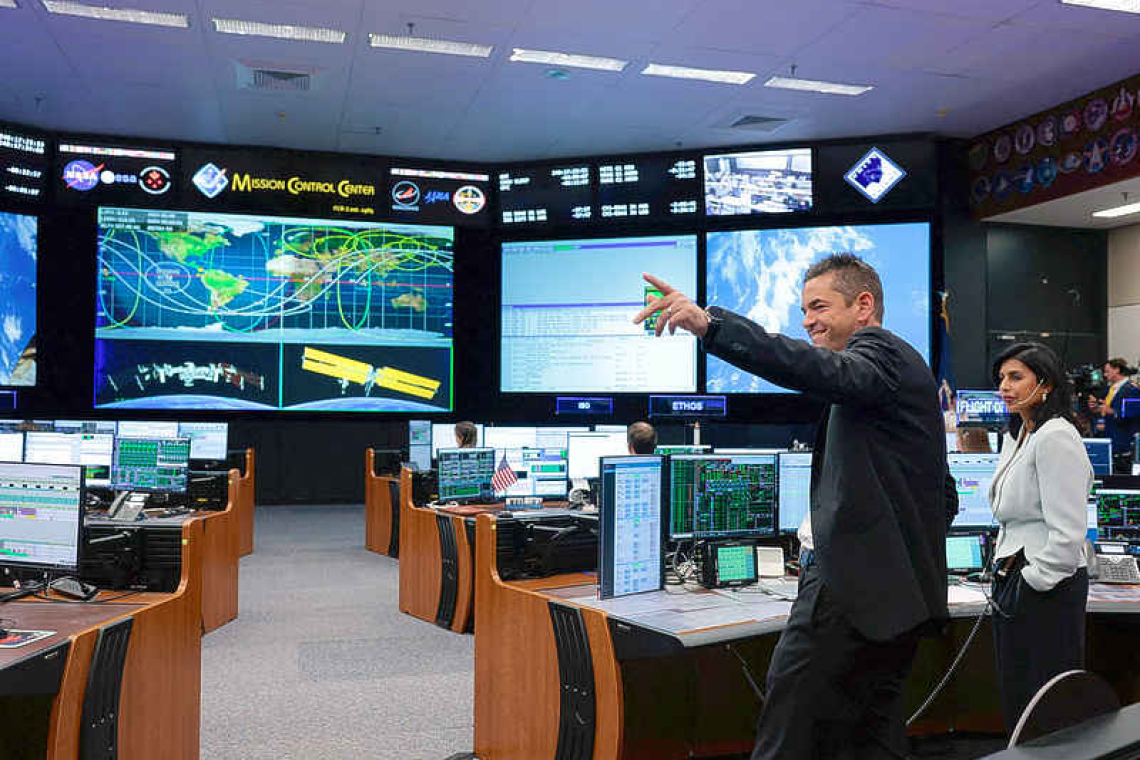
Speaking at the Lyndon B. Johnson Space Center in Houston, Trump said he would choose the location for the academy "very shortly," and hinted that the Texas congressional delegation in attendance wanted the institution in the Lone Star State. He has pledged that the U.S. will land astronauts on the moon during his final year in office.
"A nation cannot be first on Earth if we're going to be second in space," Trump said during a ceremony to award the Congressional Space Medal of Honor to the four crew members of the Artemis II mission.
That crew -- Commander Reid Wiseman, Pilot Victor Glover, Mission Specialist Christina Koch and Canadian Space Agency Mission Specialist Jeremy Hansen -- spent more than nine days in space, circumnavigating the moon and traveling deeper into space than any human before.
The multibillion-dollar U.S. moon programme is targeting its first astronaut landing in 2028, involving SpaceX's giant Starship rocket system. That rocket's development has been delayed, risking the timeline - but another moon lander from Jeff Bezos' Blue Origin that is also under development might make the 2028 deadline instead. The Artemis programme rivals the lunar ambitions of China, which is aiming for its own crewed moon landing around 2030 following a series of increasingly ambitious robotic missions. Both countries are seeking to establish a long-term crewed presence on the lunar south pole, where coveted water ice embedded in the lunar soil could be a key ingredient for fuel on the moon.