





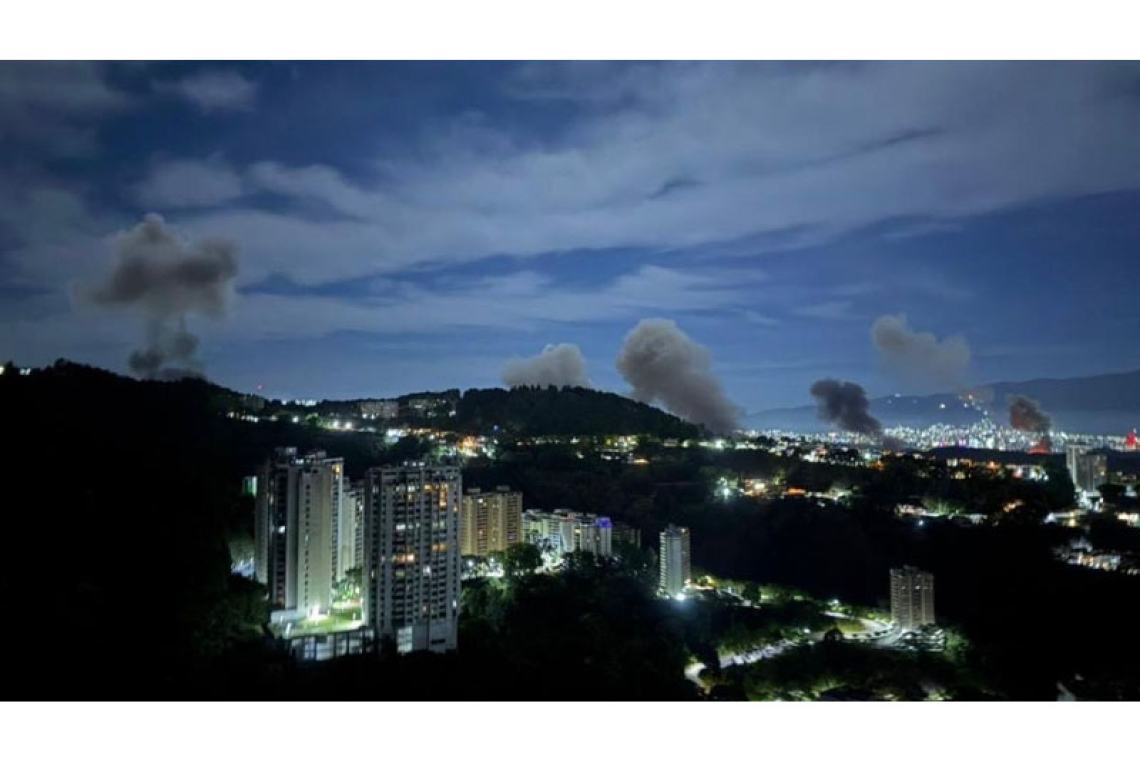
WASHINGTON, Jan 3 (Reuters) - The U.S. has struck Venezuela and captured its President Nicolas Maduro, who has been taken out of the country, President Donald Trump said on Saturday.
The U.S. has not made such a direct intervention in Latin America since the invasion of Panama in 1989 to depose military leader Manuel Noriega.
"The United States of America has successfully carried out a large scale strike against Venezuela and its leader, President Nicolas Maduro, who has been, along with his wife, captured and flown out of the country," Trump said in a Truth Social post.
There was no immediate confirmation from the Venezuelan government.
The U.S. has accused Maduro of running a "narco-state" and rigging an election. The Venezuelan leader, who succeeded Hugo Chavez to take power in 2013, has said Washington wants to take control of its oil reserves, the largest in the world.
Breaking News: Explosions reported over Caracas amid heightened military alert
Main news | By Correspondent January 3, 2026
Multiple explosions and low-altitude overflights by military aircraft were reported over Caracas in the early hours of Saturday, January 3, 2026, placing Venezuela’s capital on maximum alert. The incidents have heightened regional tensions as authorities and international agencies work to verify the nature and scope of the events.
According to preliminary reports, at least seven explosions were heard around 3:20 a.m. local time. The blasts were reportedly accompanied by military aircraft flying at low altitude and power outages affecting several neighborhoods in the city. The exact locations and targets of the explosions have not yet been officially confirmed.
The reported incidents come against the backdrop of recent U.S. military operations in the Caribbean and the Pacific, where American forces have carried out a series of air and naval actions against targets linked to drug trafficking since late December 2025. Regional media have reported strikes on speedboats suspected of smuggling narcotics and alleged drone attacks on land-based facilities in Venezuelan states such as Zulia, though these claims have not been independently verified.
The situation is unfolding amid a climate of heightened political instability in Venezuela. Tensions are already high due to planned civilian demonstrations scheduled for January 9, linked to opposition protests against the presidential inauguration process. Observers warn that the combination of internal unrest and external military pressure could further destabilize the country.
International news agencies and local Venezuelan media said they were still working to confirm the exact cause, targets, and consequences of the explosions reported overnight in Caracas. As of now, there has been no official confirmation of casualties.
Authorities in neighboring countries, including those in the southern Caribbean, are closely monitoring developments given the potential regional security implications.