





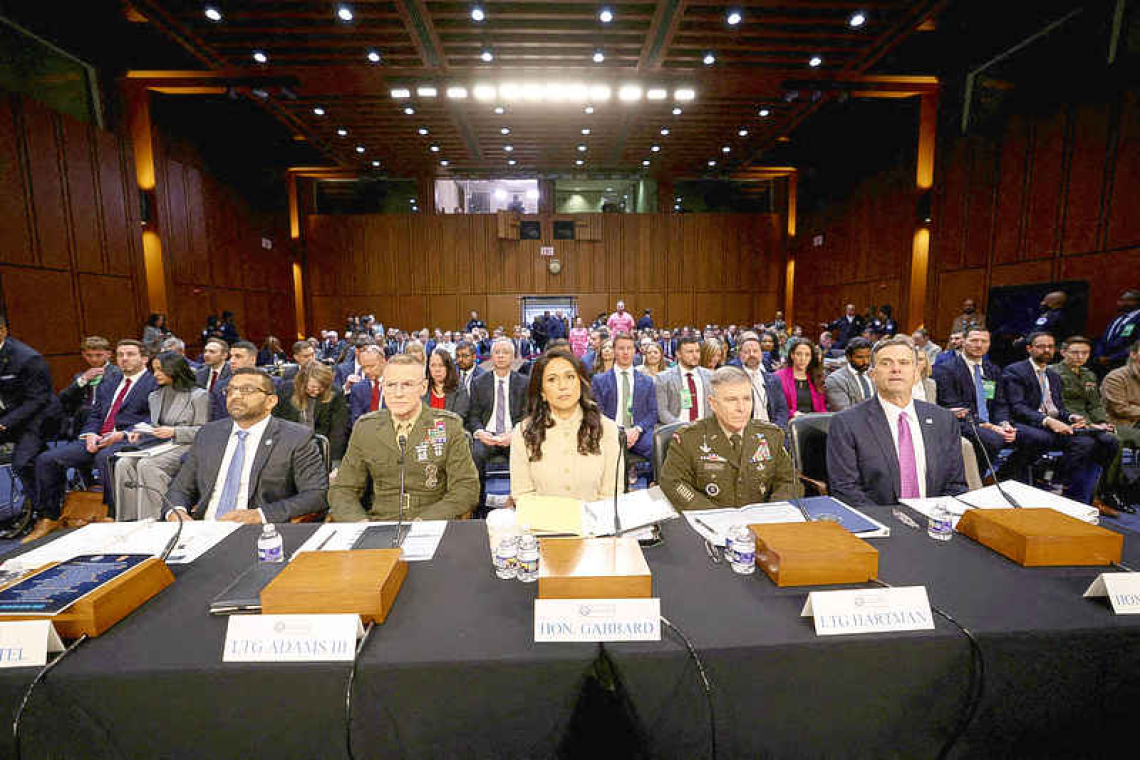
WASHINGTON--The CIA has stopped contributing to some intelligence assessments, including those related to the Iran war, produced by the office of the nation's top spy as disputes over intelligence-sharing and areas of responsibility boil over, say people familiar with the matter.
The infighting between the CIA and the Office of the Director of National Intelligence (ODNI) has flared for more than a year, disrupting collaboration on national security analyses on which presidents long have relied to navigate complex foreign challenges, said a U.S. official and three people with direct knowledge of the matter.The sources spoke on condition of anonymity to discuss sensitive internal matters.
At the heart of the disagreements is a clash over a task force set up in April 2025 by Tulsi Gabbard, the director of national intelligence, the sources said. The CIA, led by Director John Ratcliffe, contends that Gabbard's Director's Initiatives Group has acted recklessly by circumventing traditional intelligence-sharing and declassification protocols, said two of the people. ODNI officials say the CIA has consistently blocked the group's access to intelligence.
The breakdown in collaboration between intelligence agencies comes at a perilous time for the Trump administration, with the U.S. embroiled in the Iran conflict and grappling with national security challenges ranging from Chinese military expansion to Russia's war on Ukraine. It also suggests that the post-September 11, 2001, reforms, which created a director of national intelligence to coordinate the 18 U.S. intelligence agencies, have not ended dysfunction.
"ODNI is supposed to be the oil in the system that keeps the arteries of the intelligence community flowing, that removes blockages," said Beth Sanner, a former deputy director of national intelligence during President Donald Trump's first term."When you're not doing that, then you set up the potential that agencies are just going to kind of pull back into their stove pipes and you set yourself up for intelligence failures."
Beyond assessments produced by ODNI, the CIA has other avenues for ensuring its intelligence, including on Iran, reaches the president and other policymakers. The intelligence forms a large part of the Presidential Daily Brief, the highly classified daily compendium of intelligence reports prepared for the president.
Gabbard said last week that she will step down as Trump's top spy on June 30, citing her husband's illness. Trump said on Tuesday he was appointing Federal Housing Finance Agency chief Bill Pulte as acting director of national intelligence.
“The president and policymakers continue to receive the best intelligence and analysis" from the intelligence agencies, said Olivia Coleman, an ODNI spokeswoman, adding that ODNI and the agencies it oversees "communicate and collaborate daily with CIA counterparts across the full spectrum of intelligence products and operations."
The Director's Initiatives Group "operated within ODNI’s oversight authorities and in support of the president’s executive orders," Coleman said.
Reuters in February reported that Gabbard had wound down the group and reassigned its personnel elsewhere in her agency amid congressional scrutiny of its activities. "Under Director Ratcliffe, CIA quickly moved out on President Trump's priorities with a more aggressive agency taking smart risks to outmaneuver our adversaries and give the United States a decisive advantage," CIA Director of Public Affairs Liz Lyons said.
White House spokesman Davis Ingle said Trump’s "peace through strength foreign policy is a tried-and-true approach that keeps America safe and deters global threats," and media efforts to sow internal division would fail."President Trump has full confidence in his entire exceptional national security team," Ingle said.
The CIA's move to significantly pare back its contributions to assessments produced by Gabbard's office is one of the most serious consequences of the agencies' mutual distrust.The CIA has been one of the main contributors to the reports produced by the National Intelligence Council (NIC), the premier U.S. intelligence analytical body. The reports carry weight, especially during a war.
Two of the sources with direct knowledge of the matter said that assessments about Iran — where the U.S. military has been fighting since February — are among those the agency no longer regularly participates in. The CIA and ODNI now operate largely as two separate analytical operations, the sources said.
At one point last year, the CIA, in response to friction between the two agencies, stopped publishing NIC reports on the internal intelligence community distribution service it controls, briefly limiting the accessibility of the analytical products, the sources said.A U.S. official said the reports were only withheld for "a few hours" as a result of a "processing issue."