





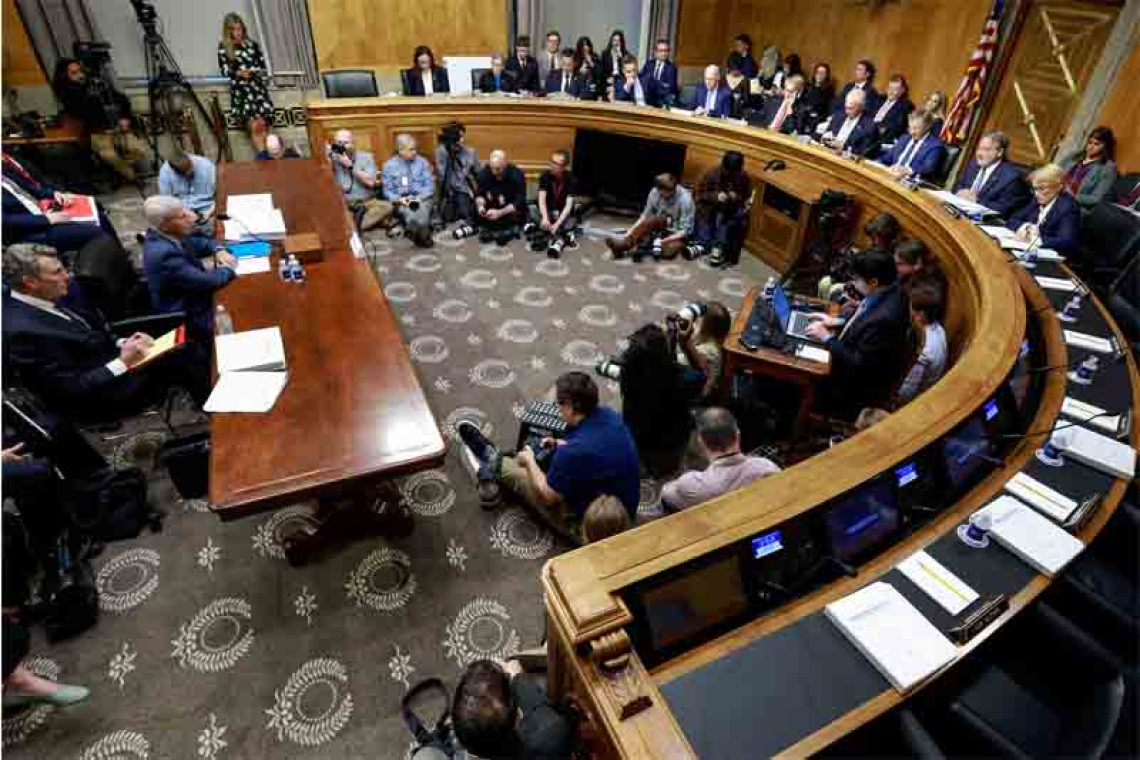
WASHINGTON--Anthony Fauci, the former top U.S. infectious disease expert, declined to answer questions at a Senate hearing on Wednesday, invoking his constitutional right against self-incrimination and accusing Republican Senator Rand Paul of an "unhinged" campaign to see him imprisoned.
Fauci, who is 85 and retired in 2022, was subpoenaed by Paul of Kentucky, the chair of the Senate Homeland Security and Governmental Affairs Committee and a longtime adversary. Fauci accused Paul of an "unhinged" campaign to see him imprisoned, and refused to answer more than 100 questions.
Paul said Fauci was not allowed to plead the Fifth Amendment right to refrain from answering senators' questions, that a pardon from former President Joe Biden would not protect him, and that there would be consequences for refusing to answer. He said the committee had scheduled a vote for next week to hold Fauci in contempt.
Fauci, who led the National Institute of Allergy and Infectious Diseases for 38 years, serving under multiple Republican and Democratic presidents, and became the face of the U.S. pandemic response, has long been criticized by President Donald Trump and many American conservatives. Trump before the hearing wrote of Fauci on social media: "His ideas were CRAZY!"
More than 1.1 million people died of COVID-19 in the United States, and the pandemic touched off a long-running effort by conservatives to assign blame for the toll of actions taken to stem the global health crisis. Fauci became the primary target of that anger, criticized for lockdown directives, guidance on mask-wearing and social distancing, and his promotion of vaccines, which became heavily politicized during the pandemic, despite being shown to be safe and effective.
He and many public health officials globally recommended such measures based on scientific evidence available at the time of best practices to slow the spread of a novel and deadly virus for which there was no immunity, until a vaccine became available.
Biden preemptively pardoned Fauci on January 19, 2025, to guard against "unjustified and politically motivated prosecutions" for allegations related to COVID or his role in the response. The pardon does not cover subsequent conduct.
Federal law makes it a crime to knowingly and willfully make a "materially false, fictitious, or fraudulent statement or representation" to Congress, potentially exposing Fauci to prison if prosecutors decided he lied after being pardoned. Republicans criticized Fauci for refusing to answer and claimed federal law and a 19th-century U.S. Supreme Court decision required him to testify. The 1896 decision lets Congress compel testimony from witnesses by immunizing them from criminal prosecution for what they say, without violating the witnesses' Fifth Amendment right against self-incrimination.