





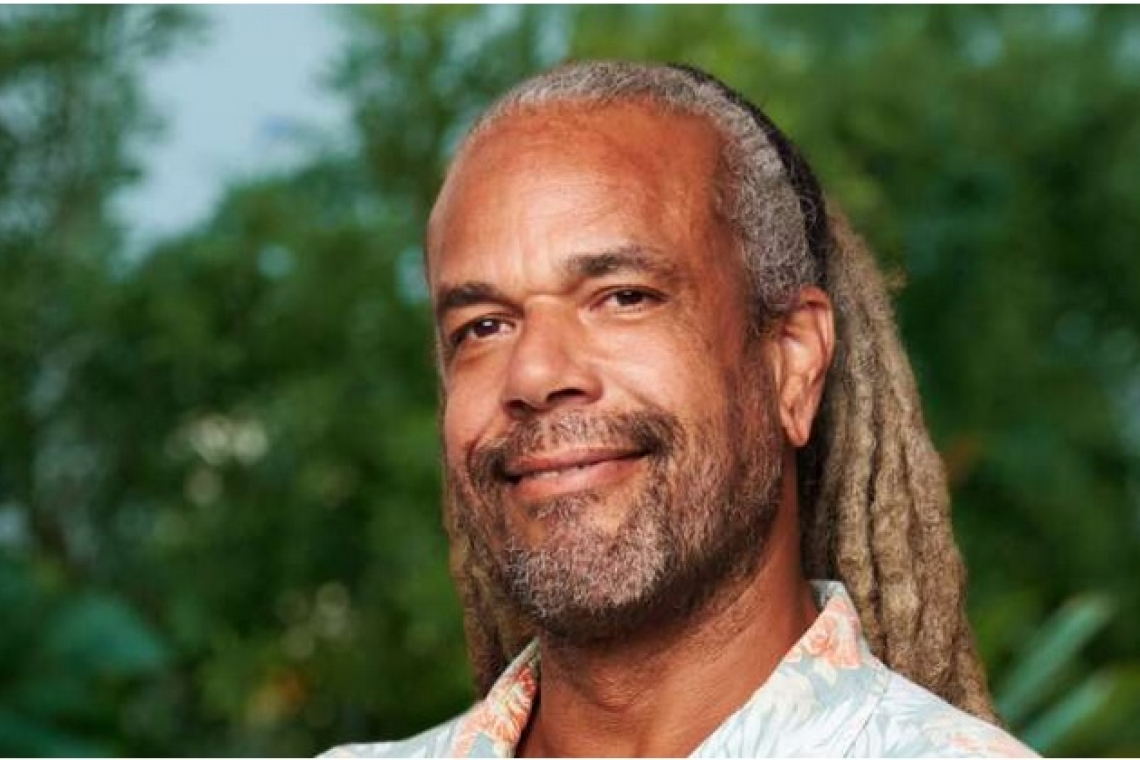
Now is the time: Myles Darrell, the head of natural heritage at the Bermuda National Trust, is in favour of implementing the Bermuda Ocean Prosperity Programme. (Photograph supplied)
HAMILTON, Bermuda--Representatives from different sectors are sharing their views on the Bermuda Ocean Prosperity Programme, saying the protection of the island’s waters affects more than just the fishing industry and will “build resilience”.
The national plan, which establishes no-fishing conservation areas with the aim of replenishing fish stocks, while seeking to boost the blue economy, was put on hold following the last election as the Government sought to reflect and allow for further consultation.
The BOPP has been seven years in the making and has included ocean-use surveys with 1,494 participants, including 60 per cent of full-time fishermen and women, with more than 180 formal public comments reviewed and integrated.
The programme features a Marine Spatial Plan, a legally binding framework forming part of the Blue Prosperity Plan, which also includes a Blue Economy Strategy for supporting sustainable fisheries, marine tourism and renewable energy, as well as an Ocean Fund.
The Fishermen’s Association of Bermuda, representing a portion of the island’s fishermen, has rejected aspects of the programme, not least the goal to create marine-protected areas for 20 per cent of the island’s waters.
The group has claimed there has been “no consultation with any local stakeholders” and that more data is required to justify the plan which it says places a “disproportionate burden” on the fishing sector.
The BOPP leaves almost 80 per cent of offshore waters and nearly 90 per cent of nearshore waters open to fishing.
The Royal Gazette reached out to stakeholders including from within the tourism industry, scientific community and heritage authorities on the issue.
It emerged that the Bermuda National Trust has crafted an open letter inviting organisations to urge the Government to implement the BOPP’s MSP and enact its proposed Marine Development Act enshrining the plan in law at the earliest possible opportunity.
Myles Darrell, the BNT’s head of natural heritage, who has also written an opinion piece in today’s edition of The Royal Gazette titled “A shared ocean future for Bermuda”, said: “At the core of the BNT’s mission is the protection and preservation of our island’s natural and cultural heritage.
“It’s these kind of developments within BOPP’s MSP that are creating a clear vision on how we protect and how we preserve,” Mr Darrell said.
“Having observed how many Bermudians have contributed after seven years and how it is based on strong scientific evidence, we believe that now is the time.”
The MSP seeks the designation of 20 per cent of Bermuda’s waters as marine-protected areas, free from fishing to help replenish fished areas. Bermuda already has seasonal protection areas for species including the red hind and black grouper.
The Government, which partnered with the Waitt Institute and the Bermuda Institute of Ocean Sciences on the plan in June 2019, claims that less than 0.1 per cent of the proposed fully-protected areas fall within the waters where shallow-water fishing occurs, as the full 20 per cent is distributed across Bermuda's 200-nautical-mile Exclusive Economic Zone.
The aim of the Ocean Fund is to drive financing into Bermuda projects to grow the economy in areas related to sustainable fisheries, sustainable tourism, marine technology, renewable energy and nature-based projects.
Mr Darrell added: “The plan ensures that we can continue to hold on to this heritage and preserve it for generations to come.
“We would have loved to find a way to achieve 30 per cent protection.
“I am going to maintain optimism that this plan will go ahead. All that is needed is voices to be heard and that’s why we are galvanising Bermudians to take action.”
Andrew Marshall, a licensed commercial fisherman, said it is crucial that Bermuda adjusts its laws in order to ensure prosecutions are carried out in cases of illegal fishing practices and that punishments must be more reflective of the crimes being committed.
Mr Marshall, 61, has been fishing in Bermuda for close to 40 years and said the ocean had transformed through overfishing, illegal fishing and lack of enforcement, as well as polluting factors.
He said: “We need to adjust the laws, they are not set up in a way that people can be prosecuted for illegal fishing and buying illegal fish.
“The very first and main thing is to amend legislation so it is enforceable. Of those who go to courts, 95 per cent get off, even when it is blatantly done.
“The punishments need to be the equivalent of the problem. Bermuda’s fish stocks are owned by everyone, including those who are not born yet.
“You need MPAs. It’s debatable as to where and how, but they should reduce the fishing effort. I don’t have a problem with protecting 20 per cent. If I was in charge, I would stop all fishing for ten years.”
He added that tracking devices should be on every fishing boat.
Thad Murdoch, a coral reef scientist, ran the Bermuda Reef Ecosystem Assessment and Mapping [Bream] Programme at the Bermuda Zoological Society from 2004 to 2018.
It mapped reefs and surveyed more than 200 locations across the platform, collecting baseline data on plants, corals and animals.
Dr Murdoch said: “We found that hard corals are abundant, marine plants are at healthy low levels, and that Bermuda sustains a high population of protected parrotfish.
“However, we also found that all commercially fished grouper and snapper were at critically low levels across all reef zones relative to international standards.”
Bream’s recommendations included expanding a network of MPAs and including more fish spawning sites into the existing protected network.
Increased protection of smaller commercial fish, such as snappers and conies was also advised as they eat damselfish which Bream documented were increasing and causing substantial damage to corals, and protocols to ensure swift response to changing fish stocks or reef disturbances.
Dr Murdoch added: “We are happy to see that many of the recommendations that we made are now proposed to be implemented by BOPP.”
He added that coral reefs are vital as “a living, self-healing seawall that prevent otherwise catastrophic damage from storms and hurricanes”.
The BOPP references research showing that loss of reef protection could result in $55 million in annual economic loss and that $405 million is generated annually from reef-related tourism.
Forrest Williams Jr, 35, is the co-owner and cofounder of Sea Venture Diving and a part-time boat captain.
He said: “I think from a tourism and diving perspective, BOPP can be good because it will provide more protected areas to allow species to flourish and go untouched by humans.
“You don’t have to worry about fishing lines or areas being overfished. In my time, there seems to have been a decline in certain species including the black grouper population, I don’t see them as much on reefs.
“I think BOPP is important because some of our laws are outdated. They could use more up-to-date regulations in conjunction with the science.
“I support it as long as it doesn’t affect the fishermen too much, I think it will impact them but not very much.”