





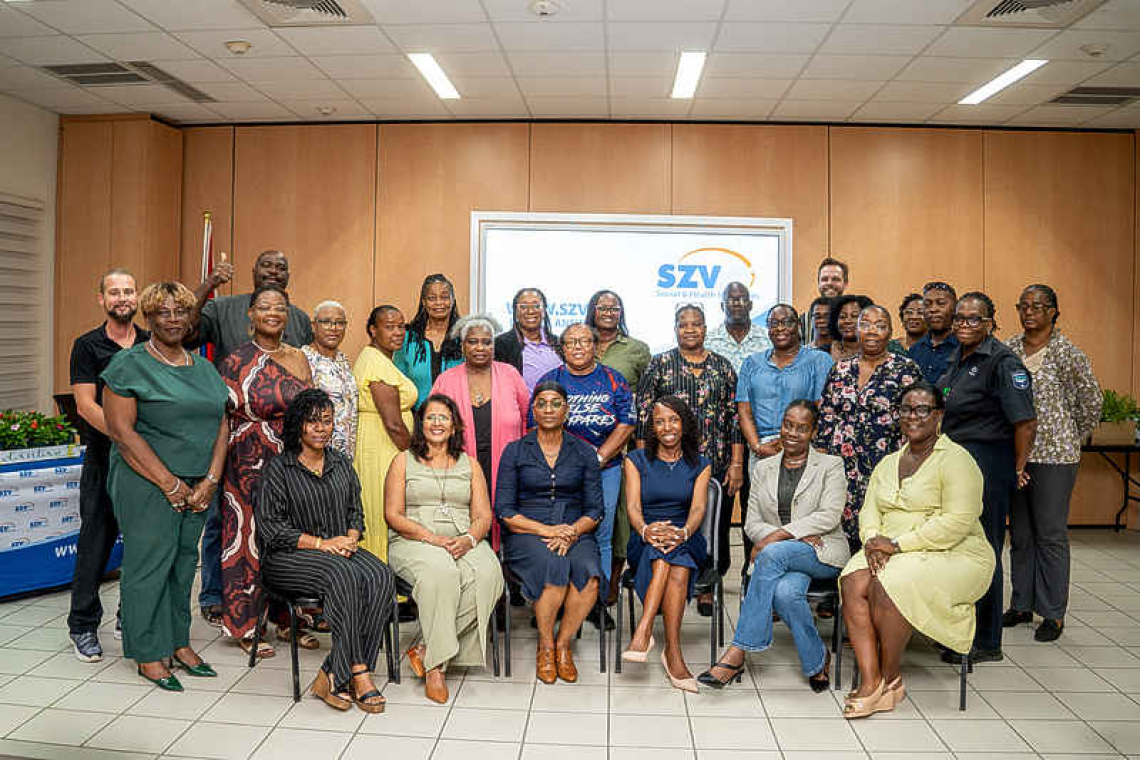
Representatives of SZV, the Ministry of VSA, participating medical clinics, lifestyle coaches, POHs, research partners and programme participants gathered during the culmination event of the Lifestyle Interventions Pilot Project.
PHILIPSBURG--More than 63 per cent of participants in a 15-month lifestyle intervention pilot project improved their blood sugar control, while 71 per cent of participants with hypertension recorded a reduction in blood pressure.
The findings were presented following the successful completion of the Lifestyle Interventions Pilot Project, a joint initiative of SZV Social & Health Insurances and the Ministry of Public Health, Social Development and Labour (VSA).
The project enrolled 165 participants across three medical clinics, with 91.4 per cent of them living with two or more chronic conditions, including diabetes and hypertension. Of the total participants, 140 completed the full programme.
Preliminary findings presented by Project Manager Dr. Judith Richardson also showed an average reduction of 0.61 percentage points in HbA1c, a measure of blood sugar control. Participants recorded an average weight reduction of 0.92 kilograms and an average waist circumference reduction of 2.93 centimetres.
Improvements in blood sugar control, weight and waist circumference were recorded across all three participating clinics.
The findings were shared during a culmination event held on November 6 under the theme "From Pilot to Impact." The event brought together participants, healthcare professionals, project partners and other stakeholders to discuss the research findings and the future of prevention-focused healthcare.
The pilot explored how structured lifestyle support, integrated into primary healthcare, could help people living with or at risk of non-communicable diseases (NCDs) improve their health and better manage their conditions.
Dr. Chandra Rombley, Chief Medical Insurance Officer at SZV, who spearheaded the initiative on behalf of the organisation, said the responsibility of a social and health insurer extends beyond financing healthcare and paying for treatment.
"Our responsibility goes beyond financing healthcare and paying for treatment. We also have a role in identifying risks earlier, encouraging prevention, and improving the quality of life of the people we insure. Investing in prevention is an investment in the long-term sustainability of our healthcare system."
Dr. Rombley identified three important lessons from the pilot. These include the need to provide people with support rather than simply advice, the importance of allowing time and providing consistent guidance to encourage lasting lifestyle changes, and the value of cooperation among healthcare professionals, organisations and communities.
The programme brought together general practitioners, Practice Support Assistants (POHs) and lifestyle coaches to provide coordinated support to participants. Through medical guidance, regular follow-ups, practical lifestyle advice and encouragement, participants were supported in developing healthier habits and taking greater responsibility for their health.
Dr. Richardson said the research demonstrated the potential of team-based, prevention-focused care while providing valuable insight into what is needed to integrate lifestyle interventions into local primary healthcare.
Feedback from participants also highlighted the value of individual guidance and continued support. One participant shared how the programme helped her better understand her health following a pre-diabetes diagnosis and expressed the hope that more people in St. Maarten would have access to similar guidance.
With the pilot completed, SZV and VSA are now looking at ways to build on the findings and establish a more sustainable approach to preventing and managing NCDs.
One of the priorities is strengthening local capacity through the training of local POHs, who play an important role in patient education, regular follow-ups, motivational support and coordination with general practitioners and lifestyle coaches. A vacancy related to the POH function is currently published on the Government of St. Maarten's official website.
The research also identified opportunities to improve referral pathways, ensure greater consistency in programme delivery and further integrate lifestyle coaching into routine primary healthcare.
The project involved three participating clinics: Madame Estate Health Clinic, represented by Dr. Pedro Arrindell; Dutch Quarter Clinic, represented by Dr. Radha Sanchit; and Pure Health BV, represented by Dr. Perry Simmons.
SZV and VSA also recognised the contributions of the lifestyle coaches, POHs, LabdeMed, Wit Gele Kruis Aruba, American University of the Caribbean medical students, and the research and evaluation team.
Special appreciation was extended to Dr. Judith Richardson, Project Manager, and Vanincia Walters, Project Facilitator, for their leadership and coordination throughout the project.
The organisations said the findings provide a foundation for translating local research into improved prevention policies, strengthening healthcare partnerships and creating more opportunities for residents to make healthier lifestyle choices.