





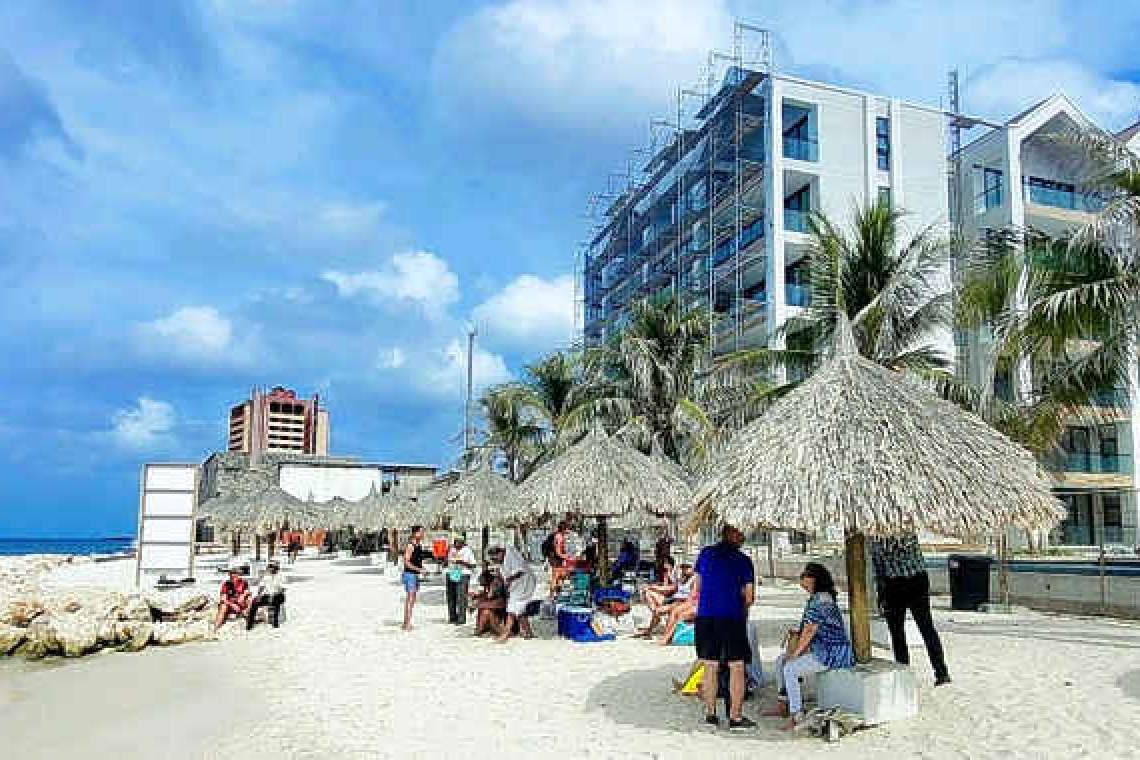
Marichi
WILLEMSTAD--A group of residents gathered Saturday morning at Playa Marichi in Punda for a demonstration under the slogan “Nos ta tuma nos playanan bèk” (“We are taking back our beaches), bringing renewed attention to the long-standing debate over public access to Curaçao’s coastline.
The protest came as beach accessibility has again become a prominent issue on the island. Participants used the gathering to emphasise the principle that Curaçao’s beaches and shores should remain accessible to locals.
The location itself is significant. Marichi, near Pietermaai, has featured in Curaçao’s legal debate over the definition and public character of beaches for more than a decade.
In a legal discussion published in 2011, jurist Jeffrey Sybesma addressed Playa Marichi specifically while examining Article 26 of Book 5 of the Curaçao Civil Code. That provision establishes a presumption that beaches belong to the country and provides safeguards concerning restrictions on the public character of government-owned beaches.
Sybesma cited earlier case law defining a beach broadly as the undeveloped and largely non-vegetated strip between the normal low-water line and natural vegetation, a seawall or long-standing development. Based on that definition, he concluded at the time that Marichi has a relatively narrow strip that can be considered a beach.
The legal issue is more complicated than the frequently heard assertion that every beach in Curaçao is automatically public. Private ownership can exist, while access to a beach may also depend on whether surrounding land is privately owned.
However, Curaçao law contains specific protections against restricting the public character of beaches belonging to the government.
Saturday's action also follows renewed political discussion about physical access to the coastline. MAN-PIN recently called for stronger protections, arguing that even where beaches themselves are accessible, private property surrounding sections of the coastline can make reaching them difficult or impossible.
The opposition party has proposed identifying and protecting existing access routes, purchasing portions of private property where necessary to establish public corridors to beaches and creating a legal mechanism for public easements across private land.
The parliamentary faction also raised a separate concern about what it described as the commercialisation of accessible beaches, where chairs, umbrellas and business facilities can occupy substantial portions of the available space and leave residents with little room to use the beach with their own belongings.
The demonstration at Marichi therefore takes place against a much broader debate: not simply over whether Curaçao’s beaches are legally public or private, but over whether residents have practical and affordable access to the coastline and sufficient space to enjoy it once they arrive.
Curaçao has wrestled with that question for years. The renewed “Nos ta tuma nos playanan bèk” movement indicates that for some residents, beach access is increasingly being viewed not only as a planning or tourism issue, but as a question about who ultimately gets to enjoy one of the island's most important natural resources.