





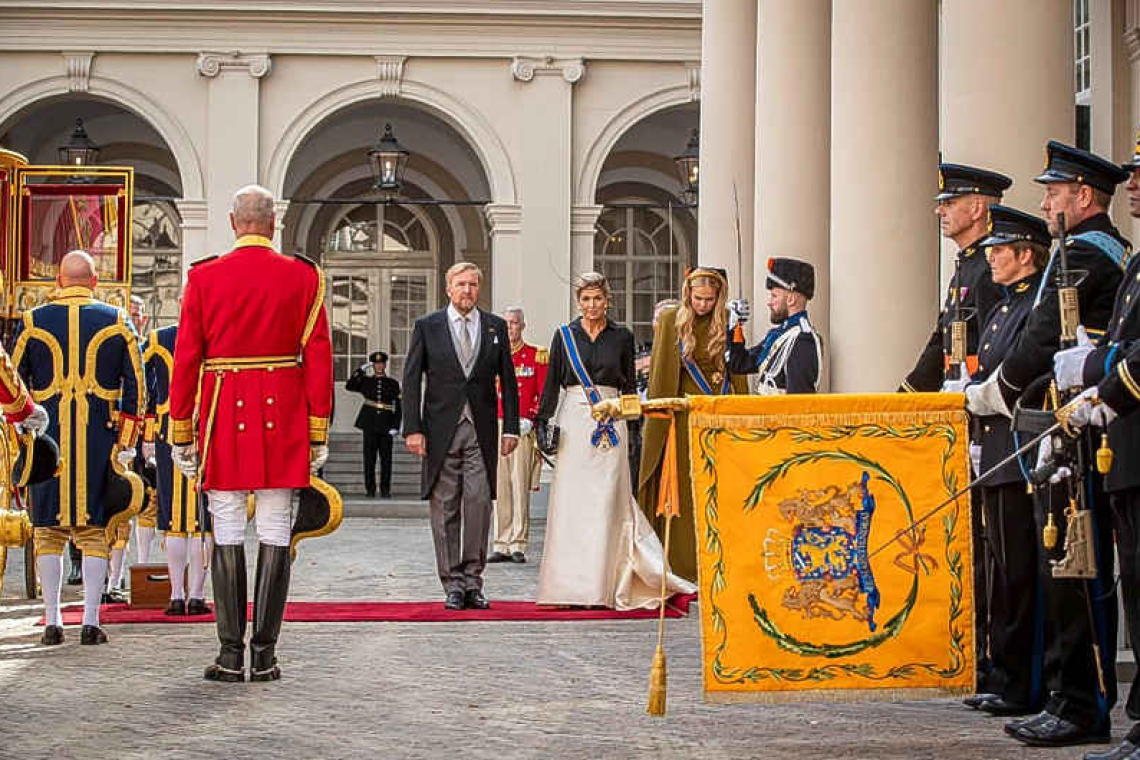
The royal family
THE HAGUE--King Willem-Alexander placed cooperation with Curaçao, Aruba, St. Maarten and the so-called BES islands (Bonaire, St. Eustatius and Saba) prominently in Tuesday’s 2026 throne speech, announcing that a summit between the four countries of the Kingdom of the Netherlands will become an annual event and closing this section in Dutch and Papiamentu with the words: “Nos ta un Reino – wij zijn één Koninkrijk” (We are one Kingdom).
The Caribbean passage was notably more extensive than in the previous year. The Dutch government intends to work closely with the autonomous countries as well as the three overseas public bodies known as Caribbean Netherlands.
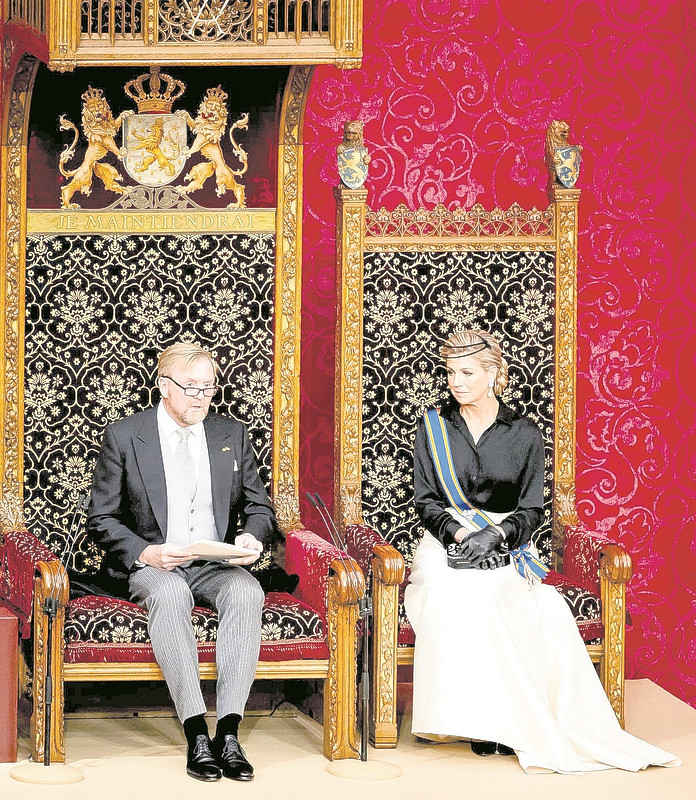
King Willem Alexander delivering the throne speech, accompanied by Queen Maxima
A central development is the planned summit later this year. The Netherlands, Curaçao, Aruba and St. Maarten are expected to discuss progress and opportunities across a broad range of areas, including the economy, income security, climate policy and waste management.
According to the king, this meeting will no longer be treated as a one-time initiative. The summit is to become an annual tradition, creating a recurring political forum for cooperation between the four governments.
For the Caribbean countries that commitment could be significant because several of the issues specifically identified in the speech -economic development, cost of living, climate resilience and waste management- are areas in which the islands have repeatedly sought cooperation or financial and technical support within the kingdom.
The speech, however, neither announced specific new funding for Curaçao, Aruba or St. Maarten nor detailed new agreements in these areas. Instead, it established continued and more structured cooperation as a policy objective and identifies the annual summit as the forum through which progress and opportunities will be discussed.
The king also connected present-day cooperation to the shared history of the kingdom. In November, the kingdom will commemorate the 250th anniversary of the salute fired from St. Eustatius in 1776 in recognition of an American vessel – an event associated with the Netherlands becoming the first country to recognise the newly independent United States. The speech presented the anniversary as an example of the Caribbean islands’ historical importance and the kingdom’s long-standing connections with the wider world.
The Caribbean message came at the end of a broader section about improving government cooperation. The Jetten Cabinet wants government to become less bureaucratic, more efficient and more accessible, while strengthening cooperation between different levels of government.
Elsewhere, the speech focused heavily on challenges facing the European Netherlands, including housing shortages, migration, healthcare, economic competitiveness, climate change, infrastructure, national security and defence. Government warned that financial resources remain limited and that not every problem can be addressed simultaneously.
Security also featured prominently. The cabinet plans additional defence spending in 2027 amid concerns about Russia, Ukraine and broader international instability, while cyberattacks, disinformation, terrorism and organised crime were identified as growing threats.
Although the speech did not specifically connect those security investments to the Caribbean, defence and foreign affairs are kingdom responsibilities, making international instability and security policy directly relevant to Curaçao, Aruba and St. Maarten as well.
Climate policy may similarly become an important point of discussion at the new annual summit. The king described climate adaptation and the transition toward cleaner and more secure energy supplies as major long-term challenges, while the Caribbean section explicitly identifies climate as one of the areas for cooperation between the four countries.
The strongest political message for the Dutch Caribbean, however, was the decision to institutionalise high-level talks between the four countries. Rather than referring to Curaçao, Aruba and St. Maarten only at the margins of Dutch policy, the 2026 throne speech explicitly placed the relationship within a recurring kingdom-wide framework.