





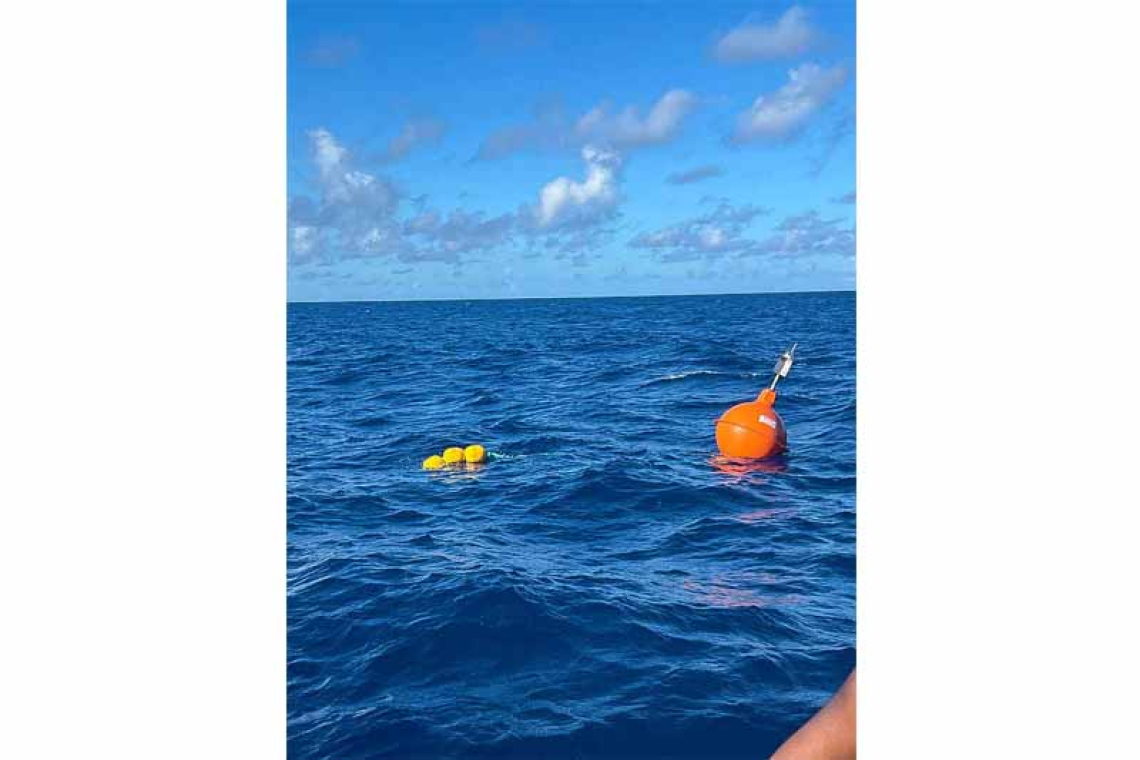
The FADs in the water.
PHILIPSBURG--St. Maarten has launched its first two fish aggregating devices (FADs) in the waters surrounding the island, in an initiative intended to improve offshore fishing opportunities, support local fishermen and strengthen the fisheries industry.
The Ministry of Tourism, Economic Affairs, Transport and Telecommunication (TEATT), through the Department of Economy, Transportation and Telecommunication (ETT), launched the devices on Wednesday, September 23.
The FADs were generously donated by the Government of Curaçao and are expected to attract pelagic fish such as tuna, mahi-mahi and wahoo.
The devices can help fishermen reduce the time spent searching for fish and lower fuel expenses, while easing pressure on sensitive nearshore reef ecosystems.
“This deployment marks an important step for St. Maarten’s fishing community and the continued development of the fisheries industry. It supports more reliable offshore fishing opportunities, promotes sustainable practices and lays the foundation for future sector growth,” the ministry stated.
The FADs use environmentally responsible materials and GPS-tracked electronic buoys to support monitoring.
Their locations were selected in consultation with the local fishing community and the Nature Foundation, and were sanctioned through Maritime Affairs and BTP to ensure compliance with maritime regulations.
The two deployed devices are located at: FAD 1: 17 degrees 57.049 minutes north, 063 degrees 12.896 minutes west and FAD 2: 17 degrees 54.093 minutes north, 063 degrees 14.435 minutes west. Following the launch, TEATT Minister Grisha Heyliger-Marten, supported by technical representatives from Curaçao, held an information session with local fishermen.
The ministry thanked Prime Minister Pisas, the Government of Curaçao and Curaçao’s Fisheries Department, including Faisel Dilrosun and his team, for donating three FADs and providing technical guidance and hands-on support during preparation and the launch.
Heyliger-Marten also thanked Roche Lesperance and the crew of the vessel “Blessing”, as well as Garth Styne and the team from the Maritime School of the West Indies, for helping facilitate the safe deployment.
The ministry reported receiving positive feedback from local fishermen about how the devices are working. The minister also thanked members of the local fishing community, the Nature Foundation, staff of the TEATT/ETT policy department and the DC-ALFA family for their collaboration and contributions to the project.
The deployment reflects regional cooperation and community partnership aimed at strengthening St. Maarten’s fisheries industry, supporting local fishers, protecting marine resources and contributing to food security.