





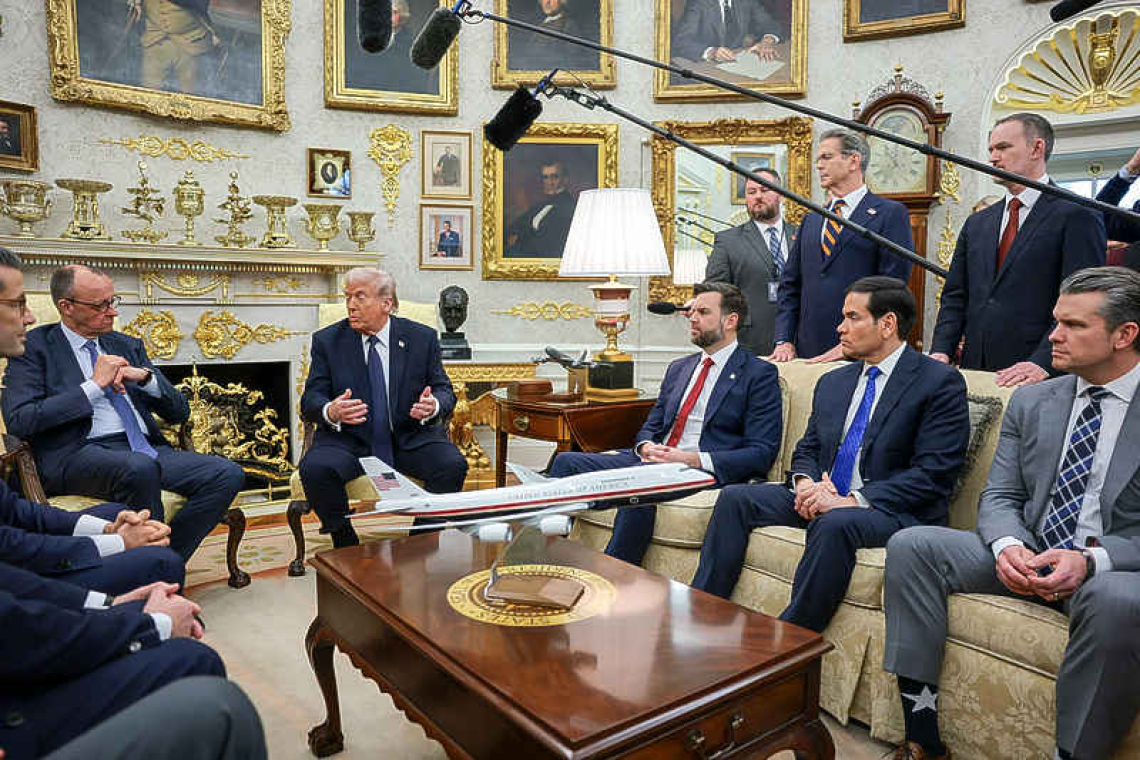
WASHINGTON--U.S. President Donald Trump welcomed German Chancellor Friedrich Merz to the White House on Tuesday, thanking the German leader for his support of the widening U.S.-Israel war against Iran in talks that also touched on trade and Russia's war in Ukraine.
Trump, speaking in the Oval Office alongside Merz, told reporters that Germany had been "helping out" by allowing U.S. forces to access certain bases, and drew a sharp contrast to the actions of two other European countries: Britain and Spain.
Merz told Trump that Germany and the United States shared a desire to get rid of Iran's current regime, and said Berlin wanted to see a rapid end to the war. He later cast doubt on whether the U.S. and Israeli military strikes would spark political change in Iran, saying the plan posed some risks.
"This plan is not without risk, and we would also have to bear the consequences," Merz told reporters after meeting Trump.
The war in Iran is politically sensitive for Merz, who faces potential backlash at home over Germany's support for the U.S.-Israeli operation. On Sunday, he had expressed no criticism of the U.S. airstrikes but stopped short of endorsing an operation which Trump's critics have said was undertaken without sufficient explanation and the required legal backing in international law.
Neither Israel nor the U.S. have asked Germany to get directly involved in the conflict, Merz said, adding he had explained to Trump that any such action would require formal German parliamentary approval."We are on the same page in terms of getting this terrible regime in Iran away, and we will talk about the day after," Merz said at the start of the talks, adding that he would also raise Russia's war in Ukraine and the need to finalize a U.S.-European Union trade deal following Trump's additional tariff threats.
Trump said the U.S. was not asking Germany to provide troops. "They're letting us land in certain areas, and we appreciate it, and they're just making it comfortable. We're not asking them to put boots on the ground."
The U.S. president said he had a good relationship with Germany and Merz in particular, calling him an "excellent leader". That marked a big change from Merz's fellow Christian Democrat and former Chancellor Angela Merkel, Trump said, adding that he had differences with Merkel over immigration and energy.