





TEL AVIV/JERUSALEM/WASHINGTON--Iran said on Sunday it would strike the energy and water systems of its Gulf neighbours in retaliation if U.S. President Donald Trump follows through with a threat delivered a day earlier to hit Iran's electricity grid in 48 hours, escalating the three-week-old war.
The prospect of tit-for-tat strikes on civilian infrastructure could further rattle global markets when they reopen on Monday morning, and threaten the livelihoods of millions of civilians in the region who rely almost exclusively in some cases on desalination plants for water.
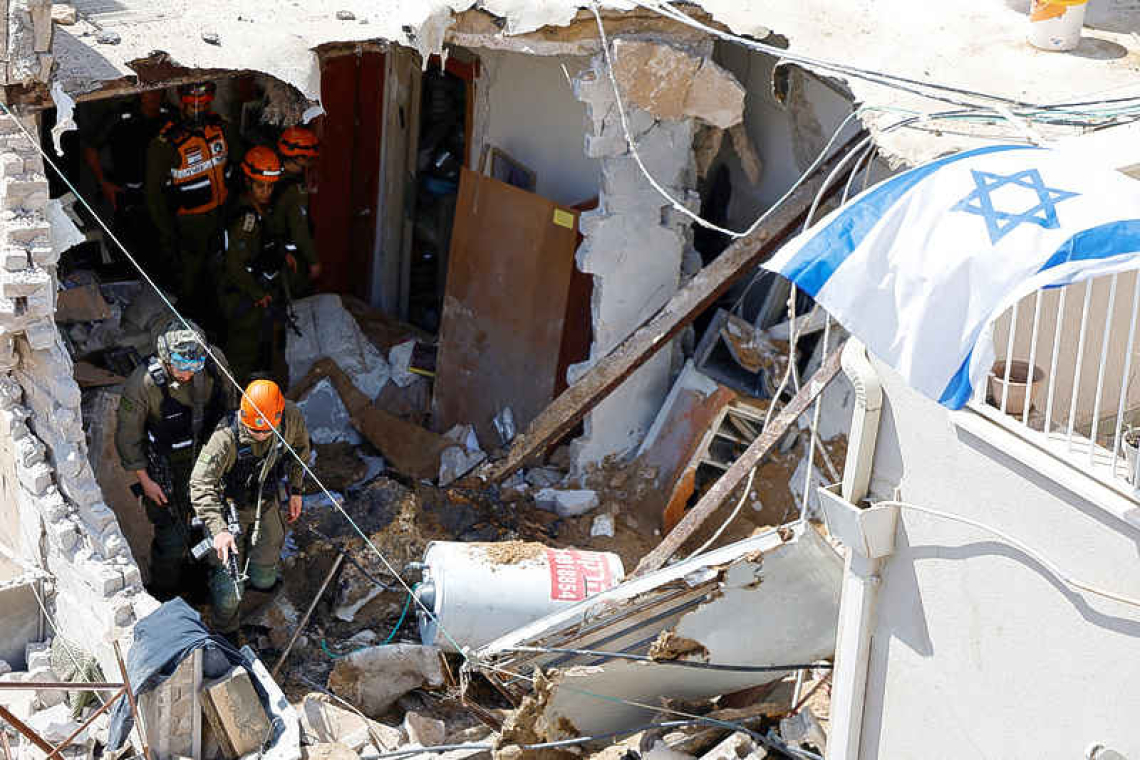
After more than three weeks of heavy U.S. and Israeli bombardment that officials say has sharply reduced Iran’s missile capabilities, Tehran continues to demonstrate the ability to carry out attacks. Air raid sirens sounded across parts of northern and central Israel, including in Tel Aviv, and the occupied West Bank overnight on Sunday, warning of incoming missiles from Iran.
Hours earlier, the Israeli military said it had completed a wave of strikes on Tehran that targeted a military base as well as weapons production and storage facilities.
Trump issued his warning Saturday evening, less than a day after signalling the United States might be considering winding down the conflict, even as U.S. Marines and heavy landing craft are heading to the region. “If Iran’s fuel and energy infrastructure is attacked by the enemy, all energy infrastructure, as well as information technology...and water desalination facilities, belonging to the US and the regime in the region will be targeted pursuant to previous warnings,” Iranian military spokesman Ebrahim Zolfaqari said, according to state media.
But while attacks on electricity could hurt Iran, they would be potentially catastrophic for its Gulf neighbours, which consume around five times as much power per capita. Electricity makes their gleaming desert cities habitable, in part by powering the desalination plants that produce 100% of the water consumed in Bahrain and Qatar. Such plants use seawater to meet more than 80% of drinking water needs in the United Arab Emirates, and 50% of the water supply in Saudi Arabia.
Iran's Parliament Speaker Mohammad Baqer Qalibaf doubled down, writing on X that critical infrastructure and energy facilities in the Middle East could be "irreversibly destroyed" should Iranian power plants be attacked.
Iran's powerful Revolutionary Guards said it would also mean the shipping lane where a fifth of global oil and liquefied natural gas normally transits along Iran's southern coast would remain shut."The Strait of Hormuz will be completely closed and will not be opened until our destroyed power plants are rebuilt," the Guards said in a statement.
More than 2,000 people have been killed during the war the U.S. and Israel launched on February 28, which has upended markets, spiked fuel costs, fuelled global inflation fears and convulsed the postwar Western alliance.
"President Trump's threat has now placed a 48-hour ticking time bomb of elevated uncertainty over markets," said IG market analyst Tony Sycamore, who expects stock markets to fall when they reopen on Monday.Oil prices jumped on Friday, ending the day at their highest in nearly four years.
Iranian attacks have effectively closed the Strait of Hormuz, causing the worst oil crisis since the 1970s. Its near-closure sent European gas prices surging as much as 35% last week."If Iran doesn't FULLY OPEN, WITHOUT THREAT, the Strait of Hormuz, within 48 HOURS from this exact point in time, the United States of America will hit and obliterate their various POWER PLANTS, STARTING WITH THE BIGGEST ONE FIRST!" Trump posted on social media around 7:45 p.m. EDT on Saturday.
Iranian media quoted the country's representative to the International Maritime Organisation as saying the strait remains open to all shipping except vessels linked to "Iran's enemies". Ali Mousavi said passage through the waterway was possible by coordinating security and safety arrangements with Tehran. Ship-tracking data shows some vessels, such as Indian-flagged ships and a Pakistani oil tanker, have negotiated safe passage through the strait. But the vast majority of ships have remained holed up inside.
The United States and Israel say they have seriously degraded Iran's ability to project force beyond its borders with their three weeks of intensive air strikes. But Tehran fired its first known long-range ballistic missiles with a range of 4,000 km (2,500 miles) on Friday towards a U.S.-British Indian Ocean military base, expanding the risk of attacks beyond the Middle East.
Early on Sunday, Iranian strikes on two southern Israeli towns injured dozens in what an Israeli hospital described as a major casuality event. The towns were located close to Israel's secretive nuclear reactor and a number of military installations, including Nevatim Air Base, one of the country's largest.