





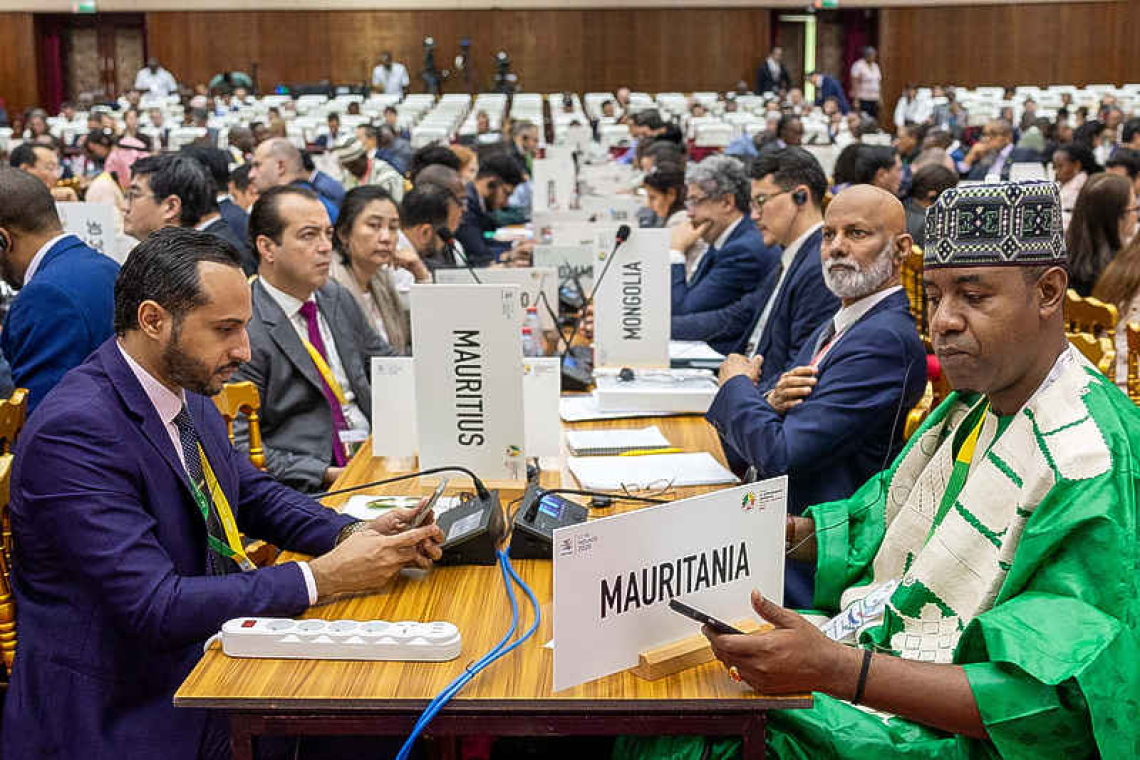
YAOUNDE--World Trade Organization talks ended deadlocked on Monday as Brazil blocked a bid by the United States and other countries to secure an extension to a moratorium on customs duties for electronic transmissions like digital downloads, diplomats said.
The talks at a WTO meeting in Cameroon were seeking to bridge differences over extending the e-commerce moratorium, and agree to a plan for broader reform of the organisation. Ministers there had been trying to extend the moratorium, which is due to expire this month, by four years plus an additional buffer year to 2031, diplomats said.
Talks would now continue in Geneva after the impasse on prolonging the moratorium, said the WTO conference chair Luc Magloire Mbarga Atangana.
In what is seen as a test for the WTO's relevance, after a year of trade turmoil and major disruptions due to the Iran war, diplomats said ministers got stuck on extending the moratorium beyond more than two years following objections from Brazil.Diplomats had been working throughout Sunday to close the gaps between Brazil, which had originally sought a two year extension, and the U.S. which wanted a permanent extension, by drafting a proposed document of a four year extension with a one year sunset buffer, concluding in 2031.
Brazil later proposed a four year extension, with a review clause half way through, however, that was not supported, two diplomats told Reuters.
A U.S. official said Brazil had opposed a near-consensus document."It's not U.S. vs Brazil. It's Brazil and Turkey v 164 members," said a U.S. official.
"The U.S. wanted the sky," a Brazilian diplomat told Reuters, adding that Brazil wanted to remain prudent in renewing the moratorium by two years, like in previous ministerial conferences.
"In four or five years' time, no one will be able to predict what e-commerce will be about, and this has an influence on a number of countries' policies," they added.
Another diplomat said that U.S. Trade Representative Jamieson Greer made delegates "uncomfortable" as he suggested there "would be consequences," if the U.S. did not get a long-term extension to the moratorium.
Business leaders say an extension is vital to guarantee predictability, fearing duties could otherwise be introduced. It is also seen as key to securing U.S. support for the WTO.
After initial resistance from some WTO members, a new draft of the reform roadmap, seen by Reuters, that provides a timeline for progress and sets out the key issues to address was close to being agreed, three diplomats said. Those include improving decision-making in a consensus-based system that has long been stymied by a few countries, and the trade benefits extended to developing countries.
A declaration on reform will also be sent to Geneva for further discussion, the WTO conference chair said.