





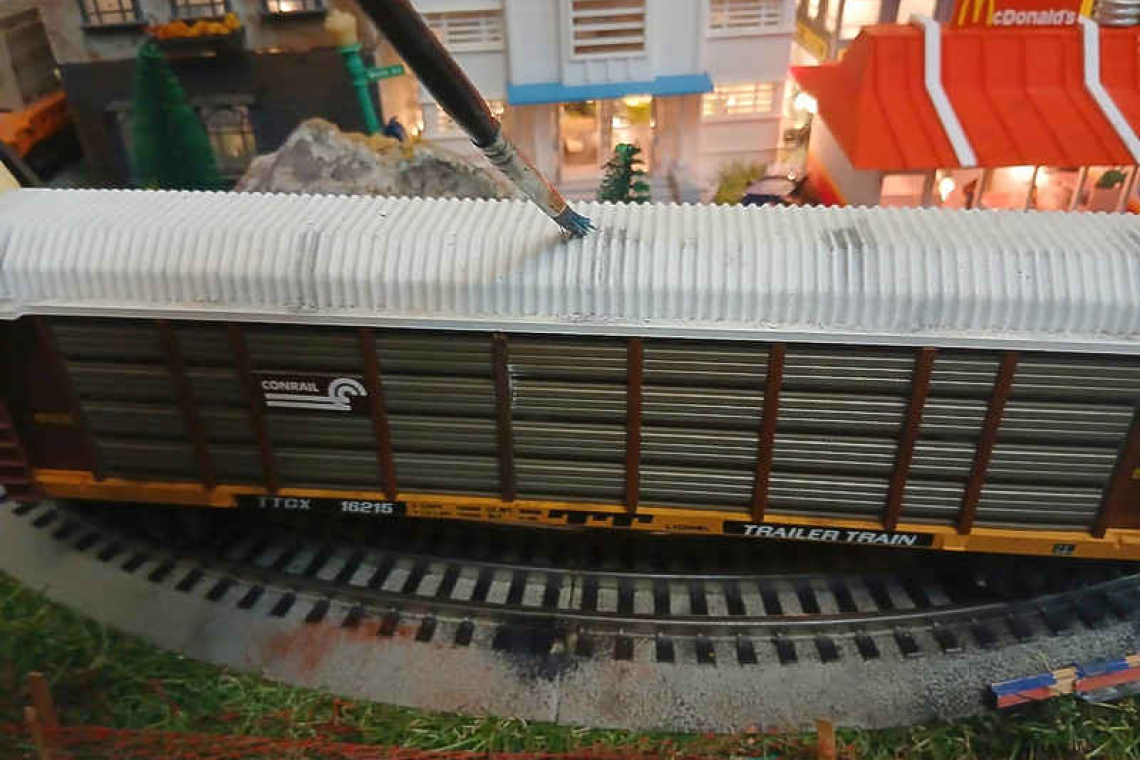
Have you ever seen a little boy with a new toy truck? First thing he does is to take it outside, find a mud puddle, sit down and start playing. Within minutes, the shiny toy is dirty. It looks worn and used. The boy seems completely happy and he too is covered in dirt.
Well, there seems to be little difference between a little boy with a toy truck and a grown man with a train set. While the man will not sit in a mud puddle, he takes paint and – listen to this – he purposely makes the train look old. He calls it weathering.
Whole books have been written and sold on how to make a shiny, new, toy train look old and used. Don’t believe me? Go to Amazon and search model train weathering. Presto, 15 books appear, followed by a selection of powders, paints and brushes to aid in your weathering adventure.
Now go to YouTube and search weather model trains. Yes, sir, jackpot! More than a dozen videos on how to make new trains look old – there is even one guy who uses a pencil to weather his trains. And, get this: The watered-down paint the modellers use to make everything look old is called “washes”. Yes, grown men wash their trains with watered-down paint to make them look realistic – that is code for “old and used.”
Now I must admit that as a modeller, I too have fallen into the trap of making new, right-out-of-the-box trains look a little old or at least used. I drip a little thinned brown paint on the roof and let it run down the sides. I dab some brown paint on the door hinges, ladder and even hand brake wheel. I also use a bit of sandpaper on the side of the car to simulate wear as the sliding box car door opens and closes. Around the wheels, I add the brown rust as well as some thicker black paint to simulate grease. Once applied, I spin the wheels a bit to get a rolling effect.
Please be careful when doing this so as to not shoot paint all over the place. But don’t worry; paint is not your only option; you can also use pastel chalks and achieve remarkable results. Just take a stick of chalk, rub it against sand paper to make a fine powder, then use a brush to lightly brush the dust onto the car you want to look older. Pay attention to areas like the doors, hinges and couplers, where the car gets a lot of use.
Now once you like the look of the pastels on the car, it is advisable to spray the car with clear coat; otherwise, the pastel will rub off on your hands every time you pick up the car. Also, look at photos of real trains and see where the dirt accumulates. Now, realize that passenger cars are cleaned often while freight cars are rarely washed and only serviced when broken.
Until next time, I hope to see your weathered cars rolling around the tracks looking well used.