





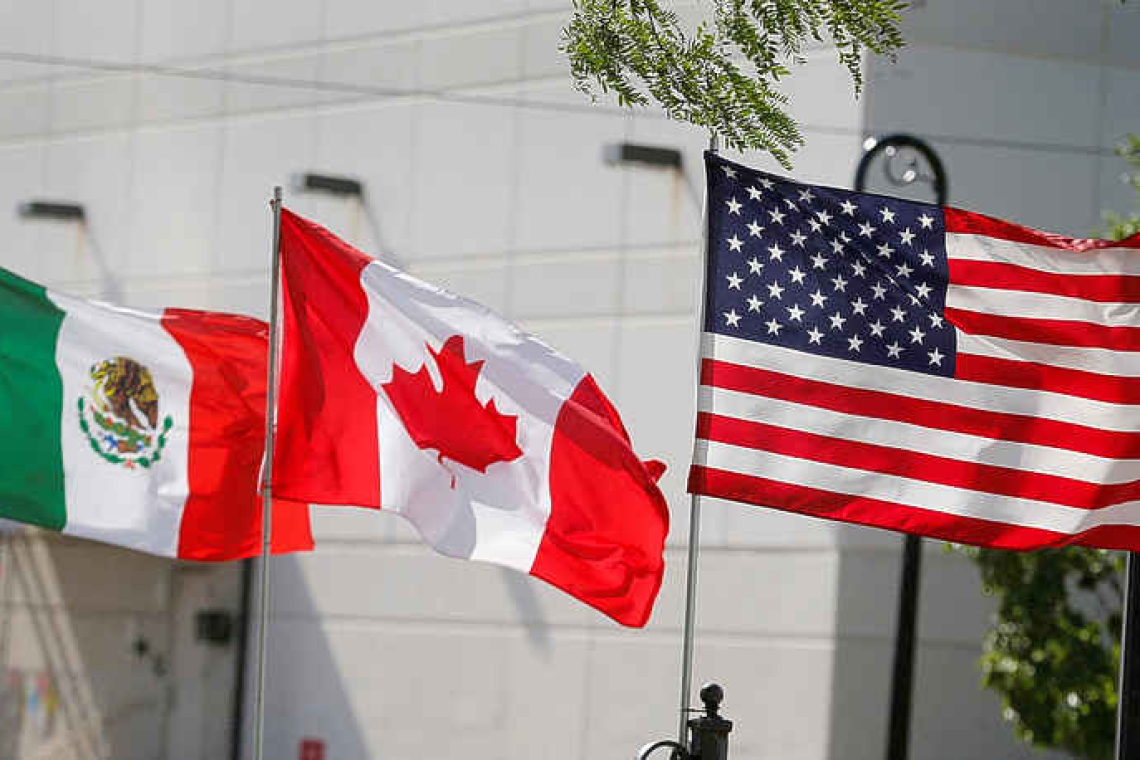
WASHINGTON--The Trump administration on Wednesday declined to extend the U.S.-Mexico-Canada Agreement, starting a decade-long clock to wind down the trade deal as it seeks changes to try to reshore manufacturing jobs and reduce U.S. trade deficits with its North American neighbors.
The decision, announced after a six-year review of the North American free trade zone, keeps the agreement in place for another 10 years with annual reviews before it expires, unless the three countries agree to renew it with changes.
"The United States did not agree to renew the USMCA in its current form," U.S. Trade Representative Jamieson Greer said in a statement. "As a result, the USMCA is not renewed. The United States will continue to engage with Mexico and Canada to address the agreement's shortcomings and our trade deficits with these countries."
Greer said the U.S. will proceed with a USMCA bilateral negotiating round scheduled with Mexico during the week of July 20. A senior administration official said that those talks in Mexico City would focus on strengthening North American rules of origin for autos and other industrial goods and economic security to keep other countries, including China, from benefiting from USMCA access.
Mexican Economy Minister Marcelo Ebrard told a news conference that Mexico wanted to help address U.S. concerns about job losses and trade deficits, but the U.S. and Mexico remain divided over U.S. demands for stricter regional automotive rules of origin.
"There is no difference that I can identify between Mexico, the United States and Canada that is so big that we cannot resolve it," said Ebrard, who participated in a virtual meeting on Wednesday with Greer and Dominic LeBlanc, the Canadian minister responsible for U.S.-Canada trade.
"We wouldn't allow our (auto) industry to be at a disadvantage," Ebrard said. "I'd say that has been the main point of discussion with the United States in all these talks: protecting our automotive industry."
LeBlanc added that Canada would continue to work to address President Donald Trump's tariffs on Canadian steel, aluminum, autos and lumber. "We agreed on the importance of continuing our discussions and identifying ways to ensure trade and investment frameworks between Canada, the United States and Mexico continue to support North American prosperity and competitiveness," he said.
The USMCA was negotiated by Trump's first administration to strengthen the 1994 North American Free Trade Agreement and underpins a highly integrated regional economy with some $1.6 trillion in annual trilateral trade. The U.S. decision was widely expected, as Greer said that more time was needed to address problems with USMCA, including persistent and growing U.S. goods trade deficits with Mexico and Canada that reached $197 billion and $48.3 billion in 2025, respectively.
Much of the deficit with Canada is driven by oil imports, while the deficit with Mexico has grown as companies shifted supply chains away from China in response to U.S. tariffs on Chinese goods.
The senior Trump administration official told reporters that it was still in U.S. interests to come to agreement on possibly separate trade "protocols" with Mexico and Canada "as quickly as possible," but did not provide an expected time frame. But the official added that Trump, who has already changed the USMCA relationship by imposing tariffs of 25% on Mexican and Canadian autos, 50% on metals, and 10% on lumber, is likely to remain skeptical of any deal.