





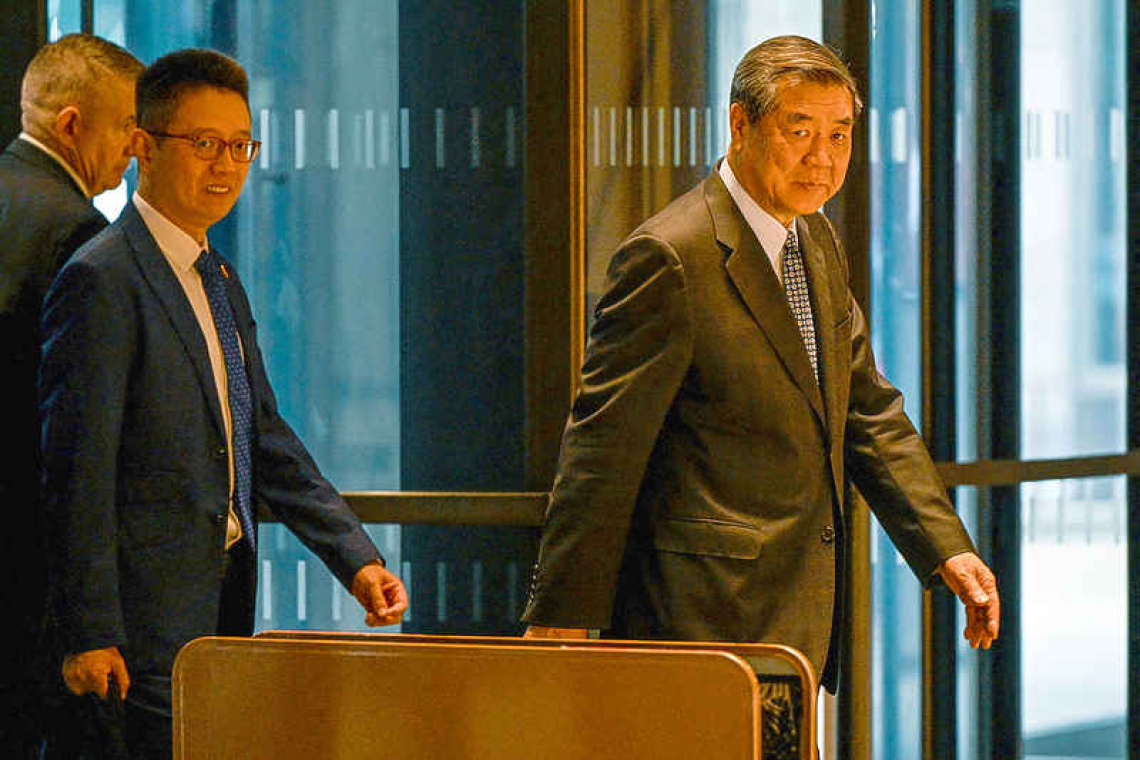
NEW YORK--US Treasury Secretary Scott Bessent and Chinese Vice Premier He Lifeng concluded talks in New York on Sunday with the US side proposing a new AI safety notification mechanism for US President Donald Trump and Chinese President Xi Jinping to consider at their summit this week.
Bessent told reporters that the two sides discussed setting up a new US-China AI dialogue, with a particular emphasis on national security concerns with a notification system for common goals and common threats that would cover AI-related incidents that rise to a national security level.
"We think that, just like with any cross-border activity, that moving from opaque to more transparency between the number one and the number two AI powers in the world is very important," Bessent said at the conclusion of the talks.
Trump and Xi first discussed potential consultations on AI development in May in Beijing, but that forum was never formalized.
The Chinese response to the US proposal was unclear. Vice Premier He and China's chief trade negotiator Li Chenggang left the talks at JPMorgan Chase headquarters in New York without speaking to media.
US Trade Representative Jamieson Greer said US export controls on sophisticated AI chips and semiconductor manufacturing equipment were not on the agenda for the AI mechanism talks. Greer added that Sunday's discussions would prepare the groundwork for a "successful summit" between Trump and Xi next Thursday and Friday in Washington.
"These are the two most powerful countries on earth, whether it's in trade or AI, and it's imperative that they're able to work together. It doesn't mean there aren't challenges in the relationship. A lot of these are obvious," Greer said.
The meeting covered other key topics, including plans to "operationalize" a process agreed in May for each side to identify potential tariff cuts on non-strategic goods, called the "Board of Trade."
Greer did not identify a specific list of products that could see such reductions, but he repeated his desire for a "relatively small subset of American and Chinese goods that can be traded in a balanced way, that are non-sensitive." These would be considered as "a class unto themselves."
Potential candidates among Chinese exports include "consumer goods, low-tech items," he said, while US exports for this treatment could include energy, agricultural goods and medical devices, he added.