





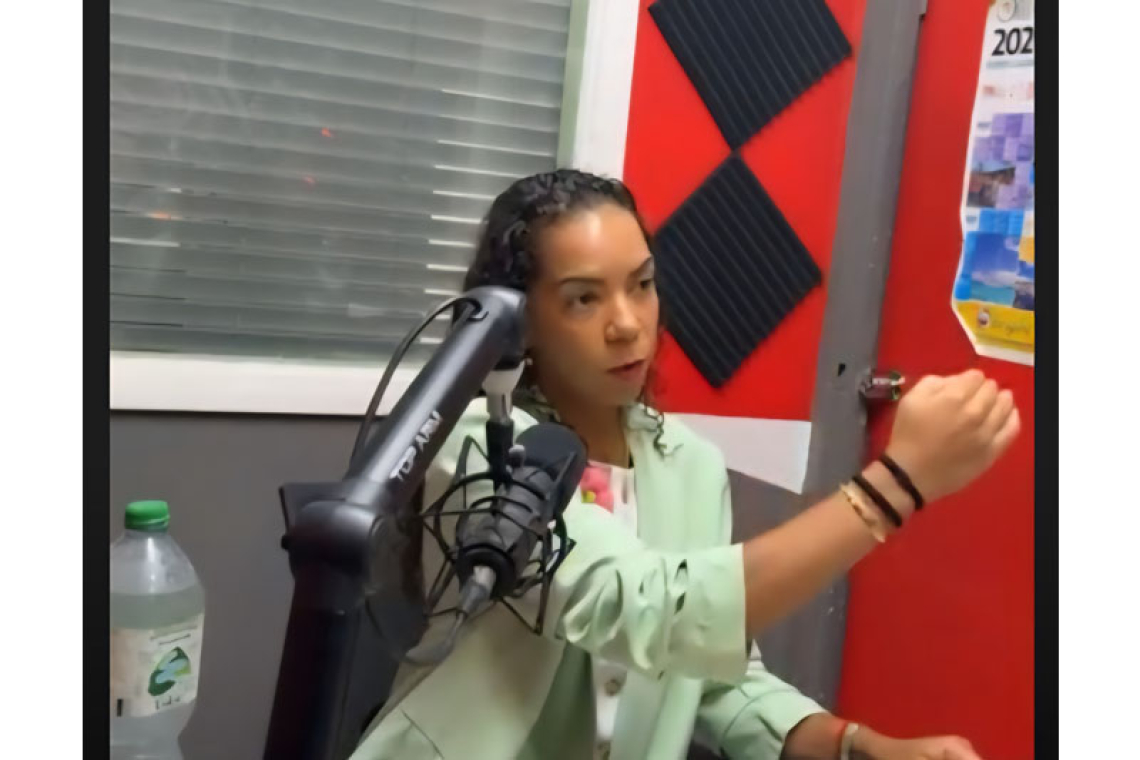
PHILIPSBURG--Party for Progress (PFP) Member of Parliament (MP) Ludmila de Weever has accused authorities of handling the cannabis concession process in a “sneaky” manner and questioned why she has been denied access to documents related to a 10-year concession granted to Native Nations Cannabis SXM (NNCSXM).
Speaking on the Breakfast Lounge with Lady Grace programme on 102.7 FM on Friday, De Weever said her concerns are not about opposing cannabis legalization. Instead, she questioned whether government committed St Maarten to a major concession without first giving Parliament the opportunity to properly examine the financial and economic benefits of the agreement.
De Weever said the agreement with Native Nations gives the company exclusivity and allows it to recover its investment before other parties can potentially be given licences.
She argued that this means government has already committed the country to a concession covering the future cannabis industry, while Parliament still has to decide whether to approve the legislation.
According to De Weever, Parliament should be able to examine the terms of a concession and determine what is in it for the country before such an agreement is made.
She questioned where the business plan and financial model are and said Parliament’s ability to make decisions is affected when a concession has already been granted.
De Weever also said she requested documentation related to the agreement but was told that she could not receive it because it was confidential. She said the Minister of Tourism, Economic Affairs, Transport and Telecommunication (TEATT) later offered a closed-door meeting.
“What are you hiding?”
De Weever said she does not believe the Minister of TEATT had the legal authority to handle the process in the way it was handled. She said she has continued with her motion during the budget debate on Thursday because Parliament has multiple means of obtaining information and should have access to the documentation needed to assess the agreement.
She said she is trying to protect the country’s money and interests. De Weever also questioned the use of a Request for Proposals (RfP) process, arguing that if government is granting a concession, she believes it should be subject to bidding. De Weever maintained that Parliament must be able to properly examine the terms and financial implications of the concession before approving the legislation.
She said she intends to continue pursuing information about the agreement and the process behind it.
Background information presented to Parliament back in April of this year by NNCSXM representative Clifton Brown stated that the 10-year concession was included in the original RfP and was not added after Native Nations won the bid.
Brown told Parliament’s Committee for Agriculture, Fishing and Animal Husbandry (CAFAH) that the RfP was issued on September 13, 2022, and explicitly allowed bidders to propose continued involvement in the cannabis industry, including concession requests.
Brown said Native Nations was selected following an evaluation by a government-appointed committee and that the agreement that followed was the result of that procurement process.
According to Brown, the agreement gives Native Nations the right to operate across the cannabis supply chain for 10 years, subject to compliance with Sint Maarten law, and includes exclusive import rights during the preparatory phase.
Brown also said the government had requested a partner that could help establish the industry and remain involved in it.