





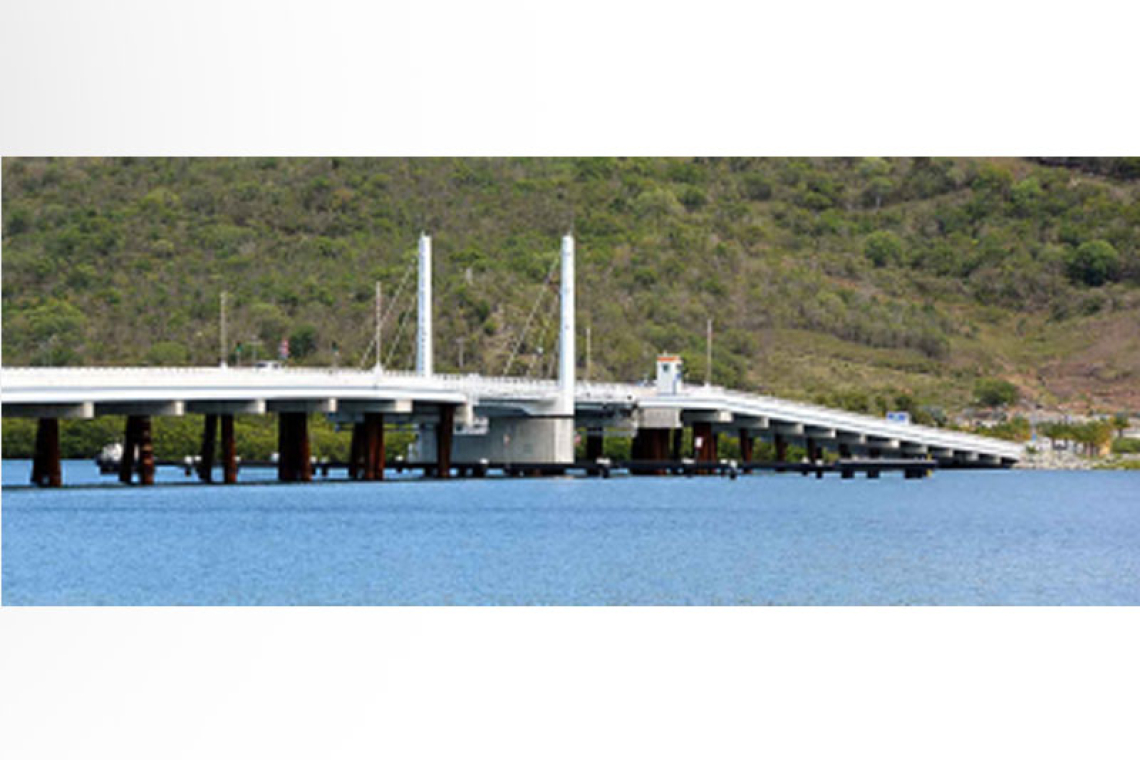
ZWOLLE / PHILIPSBURG--Two subsidiaries of the Dutch construction group VolkerWessels have been fined a combined 480,000 euros for bribing former Minister of Public Housing, Spatial Planning, Environment and Infrastructure VROMI Theo Heyliger in connection with the awarding of the contract for the Simpson Bay Causeway Bridge.
In its judgment, the Rechtbank Overijssel concluded that the companies deliberately arranged payments to influence Heyliger’s decision-making. The court described the conduct as “active bribery of a public official” and stated that the arrangement was “aimed at obtaining a competitive advantage in the awarding of a public contract.”
The subsidiaries involved – Volker Construction International (VCI) and Volker Stevin Caribbean (VSC) – made payments between 2009 and 2014 to a consultant [Ronald Maasdam, Ed.] who acted as intermediary. According to the verdict, these payments were not genuine consultancy fees but were intended, at least in part, to benefit Heyliger, who at the time served as Minister of VROMI.
“The court finds that the payments were made with the intention that part of the funds would be passed on to the minister,” the judges wrote. “In doing so, the companies knowingly accepted the significant risk that a bribe would be paid.”
Evidence presented during the proceedings showed that US $ 83,000 ultimately reached Heyliger. The money was delivered in cash, concealed between newspapers and construction drawings.
The court noted that although the amount actually paid was $83,000, Heyliger had expected substantially more – up to US $860,000 – under the broader understanding between the parties.
The judges emphasised that the companies were aware of Heyliger’s influential position within government. “The minister held a key portfolio and exercised decisive influence over the awarding of major infrastructure projects,” the court stated. “The defendants sought to secure his support in order to increase their chances of obtaining the contract.”
The Simpson Bay Causeway was one of the most significant public works projects on the island at the time, connecting key districts across the lagoon. Although formal procurement procedures were in place, the court found that Heyliger wielded substantial informal power over the final decision.
“It is evident that the defendants did not wish to rely solely on the outcome of a transparent tender procedure,” the verdict states. “By arranging payments through an intermediary, they sought to influence the minister’s conduct in office.”
Director liable
In addition to the corporate fines totalling 480,000 euros, a former director of the subsidiaries was personally fined 30,000 euros. The court concluded that he had given “effective leadership” to the bribery scheme.
According to the ruling, the director “was aware of the structure of the payments and played a decisive role in authorising and continuing them.” As such, he bore individual criminal responsibility under Dutch law.
The court stressed the seriousness of bribing a sitting minister in connection with a public infrastructure project. “Corruption of this nature undermines the integrity of public administration and damages trust in democratic institutions,” the judges wrote. “Public officials must be able to perform their duties without improper influence.”
The ruling further stated that corruption distorts fair competition. “Companies that refrain from bribery are placed at a disadvantage,” the court observed. “Such practices erode confidence in the fairness of public procurement processes.”
Although the Public Prosecution Service had sought a total fine of 525,000 euros against the companies, the court imposed a slightly lower amount. In contrast, the personal fine imposed on the former director exceeded the penalty requested by prosecutors.
Decade-long
investigation
In determining the sanctions, the judges took into account the duration of the scheme, which spanned several years, as well as the time that has passed since the offences were committed. “The facts date back more than a decade,” the court acknowledged, but added that “the seriousness of the offences justifies the imposition of substantial financial penalties.”
The case is closely linked to the earlier prosecution of Heyliger himself. In 2020, he was sentenced to five years’ imprisonment for corruption and money laundering. The present judgment focuses on the corporate side of the bribery arrangement.
Confiscation
proceedings
Beyond the fines imposed in the criminal proceedings, the financial consequences for the subsidiaries may not yet be over. The Public Prosecution Service has initiated separate confiscation proceedings seeking more than 1.6 million euros, which prosecutors argue represents profits derived from criminal conduct.
In such proceedings, the court will determine whether unlawful gains were obtained and, if so, whether they must be repaid to the state.
Following the verdict, VolkerWessels indicated that it would study the judgment before issuing a substantive response. The former director did not provide detailed comment immediately after the ruling. It remains unclear whether an appeal will be filed.