





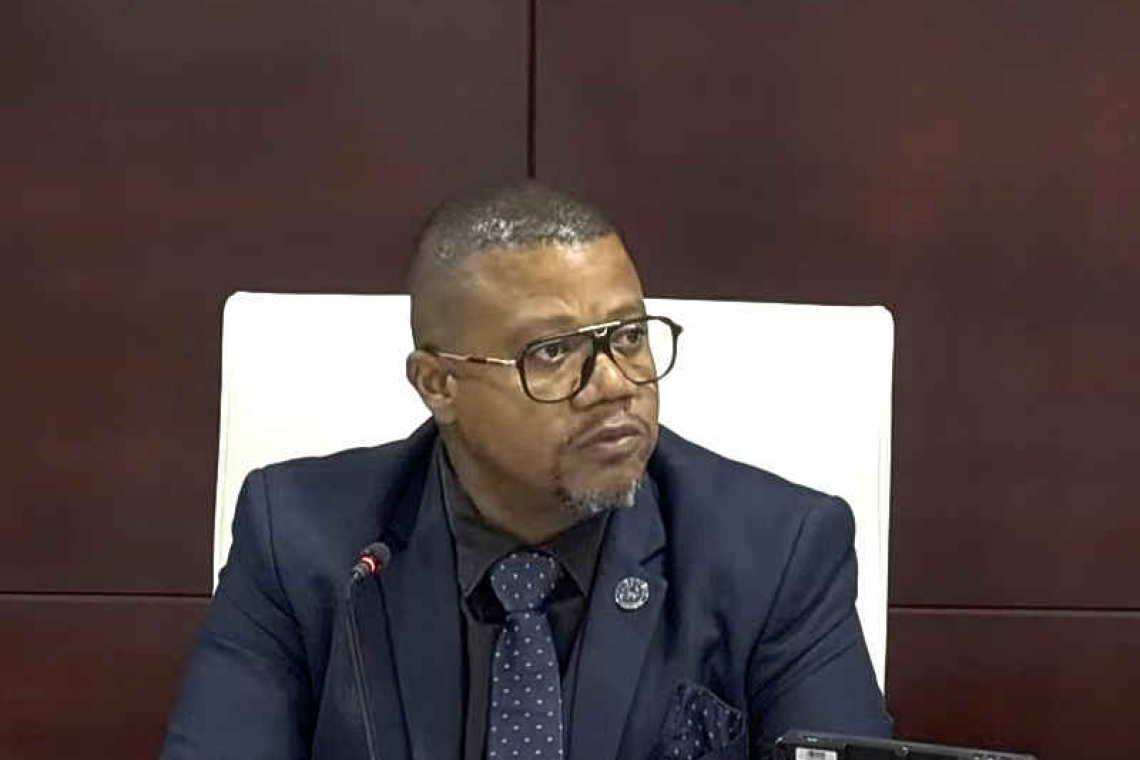
MP Francisco Lacroes.
PHILIPSBURG--United People’s (UP) Member of Parliament (MP) Francisco Lacroes on Wednesday urged the government to examine the Model Law on Sustainable Marine-Coastal Community Tourism when preparing zoning and conservation policies.
He said coastal territories remain undervalued and insufficiently protected in many cases. Lacroes made the call during Parliament’s Committee of Parlatino Matters meeting, which he chaired. He was among several MPs presenting reports on Parlatino meetings attended during the second trimester of 2025. The presentations follow recommendations from the General Audit Chamber that members submit post-travel reports to ensure transparency, accountability and effectiveness.
Addressing colleagues, Lacroes said international experience shows tourism must contribute simultaneously to economic, social and environmental development. He noted that responsibly managed community-based tourism strengthens local economies, preserves cultural identity and protects ecosystems, adding that sustainable tourism “is not a luxury – it is a necessity for long-term prosperity.”
He explained that the Model Law, developed by Parlatino’s Environment and Tourism Committee, provides a comprehensive legislative framework in eight chapters covering institutional strengthening, land-use planning and zoning, community participation, integration with sustainable fisheries and aquaculture, environmental conservation and climate resilience, financing mechanisms, monitoring systems and phased implementation.
Lacroes highlighted responsible land-use planning as a key pillar, calling for clear coastal zoning to identify areas suitable for community tourism, protect exclusion zones and regulate mixed-use areas, so tourism growth does not exceed environmental capacity.
He also stressed the importance of legal certainty for marine-coastal communities through harmonised regulations that define access to land and water and protect community rights. The model further promotes strengthening community tourism organisations and investing in training in conservation, entrepreneurship and innovation, so local populations become active managers of tourism.
The MP noted the framework encourages alignment between tourism and sustainable fisheries and aquaculture, supports artisanal fishing traditions, and promotes traceability and geospatial monitoring of industrial vessels.
Environmental protection is embedded throughout the proposal, including environmental impact assessments, vessel regulations, climate-resilient infrastructure standards, strict wastewater management, prohibition of untreated wastewater discharge, and reduction of single-use plastics.
The model also proposes financing and incentive mechanisms such as infrastructure funding, capacity-building support, ecosystem restoration projects including mangrove and coral reef rehabilitation, access to credit and tax incentives for certified community ventures, with emphasis on transparency and equity.
Lacroes said the law establishes measurable monitoring and evaluation systems with community participation and allows phased implementation based on national capacity.
He said the framework offers a forward-looking regional approach that addresses climate change, economic vulnerability and community participation, noting that for coastal and island economies, sustainable marine-coastal tourism represents economic security, environmental stewardship and intergenerational responsibility.