





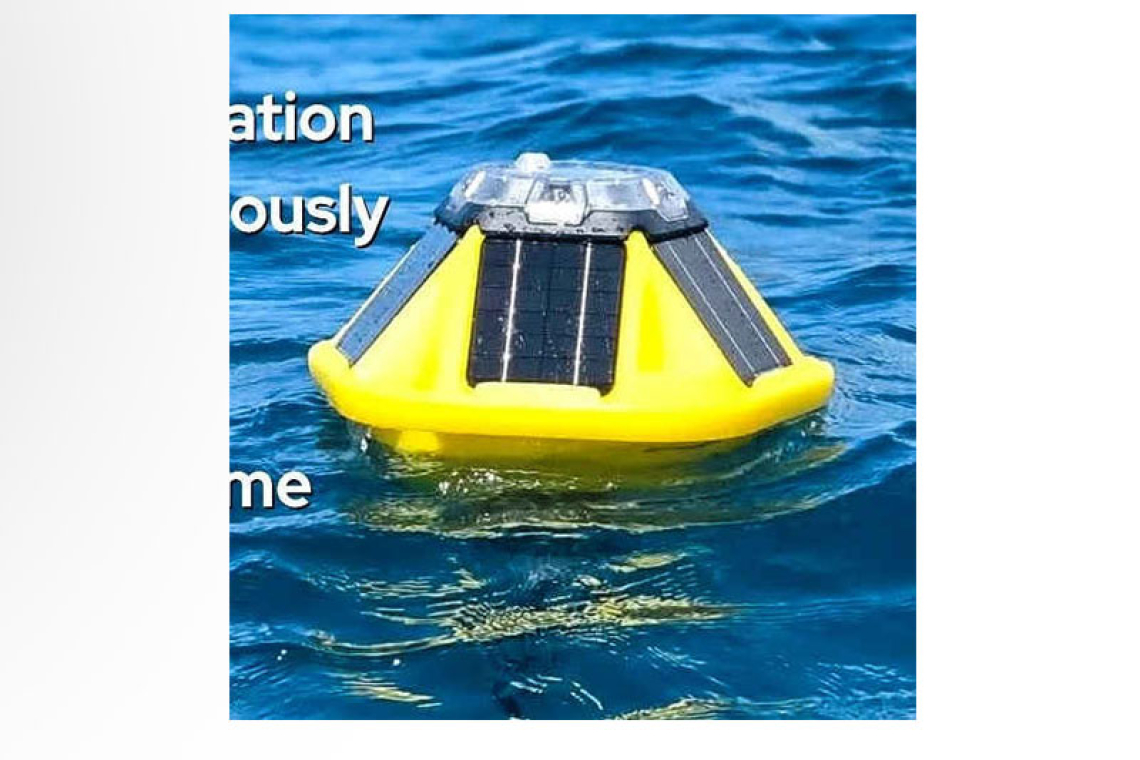
A SOFAR Spotter Buoy.
ANGUILLA--The Department of Disaster Management, with support from the Maritime Unit and the Fisheries Department, has announced the deployment of three SOFAR Spotter Buoys in Anguilla dur-ing the week of October 19–23, 2026. This deployment forms part of the Caribbean Institute for Me-teorology and Hydrology (CIMH) RCCAME Project, which is expanding marine observation capabilities across the Caribbean. The buoys are being provided to Anguilla as a donation through this regional initiative.
The buoys will collect and transmit near-real-time ocean data, including wave and swell conditions, helping to strengthen marine forecasting, improve monitoring of coastal and marine hazards, and support informed decision-making. The observations will benefit disaster preparedness and response, maritime transportation, fisheries, tourism, and coastal management, contributing to a safer and more resilient Anguilla.
Trevor Queeley, Director of Disaster Management in Anguilla, welcomed the deployment as an important step towards improving marine forecasting, supporting coastal resilience and providing critical ocean data for national development and risk management.
“By working together and sharing this vital data, we are strengthening national preparedness, pro-tecting livelihoods, and building a safer and more resilient Anguilla for everyone,” he said.
The marine observation network forms one component of the RCCAME project, a 27 month initia-tive designed to enhance environmental monitoring, climate services, impact-based forecasting, and institutional capacity across the Caribbean. In addition to expanding marine observations, the project is strengthening air quality monitoring, advancing climate prediction, supporting climate and health research, and improving the region’s ability to anticipate, prepare for, and respond to environmental hazards.
Boaters are advised to keep some distance from the buoys when operating at sea, keep fishing gear, net lines and other equipment from the buoy and its mooring, and report if a buoy appears damaged, displaced or washed ashore. Also, boaters are not to moor to the buoy, cut or interfere with the mooring, swim too close to it, touch or remove it.