




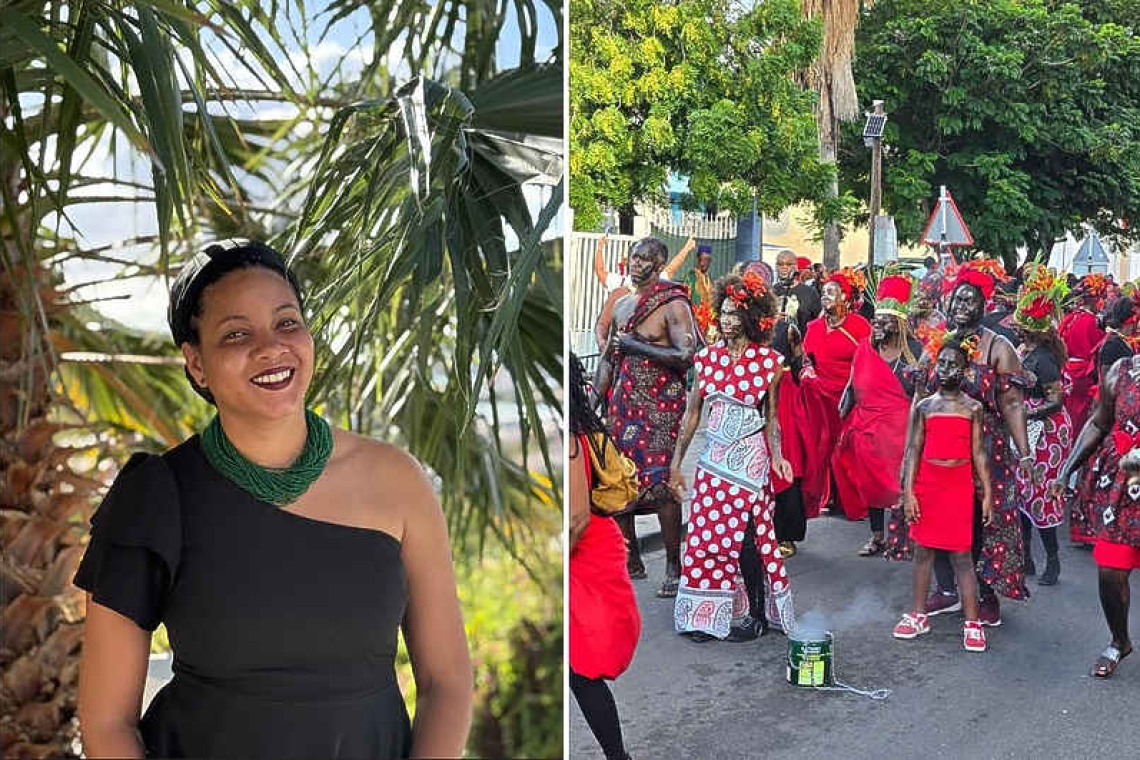
Iris Hakkens (left) aims to work at a senior level within United Nations organisations.
PHILIPSBURG--At 27, Iris Hakkens proudly describes herself as an “island girl” from St. Maarten. Driven by both academic goals and personal curiosity, she is researching Caribbean identity across the former Netherlands Antilles, travelling to Aruba and St. Maarten to explore how people in the region view community, culture and shared belonging within the Kingdom of the Netherlands.
Hakkens says her own background reflects the interconnected nature of Caribbean families. Raised on St. Maarten, she always names the island when asked where she is from, yet she also considers herself a child of the Kingdom. Her grandparents live in Aruba, her father is Dutch, and her mother was born in Aruba and also lived in Curaçao. “We have family everywhere, like many Caribbean people,” she explains.
Her academic path has not been without interruption. After moving to the Netherlands to pursue a bachelor’s degree in International Public Management, she returned to St. Maarten following the devastation caused by Hurricane Irma in 2017. What was intended to be a short stay turned into seven years of involvement in rebuilding efforts. She recalls feeling powerless while abroad and wanted to give back to the island that had shaped her.
Now back in Rotterdam, Hakkens is focused on completing her bachelor’s degree and hopes to continue with a master’s program in Management of International Social Challenges at Erasmus University. Her long-term ambition is to work at a senior level within United Nations organisations. Returning to student life has been an adjustment, she admits, as she balances academic responsibilities with memories of the independence and professional life she built during her years on Sint Maarten.
Her research into Caribbean identity emerged from an internship opportunity and developed into a broader personal mission. Hakkens believes identity plays a crucial role in shaping the region’s future and sees storytelling as part of a wider decolonisation process. Working alongside anthropologist Francio Guadeloupe, she conducted interviews across Aruba and St. Maarten, gathering perspectives from trade unionists, musicians, artists and community members about how connected the islands feel to one another.
One of her main observations is that older generations often experience a stronger sense of shared Caribbean identity. She attributes this to historical ties, when residents of the Windward Islands frequently travelled to Curaçao or Aruba for education or employment in the refinery sector. Today, those interactions occur less often, which she believes influences how younger generations relate to one another. Cultural differences are also reflected in music, she notes, with Curaçao and Aruba leaning more toward Latin influences while St. Maarten’s sound is shaped by French-Caribbean traditions.
Looking ahead, Hakkens envisions returning to St. Maarten to launch a sustainability-focused park that combines agriculture, culture and art, alongside a restaurant serving locally sourced food. For now, her priority is completing her studies and settling back into life in the Netherlands, while keeping her long-term dream firmly rooted in the Caribbean.