





Students will be taken on a journey.
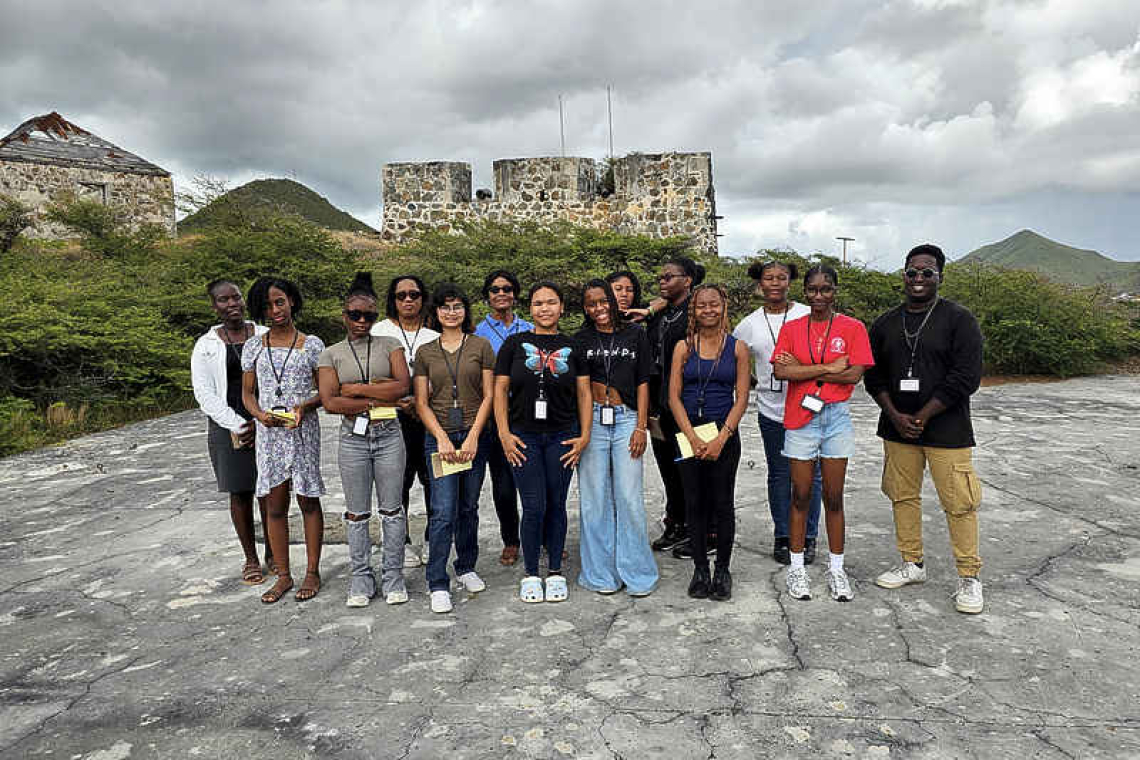
PHILIPSBURG--The St. Maarten Institute for Public Policy Studies (SIPPS) has launched a new education development project aimed at increasing public knowledge and awareness of St. Maarten’s colonial slavery past, including taking secondary school students on a field trip to historical enslavement sites across the island.
The initiative, sponsored by the Slavery Memorial Committee, seeks to cultivate a more informed society through public dialogue on the island’s history. As part of the project, a group of students participated in an exploration field trip on Saturday, March 28, visiting several significant locations tied to the history of enslavement.
Sites visited included Diamond Run Estate, Mary Fancy Estate, Ebenezer Plantation, Golden Rock Plantation, Industry Plantation, Cul-de-Sac Cemetery, Fort Amsterdam, the Salt Warehouse, Salt Factory, Bishop Hill, Belvedere Plantation, Union Farm Plantation, and Madam Estate. The tour was guided by historical and cultural heritage orator Jean-Marc Augusty, who educated students on the timeline and significance of these locations.
Participating schools included Milton Peters College HAVO/VWO, MAC Comprehensive Secondary Education, St. Maarten Academy VSBO, Learning Unlimited Preparatory School, and the St. Maarten Youth Council Association.
As part of the programme, students are encouraged to write and submit essays reflecting on how the field trip shaped their understanding of enslavement, as well as their perspective on the “spoke” about or offered atonement by the Dutch in addressing what is described as a “crime against humanity.” The essays will be reviewed by a panel, with the top three entries receiving prizes and special recognition.
The project will culminate in a public dialogue focused on St. Maarten’s Dutch-colonial slavery past, examining its effect, legacy, and continuing impact on present-day society. Discussions will also address atonement proposals aimed at righting the “crime against humanity” and exploring ways to build a more equitable future by overcoming systemic
inequalities rooted in slavery.