





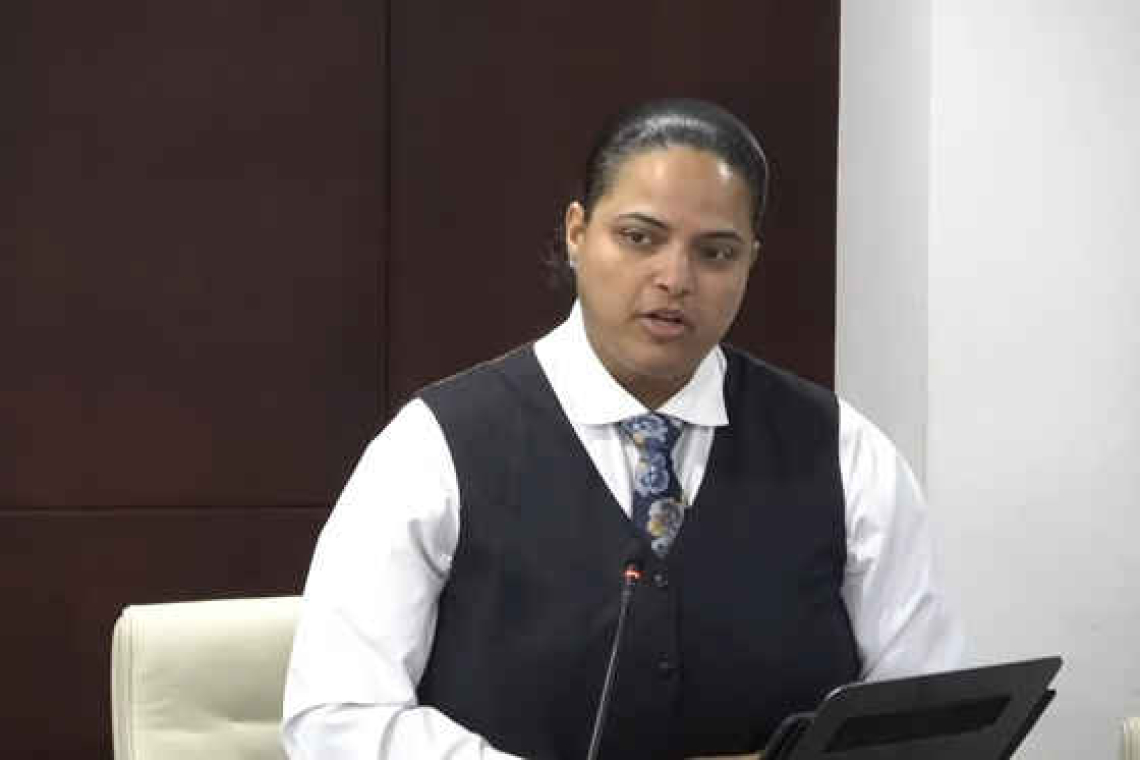
PHILIPSBURG--A multi-phased plan to address long-standing supply shortages and operational challenges in public schools is now being implemented, ECYS Minister Melissa Gumbs said during the continuation of a meeting of Parliament on Thursday.
Responding to questions from Members of Parliament (MPs), the Minister detailed immediate, short-term, and long-term measures aimed at stabilizing school operations and building a more reliable and efficient system.
Gumbs said urgent steps have already been taken to keep schools functioning safely, including emergency procurement orders to supply sanitation items and direct engagement with schools to resolve critical shortages. These actions were meant to ensure schools could continue operating in a safe and sanitary environment without disruption.
In the short term, the Ministry has tightened its internal processes by improving the review of supply requests to prevent shortages and is exploring an emergency payment process for critical goods and services to reduce delays and ensure continuity of supply.
The Ministry is working to improve procurement and supply chain efficiency through the reintroduction of bulk purchasing, which is expected to lower costs, improve availability, and reduce the risk of shortages. Coordination between schools and the Division of Public Education is also being strengthened to allow for more proactive planning and ordering.
At the structural level, broader reforms are being pursued, including improving the procure-to-pay system to address payment delays and rebuild supplier confidence, strengthening inventory management, and developing more structured procurement and maintenance frameworks. These efforts are being carried out amid budget constraints, including reduced 2026 allocations, existing inefficiencies in government payment systems, and the need to restore trust with suppliers affected by past delays.
“The objective is not merely to quiet a moment of criticism, but to build a better system,” the Minister stated.
While waiting for supplies to arrive, interim measures have been put in place to support schools. These include allowing school management to directly purchase essential items from local vendors in urgent situations, enabling supplementary supply requests outside the regular cycle, and maintaining close monitoring of stock levels through continuous communication with schools. Priority is being given to critical items, particularly those related to sanitation and health.
To address shortages of classroom materials, the Ministry has implemented a combination of immediate actions, including processing supply orders and approving emergency purchases, alongside short-term improvements in coordination and supplier engagement. Structural measures such as bulk procurement, data-driven planning using historical supply data, and enhanced inventory systems are also being developed to ensure consistent availability over time.
Gumbs explained that supply levels are tracked through both annual and ongoing systems. Schools participate in a yearly inventory exercise, typically conducted in November, to identify needs for the upcoming academic year, although the most recent cycle was delayed. In addition, sanitation supplies are monitored monthly through a replenishment system, while instructional materials are requested through a formal submission process. Oversight involves collaboration between school management, the Division of Public Education, finance teams, and division leadership.
While these systems provide a working framework, the Minister acknowledged that further improvements are needed to strengthen planning timelines and supply chain management.
Gumbs spoke of the importance of accurate public understanding of the situation. She said issues such as sanitation shortages are taken seriously and are not ignored, noting that a disruption experienced over a month ago was due to operational and financial constraints, including longstanding payment arrears, which were addressed once confirmed.
The Minister further highlighted that challenges within the education system go beyond immediate supply issues. Recent education assessments point to deeper systemic concerns that require sustained national attention and collaboration among policymakers, educators, parents, and the wider community.
She stressed that the current issues did not arise overnight and said the purpose of presenting historical context was to ensure transparency, not assign blame, while acknowledging her responsibility to address them.
“Context is not blame; context is necessary for solutions,” Gumbs said, adding that the Ministry remains focused on resolving the challenges in a timely, sustainable, and accountable manner.



