





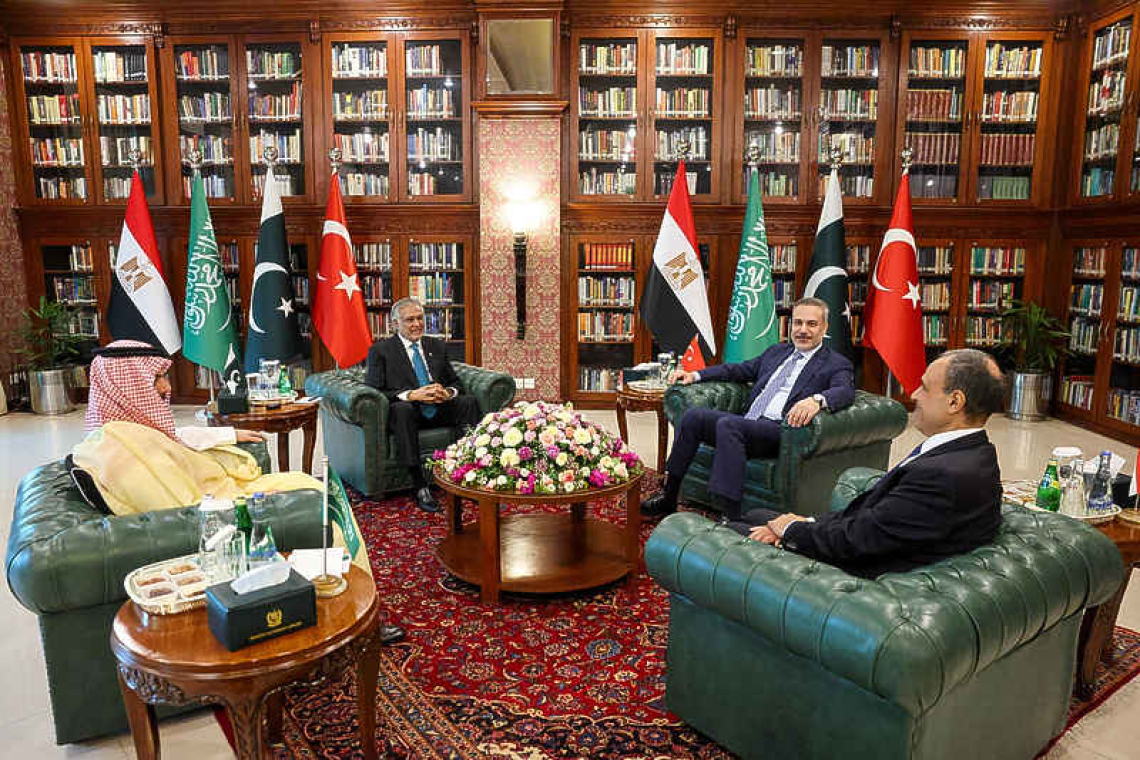
ISLAMABAD/TEL AVIV--Pakistan said on Sunday it was preparing to host "meaningful talks" to end the conflict over Iran in coming days even though Tehran said it is ready to respond if the United States moves in with soldiers on the ground.
Speaking after talks between regional foreign ministers, Pakistan's Foreign Minister Ishaq Dar said they had covered possible ways to bring an early and permanent end to the war in the region as well as potential U.S.-Iran talks in Islamabad.
"Pakistan will be honoured to host and facilitate meaningful talks between the two sides in coming days, for a comprehensive and lasting settlement of the ongoing conflict," he said. It was not immediately clear whether the U.S. and Iran had agreed to attend.
The U.S. State Department and the White House did not immediately respond to requests for comment on potential talks in Pakistan.
Complicating Pakistan's bid are the maximalist positions set out by the United States, Israel and Iran on what it would take to end the conflict. Iran's parliament speaker Mohammad Baqer Qalibaf earlier accused the U.S. of sending messages about possible negotiations while at the same time planning to send in troops, adding that Tehran was ready to respond if U.S. soldiers were deployed.
"As long as the Americans seek Iran's surrender, our response is that we will never accept humiliation," he said in a message to the nation.
Initial discussions between Pakistan, Saudi Arabia, Turkey and Egypt had focused on proposals to reopen the Strait of Hormuz to shipping, sources familiar with the matter said. Iran's effective blockade of oil and gas shipments through the strait since the U.S. and Israel began attacking the country on February 28 is spreading economic pain around the world.
As the conflict entered its second month, it showed no signs of slowing. Israel's military said it had launched over 140 air strikes on central and western Iran, including Tehran, over the 24 hours to Sunday evening, hitting ballistic missile launch sites and storage facilities, among other targets.
Iranian state media reported that strikes had hit Mehrabad airport and a petrochemical plant in the northern city of Tabriz.
The director of the World Health Organization said Israel's expanding military operations in southern Lebanon had resulted in the death of "yet another" health worker after 51 had already been killed. Israel says Iran-backed Hezbollah militants use medical facilities for cover, which the group denies.
A chemical plant in southern Israel near the city of Beer Sheva was hit by a missile or missile debris as Israel fended off multiple salvos from Iran, prompting official warnings to the public to stay away due to "hazardous materials". Another missile hit open ground near homes in Beer Sheva, located near several military bases, injuring 11 people.
The war has killed thousands of people and hit countries across the Middle East: major aluminium plants in Bahrain and the United Arab Emirates were damaged by air strikes over the weekend. The UAE is seeking reparations from Iran for attacks on civilians and vital facilities and guarantees to prevent any repetition, an adviser to the president said.
Yemen's Iran-aligned Houthis joined the conflict on Saturday, launching their first attacks on Israel and raising the prospect they could target and thus block a second key shipping route, the Bab el-Mandeb Strait. Israeli authorities said on Sunday that they had intercepted two drones launched from Yemen.
Washington has dispatched thousands of Marines to the Middle East, with the first of two contingents arriving on Friday aboard an amphibious assault ship, the U.S. military has said.The Washington Post quoted U.S. officials as saying the Pentagon was preparing for weeks of ground operations in Iran, adding that it was not yet clear if President Donald Trump would approve such plans. Reuters has reported that the Pentagon has considered military options that could include ground forces.