





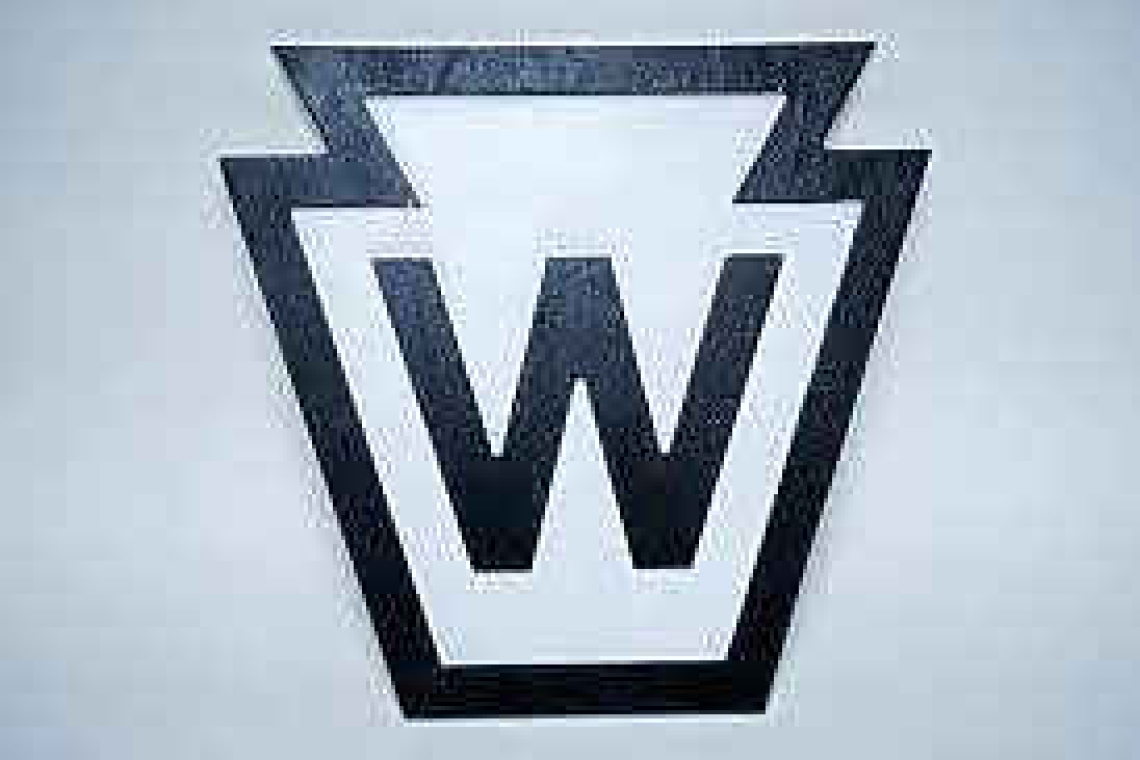
Have you ever seen a capital “W” on a sign or pole near a railroad crossing? The “W” stands for Whistle. Simply put, the “W” tells the engineer to blow his whistle as he approaches a station or road crossing. A whistle stop refers to a small, unscheduled railway station where trains stop only upon request.
Traditionally, a train signals with a few shot blasts of the whistle when approaching the station. Then if passengers are waiting to be picked up, the station whistles back or uses a red marker to signal the stop if no whistle is available.
Politicians have coined the phrase to describe a brief campaign visit to small towns. The term originates from the railroad practice where a train would blast its whistle to announce its approach to a small station. Traditionally, a wooden or metal post, often painted white, features a large letter “W” to tell the engine to blow the whistle.
Whistle posts are among the earliest forms of railroad signalling and are still in use today. Wooden or metal posts were traditionally installed about one-quarter mile in advance of a public crossing.
The first presidential candidate to give a speech from the back of a train was William Henry Harrison in 1836. Others like Harry S. Truman did a few whistle stop rallies in 1948, but it was
Theodore Roosevelt, who saw the real potential of whistle stops and went all in. In one campaign, Roosevelt made 480 whistle stops in 23 states. Each stop only lasted 10 to 20 minutes, but the endeavour paid off – of the 23 states visited, 18 swung his way.
Since the first whistle stop, every U.S. president – except Warren G. Harding, Calvin Coolidge, and Donald Trump – has used the private railcar tour to connect with voters in small-town America. It is said a whistle stop campaign handed Harry S. Truman the presidency in 1948. Truman was elected Vice President in 1944. Just 82 days into the term, President Franklin Roosevelt died of a heart attack.
Truman faced a lot of challenges as America stopped war time production and tried to return to peace while still helping rebuild Europe. By 1948, Truman’s approval rating dropped from 80 to just 35 percent. His opponent New York Governor Thomas E. Dewey was considered a shoe in. Pollsters even stopped polling as Dewey had such a large lead. Truman decided to do not one but three whistles stop trips. The campaign train ran from summer to fall of 1948. It featured three trips, including a cross-country route to California, a six-day run through the Midwest, and a 10-day journey through the population centres of the Northeast.
Truman was a true craftsman. We told the crowds the Republican Congress did nothing for the common man. He went out of his way to tailor each speech to the area he was in. He talked directly to the people about their problems and often mentioned their hometown events.
Soon, large crowds met him at each whistle stop. If someone yelled at him during a speech, he would pause and answer back. The chant soon became: “Give ‘em hell, Harry!” Truman travelled 31,000 miles and made 352 speeches – many of them to voters in cities and towns most Americans had never heard of. When he returned home to Missouri on October 31, he was still behind in the polls.
In a final appeal to the electorate, Truman wrote, “From the bottom of my heart, I thank the people of the United States for their cordiality to me and their interest in the affairs of this great nation and of the world. I trust the people, because when they know the facts, they do the right thing...” He, of course, won the election.
Back to the “W” – be aware that the capital “W” on a white background does not have the same meaning everywhere. In Germany, the “W” typically indicates a “Wohngebiet” or residential zone. Drivers are warned of reduced speed limits, restricted parking, and priority for pedestrians.
So, why not add a few “W” signs to your layout. It gives you the chance to blow your whistle if using a steam locomotive, or blast your diesel horn and make a few unscheduled stops for fun.
Until next time, I hope to see you around the tracks with some “W” signs.