





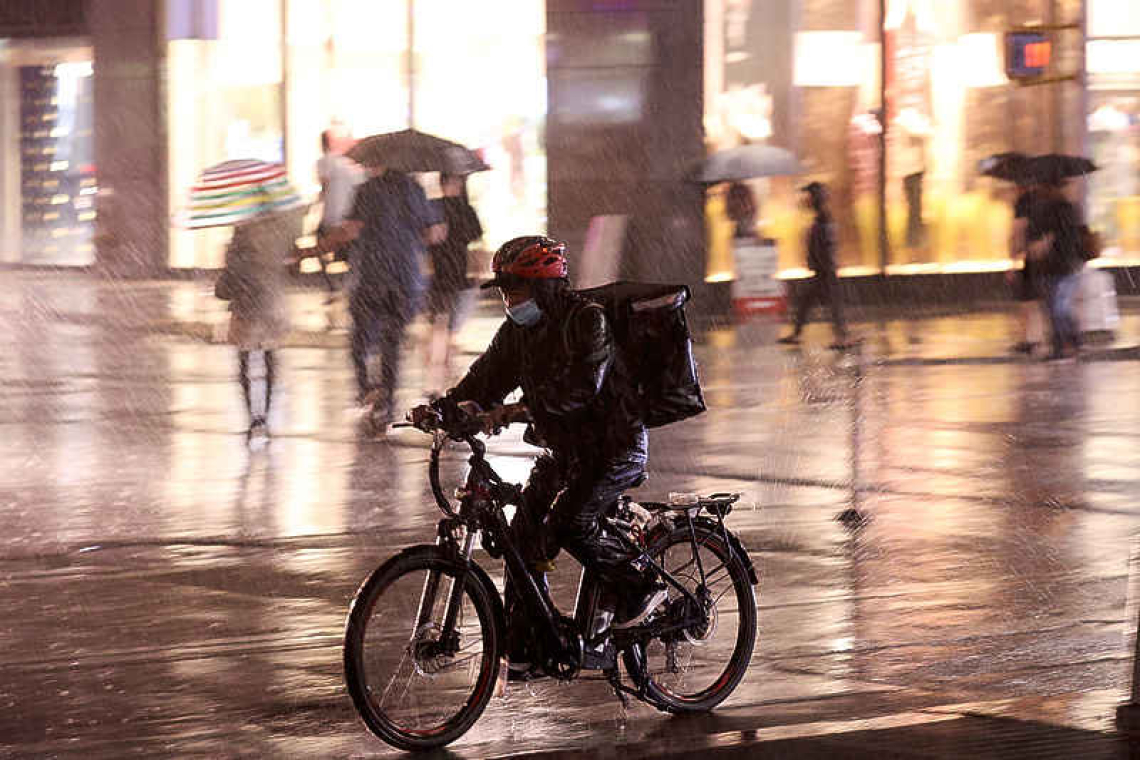
GENEVA--The International Labour Organization agreed on Friday to adopt the first binding employment standards for gig workers in sectors such as ride-hailing and food delivery, potentially giving them rights on pay, safety and social benefits.
The standards, however, still need ratification by governments, and then enforcement. The United States, for example, has frequently declined to ratify ILO conventions and its government voted against Friday's convention, whereas European countries have been more supportive.
While the convention recognises that platform workers may be employees or independent contractors, it establishes, for the first time, a set of protections that apply regardless of employment status, including measures on occupational safety and health, minimum remuneration, and protection against unjustified termination or deactivation. However, how those protections are applied will depend on employment status.
A total of 406 members including the governments of China, Japan, Germany, France and South Africa voted in favour of the employment standards convention while eight, including the United States and New Zealand, voted against. Another 36, including Britain and India, abstained. Members of the U.N. agency include governments, employers and workers.
U.S. representative Lorenzo Riboni told delegates the U.S. did not support a prescriptive binding convention in fast-evolving areas of the economy."This is especially true for the cross-cutting platform economy, where overly rigid rules hinder innovation and harm workers that they intend to help," Riboni said.
The World Bank estimates that the number of app-based gig workers globally is somewhere between 154 million and 435 million people.Rights groups, including Human Rights Watch and trade unions, say that the widespread classification of workers as independent contractors allows companies to avoid paying the minimum wage and providing benefits.
A 2025 Human Rights Watch report found that U.S. platform workers surveyed earned a median of $5.12 per hour after expenses, with overall compensation falling about 30% below the federal minimum wage.
Amanda Brown, vice chair of the ILO's Workers' Group, said the deal was a landmark moment for platform workers worldwide and a response to years of documented abuse and exploitation."For the first time in the history of international law, the women and men who move our cities, who clean and care in our homes ... will be named, recognised and protected by a binding international standard," Brown told delegates.
The convention also states that platforms must disclose how automated systems affect workers.Lena Simet, a senior advisor on economic justice at Human Rights Watch, said the convention was a breakthrough, though challenges remained.
"It is a floor, not a ceiling, and governments now need to ratify it, enforce correct classification, and close gaps for workers misclassified as self-employed," she said.
The convention also sets, for the first time, international rules concerning algorithmic management, meaning that platforms must disclose how and when automated systems are being used to manage pay and access to work.
The ILO has no enforcement power, but ILO members can submit complaints that may lead to investigations and put pressure on governments.If a country has ratified the convention and implemented it into national law, then individuals may be able to take a platform economy company to court.