





“I wanted to provide a Caribbean perspective to my stories and show that incredible stories in this international crime space could come from the Caribbean as well."
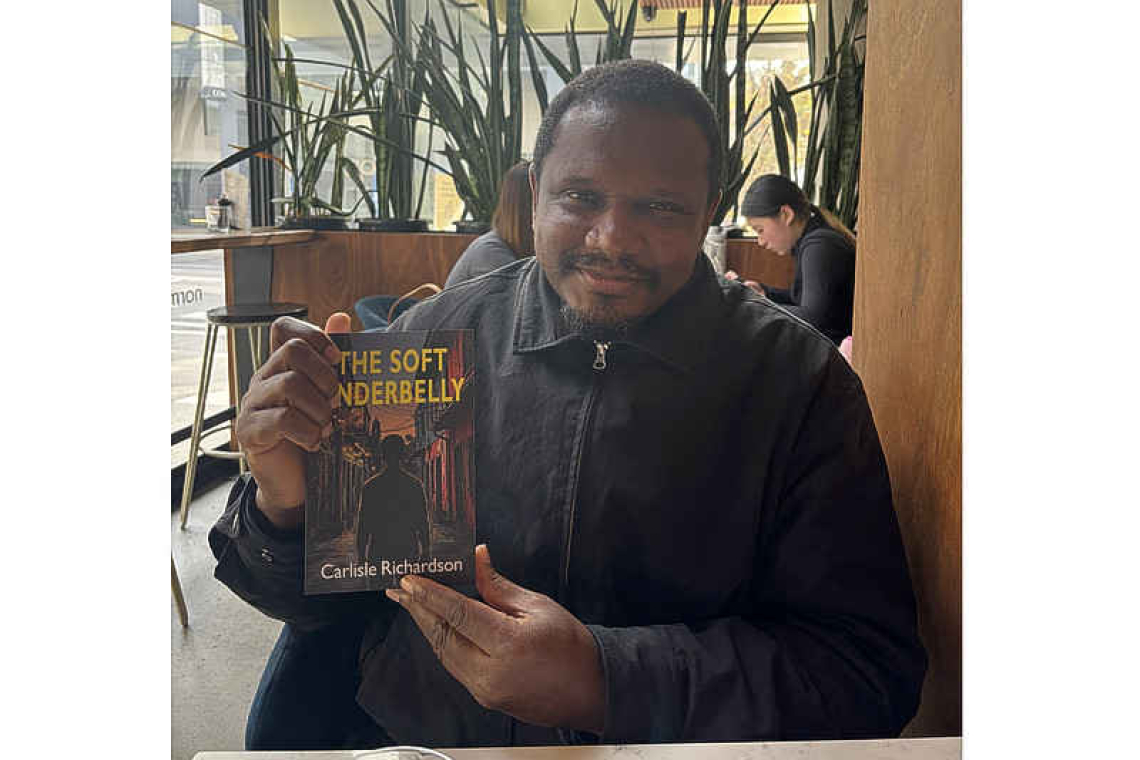
Carlisle Richardson, originally from St. Kitts and Nevis and currently residing in Australia, has always been a fan of crime novels, and has always wanted to write about the Caribbean in the wider world. He has a strong interest in international relations, sustainable development, and Caribbean history, and has worked in the Foreign Service including as Ambassador of St. Kitts and Nevis to the United Nations and as Sustainable Development Officer of the United Nations. While he is an experienced writer, The Soft Underbelly is his debut novel, and his first venture into writing crime fiction.
Involving murder, political instability, corruption, and the threat of war, The Soft Underbelly – a crime thriller set in a fictitious Caribbean country – revolves around the investigations of local police officer Gerald Brookes and M16 agent Fiona Sawyer.
Richardson spoke to The Weekender to tell us more about this exciting publication.
You’ve published articles, short stories and non-fiction books before; what made you want to venture into fiction?
I’ve always loved fiction. From a young age, I enjoyed the way I could be immersed in a good novel and I wanted to give that experience to other readers. So, I knew that I would eventually gravitate towards fiction, even while writing the other pieces.
I’m also keen to write about the Caribbean experience. Most of my writing from opinion pieces to non-fiction, and now fiction, has shared a similar purpose of showing elements of the Caribbean, and dispelling inaccurate perceptions or portrayals of who we are.
Fiction does allow me to present the themes differently, but the motivation of prioritising the Caribbean, international relations, sustainable development, and history is always there, but in a more subtle way for fiction.
What are you hoping that readers get from the book?
I’m hoping that Caribbean readers feel seen and represented in this book. Often, in international crime and espionage novels based in the Caribbean, we are relegated to the background. The characters are often one dimensional, because they are not there to generate any emotions towards them but instead are there to contribute to the narrative of the main characters. I wanted to tell a story where we are the protagonists solving a crime with both local and international implications. I want Caribbean readers to feel encouraged by what they read and feel inspired to also contribute to the documenting of the Caribbean experience.
For international readers, I want them to experience the real Caribbean. I don’t want them to just see negative elements like what they tend to see in some elements of popular culture, but rather witness the positive figures and experiences that we have. I hope international readers will be encouraged to seek out more of these accurate stories about the region.
Can you tell us a little about your career? Would you say that your work experience has helped to shape the story or how it is told?
My career was primarily in the international relations and sustainable development space. I served 15 years at the United Nations in New York, and an additional five years at the Foreign Ministry in St. Kitts and Nevis. Working in the Foreign Service did help to shape the story, as it revolves around international intrigue. I pulled from that world in writing it, based on observations over the years. I was very careful not to include any actual experiences or persons, but I did write it so that it feels as though it was pulled from current news headlines. Readers should feel like they know these people they are reading about, even though they are not real or based on any specific person.
Working in the Foreign Service also exposed me to various security personnel around the world, allowing me to have a sense of the security issues that concerned them most. I was then able to include these elements with some accuracy.
Have you always been a fan of crime novels, movies, or shows?
Yes, I have always been a fan of crime novels. I was drawn to international crime and espionage stories from an early age. I started reading Robert Ludlum and Tom Clancy as a teenager, and John le Carré while at university. I always loved the urgency of a Ludlum novel, and the political conspiracies of le Carré. I later incorporated similar authors to my reading list, such as Lee Child, Gayle Lynds, and Dan Brown. It was fascinating to me when they contained international and political implications as well. I wanted to write like these authors, but I wanted to provide a Caribbean perspective to my stories and show that incredible stories in this international crime space could come from the Caribbean as well.
Tell us about why you chose this title. Were there any working titles that almost made the cut?
The title came first. I was reading an international relations newsmagazine on the train after work one night when I lived in New York. I read this article about how political corruption eventually oozes across all aspects of the society if the corruption remains unchecked. The phrase, the soft underbelly, popped into my head then, and I wrote the novel with that title in mind. It basically guided the plot and the motive of the characters.
The title implies vulnerability. Would you say that vulnerabilities explored in the story are relevant for the region in general?
Yes, The Soft Underbelly refers to the vulnerabilities of societies when political corruption is rampant. The vulnerabilities in the story are definitely relevant for the region. Political corruption is devastating to any country and to any society, but it is particularly disappointing in the region because of the close-knit societies that we have. We know the people who are involved, and we know the people who are impacted. It affects the psyche of the people, and our relatively small populations make it feel stifling.
So, this story is a bit of a cautionary tale for people with political aspirations, and people already involved to be careful with their choices. I believe many begin with the best of intentions, but some lose themselves along the way. It is important for them to remember why they got involved in the first place, and who will be negatively impacted by their actions.
Where is the book available?
The book is now available online on Amazon, Foyles, Waterstones, Blackwell’s and via other booksellers.