





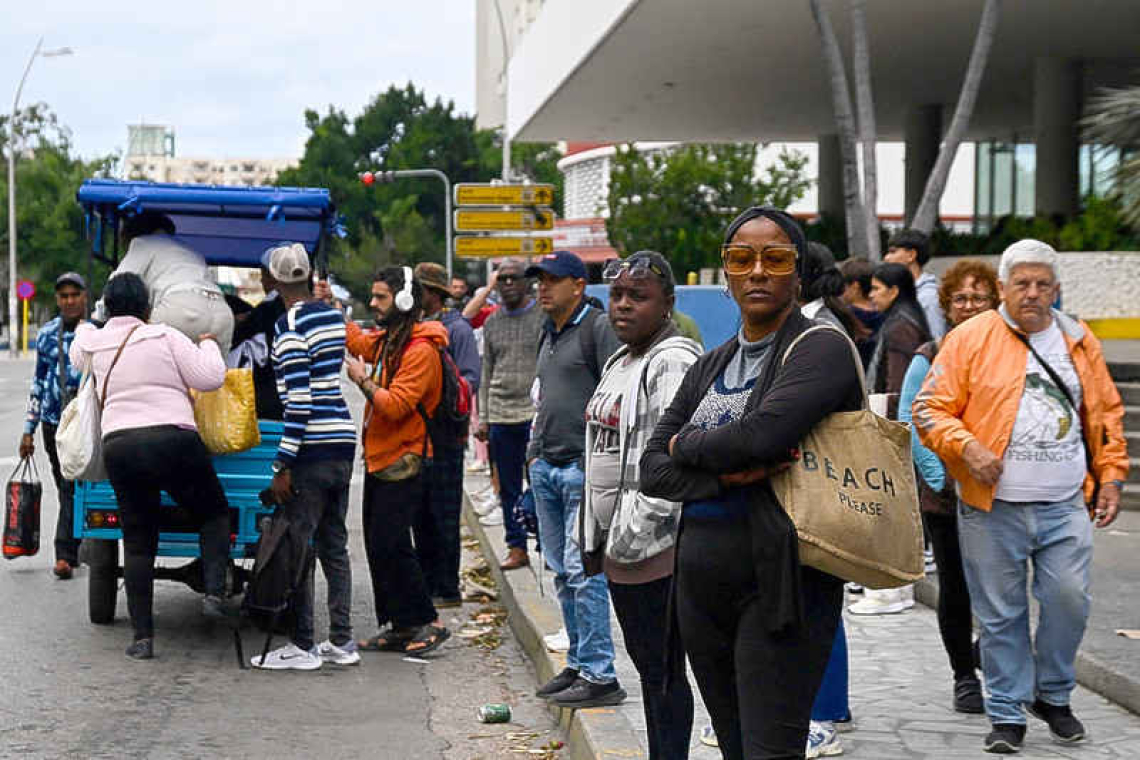
People wait for transportation as Cubans brace for fuel scarcity measures after US tightens oil supply blockade, in Havana, Cuba, February 6, 2026.
HAVANA, Cuba--Cuba detailed a wide-ranging plan on Friday to protect essential services and ration fuel as the communist-run government dug in its heels in defiance of a United States (US) effort to cut off oil supply to the Caribbean island.
The rationing measures are the first to be announced since President Donald Trump threatened to slap tariffs on the US-bound products of any country exporting fuel to Cuba and suggested hard times ahead for Cubans already suffering severe shortages of food, fuel and medicine.
Government ministers said the measures would guarantee fuel supply for key sectors, including agricultural production, education, water supply, healthcare and defense.
Commerce Minister Oscar Perez-Oliva struck a defiant tone as he laid out details of the government plan.
“This is an opportunity and a challenge that we have no doubt we will overcome,” Perez-Oliva told a television news programme. “We are not going to collapse.”
The government will supply fuel to the tourism and export sectors, including for the production of Cuba’s world-famous cigars, to ensure the foreign exchange necessary to fund other basic programmes, Perez-Oliva said, adding, “If we don’t have income, then we will not overcome this situation.”
Domestic and international air travel will not be immediately affected by the fuel rationing, although drivers will see cutbacks at the pump until supply normalises, he said.
The government said it would protect ports and ensure fuel for domestic transportation in a bid to protect the island nation’s import and export sectors.
Perez-Oliva also announced an ambitious plan to plant 200,000 hectares (500,000 acres) of rice to guarantee “an important part of our demand,” but acknowledged fuel shortfalls would push the country to depend more on renewable energy for irrigation needs and animal-power for tilling fields.
Education Minister Naima Ariatne, appearing on the same programme, said infant-care centres and primary schools would remain open and in person, but secondary schools and higher education would implement a hybrid system that would require more “flexibility” and vary by institution and region.
“As a priority, we want to leave our primary schools [open – Ed.],” Ariatne said.
Top officials said healthcare would also be prioritised, with special emphasis on emergency services, maternity wards and cancer programmes. ~ Reuters ~