




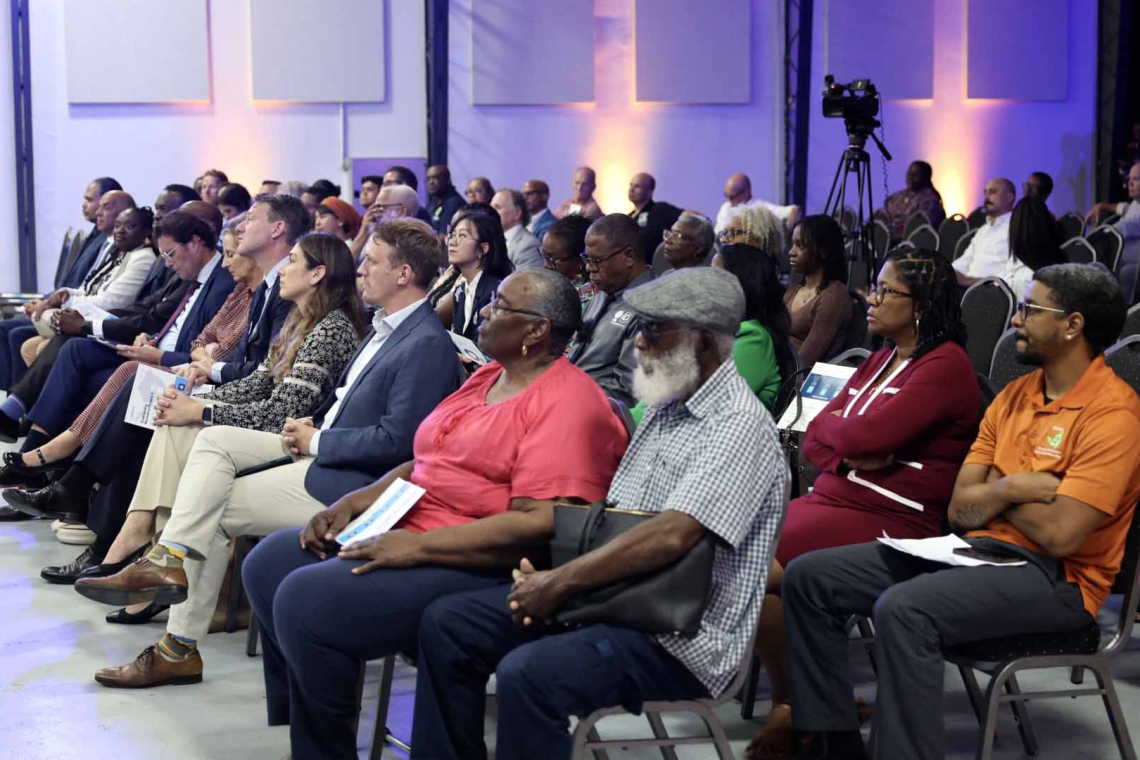
Guests at the ERP-I Impact and Recovery Celebration on October 28.
PHILIPSBURG--The Emergency Recovery Project I (ERP-I), the first project financed through the St. Maarten Recovery and Resilience Trust Fund, is approaching its scheduled closure in December 2026 following eight years of investment in the country’s housing, education, public infrastructure and emergency services.
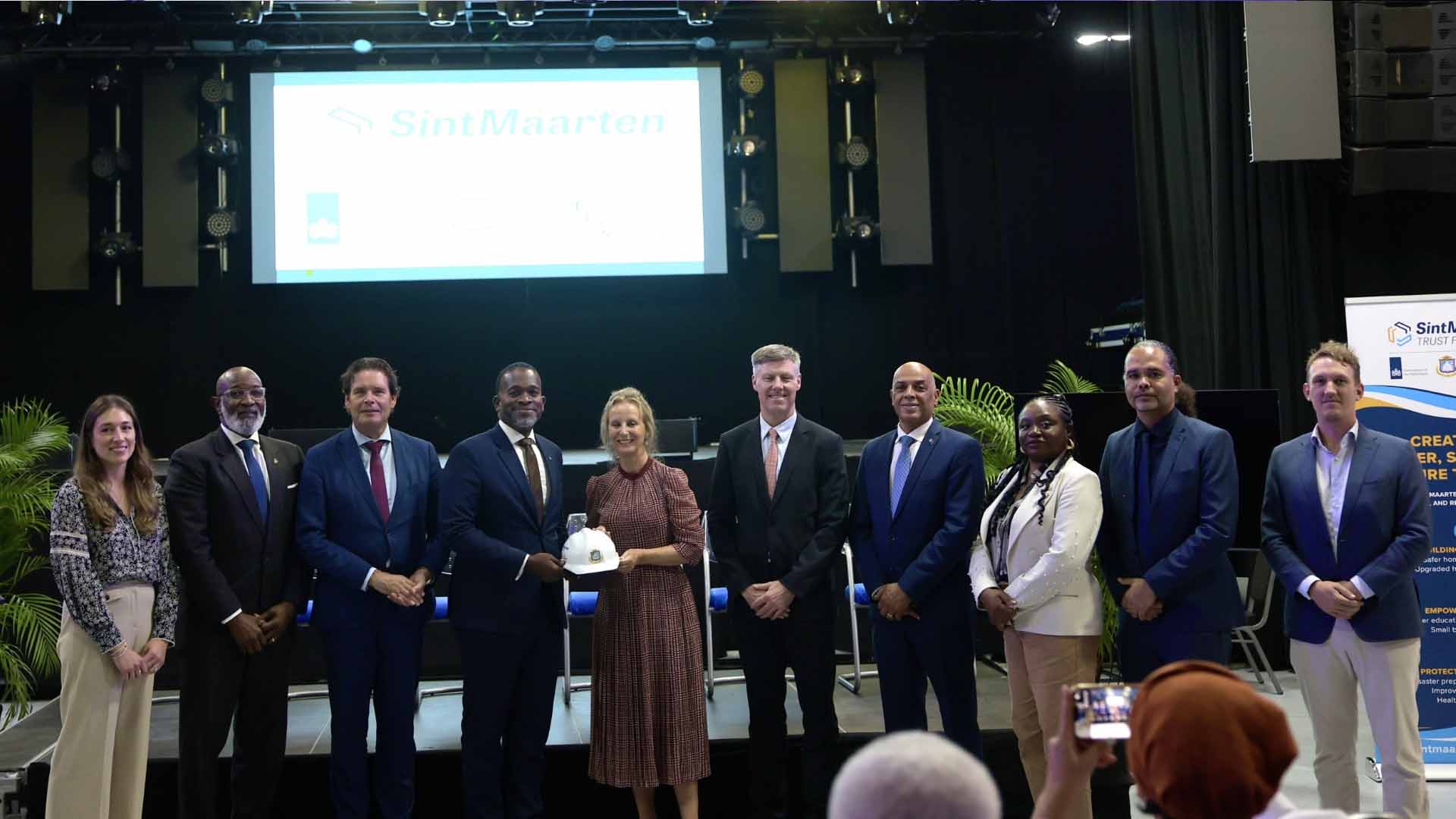 Giuliana De Mendiola Ramirez, World Bank Task Team Leader for ERP-I; VSA Minister Claret Connor; Frans Weekers, Netherlands representative on the St. Maarten Trust Fund Steering Committee; Governor Ajamu Baly; Barbera Wolfensberger, Director General for Kingdom Relations at the Netherlands Ministry of the Interior and Kingdom Relations; Achim Fock, World Bank representative on the Trust Fund Steering Committee; Ronald Halman, St. Maarten representative on the Trust Fund Steering Committee; Toyin Jagha, World Bank Program Manager for the Trust Fund; Rueben J. Thompson, NRPB Deputy Director; and Thijn Laurensse, NRPB Senior Program Manager.With approximately US $119.7 million in financing, the project has supported repairs to more than 500 homes, restored 19 schools and placed 21 kilometres of electricity distribution infrastructure underground. St. Maarten has also gained new emergency response vehicles, increased water-storage capacity and more advanced systems for monitoring severe weather and communicating public warnings.
Representatives of the Government of St. Maarten, the Government of the Netherlands, the World Bank and the National Recovery Program Bureau (NRPB) gathered on October 28 at the Aleeze Convention Center, alongside public institutions, project partners and beneficiaries, to recognise ERP-I’s achievements at the Impact and Recovery Celebration as the project enters its final phase.
ERP-I began in 2018 with an initial focus on urgent recovery needs after Hurricane Irma. In the following eight years, its scope expanded to include longer-term investments in infrastructure, public services and disaster preparedness. Nearly 12,000 residents have benefited directly from its investments, while improvements to national emergency response capabilities are intended to serve the wider population of St. Maarten. As ERP-I winds down, responsibility for maintaining its facilities, infrastructure, equipment and systems will remain with the government’s ministries and public institutions that manage them.
Throughout the programme, speakers reflected on ERP-I’s achievements, the challenges involved in delivering investments across different sectors and the lessons that can inform future development efforts. Their remarks also recognised the contributions of public servants, technical specialists, contractors, frontline workers and communities whose efforts have supported the recovery programme over the years.
Minister of Public Health, Social Development and Labor VSA Claret Connor emphasised ERP-I’s role in helping families return to their homes following Hurricane Irma. He highlighted the importance of the project’s housing repairs in restoring stability and helping residents rebuild their lives after the disaster.
The event included a panel discussion, “From Recovery to Resilience: What ERP-I Made Possible”, which explored what the investments have meant for public services and the
institutions responsible for delivering them. Speakers representing government, education, shelter management, meteorology and emergency communications shared their experiences of implementing recovery activities and discussed how the improvements will continue to benefit St. Maarten.
Panellists discussed the vital role of restoring schools in helping communities regain a sense of normalcy after a disaster, along with the improvements made to 19 schools through ERP-I. They also highlighted upgrades to emergency shelters and the new equipment and capabilities available to emergency services. The Meteorological Department’s role was also discussed, including its increased capacity to forecast the weather and communicate timely information to the public.
The discussion highlighted the importance of maintaining these investments and applying the experience gained through ERP-I to future public projects.
“ERP-I shows what strong partnerships and long-term investment can achieve. Together with our partners, we have strengthened resilience and improved critical services that will continue to benefit St. Maarten for years to come,” said Toyin Jagha, Program Manager, St. Maarten Trust Fund.
“Over the past eight years, many people have contributed to achieving ERP-I’s objectives. We thank our counterparts in government, the World Bank and the Government of the Netherlands, together with the project teams and partners who have supported this work over the years. These achievements reflect their collective effort and commitment to St. Maarten’s recovery,” said NRPB Deputy Director Rueben J. Thompson. “Appreciation is also extended to the many beneficiaries for their faith in our teams, their patience and cooperation throughout this process.”
Although the event celebrated the project’s achievements, ERP-I remains active as its final activities progress towards the scheduled closure in December. The NRPB and its project partners will continue to share updates with the public on the remaining works, their progress and the project’s final results.
ERP-I is implemented by the NRPB on behalf of the Government of St. Maarten. It is funded through the St. Maarten Recovery and Resilience Trust Fund, financed by the Government of the Netherlands and administered by the World Bank.