





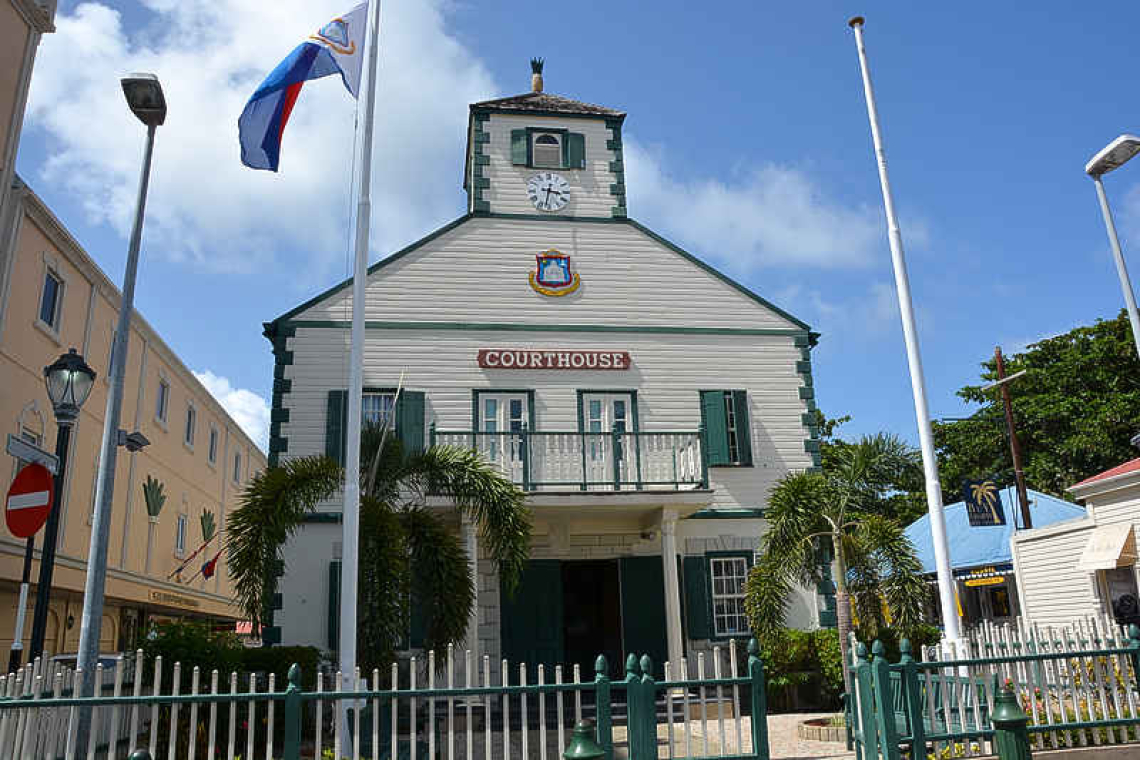
PHILIPSBURG--A man has been awarded 41,783.08 euros in damages after the Court of First Instance found that his former wife acted unlawfully by taking their three children from St. Maarten to South Africa without his knowledge or consent.
In a judgment delivered on September 29, the court ruled that the woman's decision to relocate with the children had violated the father's rights, despite a later decision allowing the children to remain with her in South Africa.
The couple, who share parental authority over their three children, had lived in St. Maarten since 2019. The woman left for South Africa with the children on October 30, 2022, without informing the father or obtaining his permission.
The court found that the reasons the woman gave for leaving did not justify her actions. Even if her allegations about the father's conduct during the marriage were established, the court said she should have involved the judicial authorities and sought permission to relocate rather than deciding unilaterally.
The court also rejected the argument that her actions could not be considered unlawful because she had not been criminally prosecuted for child abduction. It found that taking the children without the father's knowledge and consent was, in itself, contrary to the duty of care owed to him and had restricted his ability to exercise parental authority and maintain contact with the children.
The children were eventually allowed to establish their primary residence with their mother in South Africa. In a November 2023 decision, the court had found that returning them to St. Maarten could cause them further harm, particularly as they appeared to have settled in South Africa. However, the September judgment clarified that this later decision did not make the original relocation lawful.
The father had sought 255,020.30 euros in material damages and 25,000 euros in non-material damages. His claims included legal fees, psychological assistance for the children, travel and accommodation costs associated with proceedings and visits in South Africa, and rent for the former family home.
The court awarded 71,516.08 euros for travel and accommodation expenses, finding that these costs were a direct and foreseeable consequence of the woman's actions. The father had needed to travel to South Africa for proceedings concerning parental authority, contact with the children and their residence, as well as to visit them.
The woman had questioned the amount, arguing that the father travelled in business class and stayed in five-star hotels. She also claimed he had combined some trips with other activities in South Africa. However, the court found that she had not sufficiently explained how these arguments should affect the amount of damages.
The court rejected the claims for legal fees and the children's psychological assistance because the High Court in Pretoria had already ruled on how those costs should be divided and ultimately ordered the father to bear them. The court said those decisions could be recognised and enforced in St. Maarten, leaving it without authority to decide those costs again.
The claim for rent on the former family home was also rejected. Although the court accepted that the father had kept the property for a time in the hope that the children might return, it found that he would have incurred those rental costs even if the mother had remained in St. Maarten. There was therefore insufficient causal connection between the woman's actions and that expense.
The court did, however, award the father 25,000 euros in non-material damages. It found that the circumstances and consequences of the relocation amounted to a serious personal infringement, even without requiring proof of psychological injury.
In reaching that conclusion, the court considered how abruptly the father discovered that his family had left. After returning from a trip abroad, he went to the former family home expecting to see his wife and children and collect his car. Instead, he found that they were gone and that only the family dog remained. He was unable to reach the woman by telephone and learnt several days later that she and the children had travelled to South Africa.
Contact between the father and the children was particularly difficult, and at times impossible, in the years that followed. The court also referred to a report by a court-appointed guardian in South Africa, who stated that the woman had turned the children against their father to such an extent that it could be regarded as parental alienation.
The court considered the duration of the separation, the distance between South Africa and St. Maarten, the abrupt circumstances of the departure, the children's ages at the time and the limited contact that followed when determining the compensation.
The father had also requested compensation for future travel expenses to visit the children. That claim was rejected because he had not specified an amount or provided a concrete basis on which the court could estimate the future costs.
The woman's counterclaim for unpaid child maintenance was also taken into account. She had argued that the father owed 111,700 Caribbean Guilders in maintenance, an amount he did not dispute. The court deducted its equivalent of 54,733 euros from the 96,516.08 euros in damages otherwise awarded.
This left the woman ordered to pay the father 41,783.08 euros, together with statutory interest from January 30, 2024, until payment in full. As neither party was considered predominantly unsuccessful, the court ordered each to bear their own legal costs.