





CASA GRANDE, Arizona--In Arizona, dead fish lie in the dry bed of a reservoir. To the north, a small Utah town could run out of water in months. And in Colorado, a rancher has sold a fifth of her herd as stock ponds stand empty.
The communities are linked by the Colorado River system, which supplies water to about 40 million people across seven Western states and Mexico and irrigates millions of acres of farmland. Decades of drought, compounded by this year's record-low winter snowpack and the hottest March on record, have deepened shortages across the basin.
The drought is pitting farmers against residents of cities and suburbs as well as industrial users including data centers, solar projects and semiconductor plants. Federal officials are considering steep cuts in water allotted from the Colorado River to Arizona, California and Nevada.
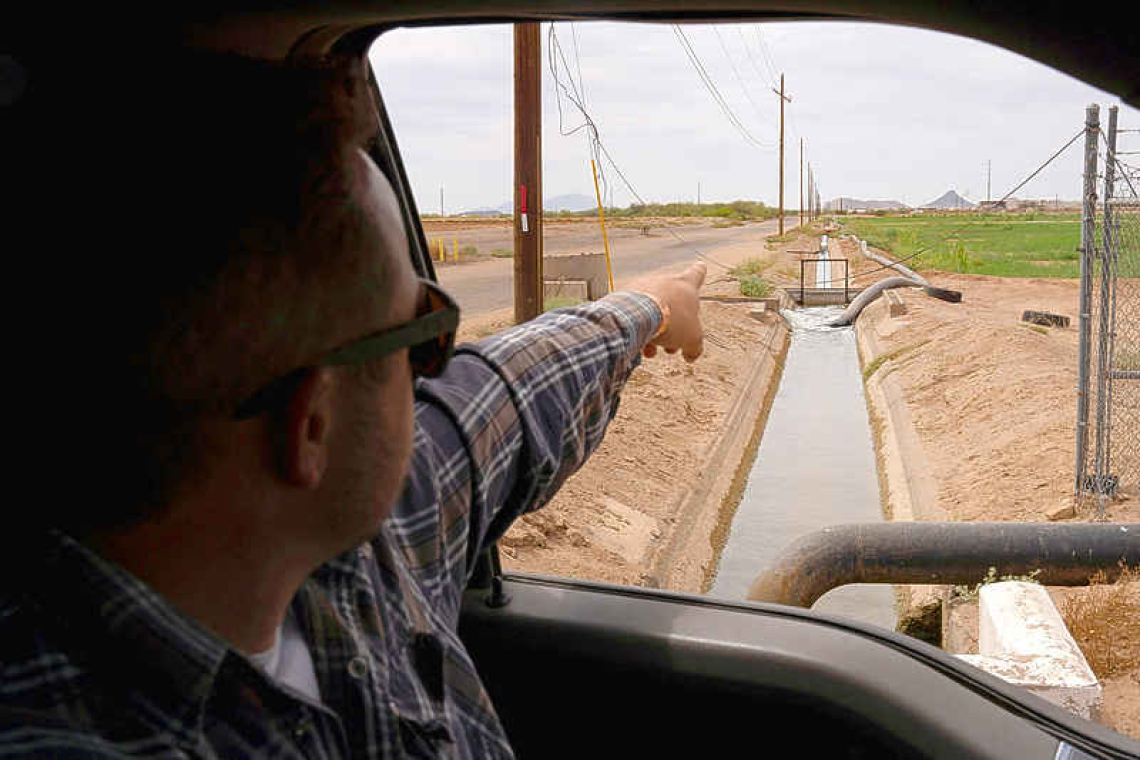
Near Casa Grande in central Arizona, farmer Nancy Caywood must pay a $21,000 annual fee to her local water district even though river water ran out in March. Her approximately 250-acre (100-hectare) alfalfa and cotton farm relies entirely on irrigation from the San Carlos Reservoir on the Gila River, a Colorado River tributary. In a catastrophically bad snow year, demand from farmers and towns has drained the reservoir to 1% capacity, leaving herons and pelicans to feast on bass and carp littering its parched floor.
"We have hung on for almost 30 years," said Caywood, who has leased a neighbor's fields with access to aquifer water. "There are people approaching you saying, 'Would you like to sell your land to put solar panels on it?'"
Fellow Pinal County farmer Jace Miller is the fifth generation of his family to farm there over 107 years and hopes to bring his son into his business, even though more than half his fields are fallow due to the drought. Like many farmers in the area, he lost most access to Colorado River water in 2022 as municipal users got priority for dwindling supplies.
Housing developers and solar companies are buying up agricultural land he leases south of Phoenix. He urged Arizona to impose a moratorium on residential growth, arguing that farmers are critical to the country's food security. Miller called for creative solutions beyond tapping aquifers, such as cross-country water pipelines similar to those for oil.
"You can't just keep taking water from agriculture," he said.
But Michelle Ugenti-Rita, a city council candidate in the wealthy Phoenix suburb of Scottsdale, said water historically devoted to farming could provide for the city's water needs. With 70% of its water coming from the Colorado River, Scottsdale, a city of about 250,000 people, is scrambling to find new sources. Ugenti-Rita said in a telephone interview that buying groundwater rights from farmers and other towns was among the potential solutions.
“The ag community, they’re a big user of our water. Is that where it should go?" Ugenti-Rita, a former Republican state senator, asked.
Colorado State University scientist Brad Udall said Arizona's massive groundwater reserves beneath its desert were globally unique and allowed the state's population to double over four decades. But he said this resource was non-renewable and should not be relied on.
"We kind of created this monster that you've got to continue to feed," he said of Arizona's water needs.
The U.S. Bureau of Reclamation is considering adopting much of a proposal by Arizona, California and Nevada — known as the Lower Basin states — to reduce their Colorado River use by around 21% a year through 2028 to maintain critical reservoir levels. The proposal has sharpened a long-running dispute over how to divide the river's shrinking flows between those downstream states and the Upper Basin states of Colorado, New Mexico, Utah and Wyoming, which are home to the river's Rocky Mountain headwaters. The seven states could end up in court.