




By Bianca Peters, co-producer of the WOW! nature film
When I first set foot in the Caribbean, I immediately felt that this would become a project I would never forget. I was there as a biologist and cameraman and already knew many species and places from literature, yet I stepped into a new world. Each island is unique, with different species, landscapes, conditions and, above all, different stories.
The trips were full of extraordinary moments. We filmed on Mount Scenery on Saba, the highest point in the Dutch Kingdom, and dove with a submarine off Curaçao to a depth of two hundred metres. On St. Eustatius, we walked through the volcanic forest inside the crater, while in Aruba we stood in deep caves to capture bats flying out at dusk. We lay in a small boat next to a 3.5-metre tiger shark that had been caught for research, and later I walked around in the middle of the night with my camera to film the hidden life of Antillean whistling frogs.
We filmed the stories of researchers, local fishers, divers, and volunteers. Very different people, yet all with the same mission: to protect nature on the islands and raise awareness and support restoration. I found it remarkable to see how many people work on this every day. It’s important work that often remains unseen. That’s why I’m glad that with the WOW! documentaries and film, we can also tell their story and make the unseen seen.
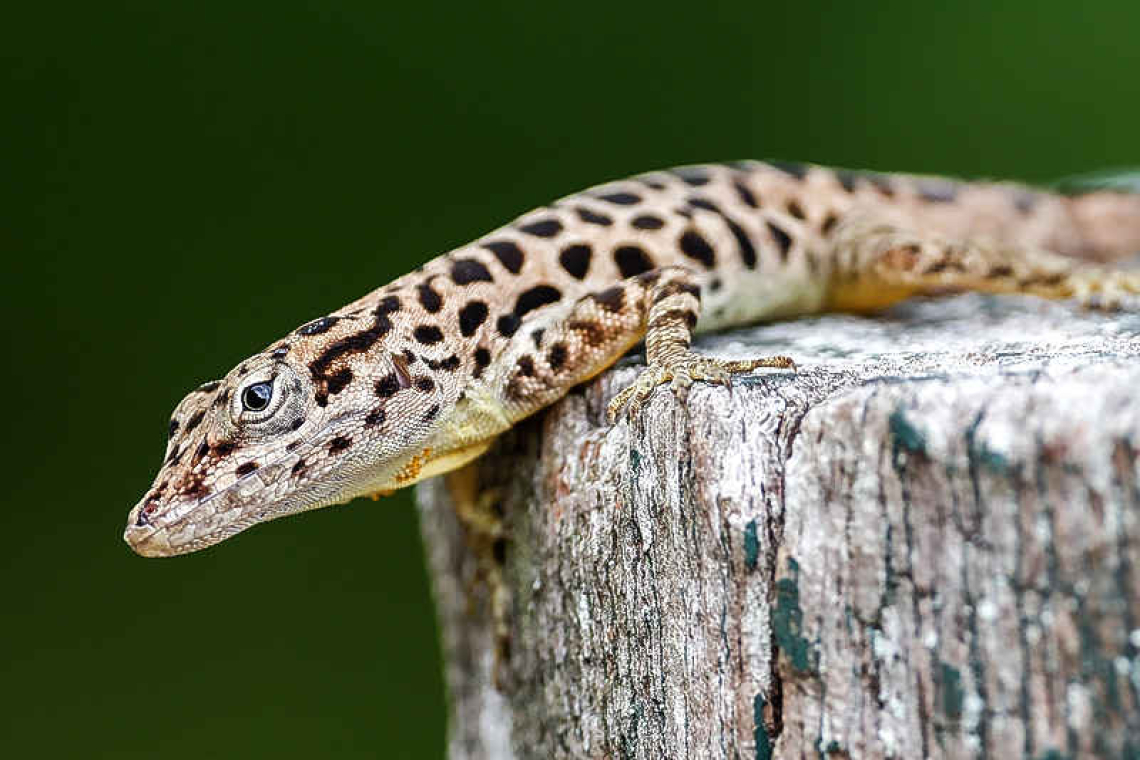
Of course, we also saw and filmed the iconic species such as flamingos and sea turtles. These are species people immediately recognize and that many viewers look forward to. But as a biologist and filmmaker, I believe the most beautiful stories come from the connections in nature, especially when focusing on the smaller life. On Saba, for example, we filmed the endemic Saban anole. A small lizard found nowhere else on Earth, and at the same time an important food source for the red-bellied racer, a snake species unique to the islands.
Another example is a type of stinkhorn fungus. A bizarre mushroom you can mostly smell. I experienced that firsthand when I lay down next to it to capture close-ups. The smell attracts flies, which then spread the spores. It’s a simple mechanism, but it tells so much about how species depend on each other to survive.
These kinds of connections show how the ecosystems on the islands function and how dependent species are on one another. If one link disappears, the whole network changes. And that is already happening. In several places, you can see what happens when a species declines or disappears due to habitat loss, pollution, invasive species, or warming waters. Relationships shift. Prey species suddenly increase or decrease, plants lose pollinators, and reefs become overgrown with algae because grazers are gone. That is exactly why it feels so urgent to show these connections because it helps people understand how much is at stake, and how important every species is, no matter how small.
At the moment, I am working with great enthusiasm on the editing of the six documentaries. By watching the footage again and again, the memories return, and I’m constantly reminded of how special the nature there is. I can’t wait for everyone to see it soon. I believe in the power of imagery, and I hope that when people see how beautiful and complex the nature of these islands is, they will care more about it. And when you care about something, you want to protect it. That is what we hope this project will inspire. Six islands, each unique, but together showing the value of nature that is still truly its own and how important it is to keep protecting it. For me, that is where the true WOW-factor lies.