





The Formula One race season is ready to start. The new cars are going around the circuit at 230 miles per hour (mph). While most trains cannot catch an F1 car, there are a few bullet trains that would leave even Lewis Hamilton looking at their dust.
While most European bullet trains only travel at 217 mph, in Japan and China, specialized Maglev (magnetic levitation) trains use powerful electromagnets to lift and propel carriages without touching the track, eliminating wheel friction for speeds exceeding 370 mph.
None of my engines are capable of even simulating such speed (and honestly, I am not sure I would even want them to, as I enjoy watching the trains move around the layout), but I think it is time to add a passing siding to the layout to allow faster trains to “fly” without interruption.
A siding – often called a passing loop in Europe or sometimes a passing lane in the states – is easy to assemble. You need two switches and a few sections of straight track. The number of straits will be determined by the average length of your trains. Simply install the two switches connected by the straights and set up the passing track to run parallel to the main line.
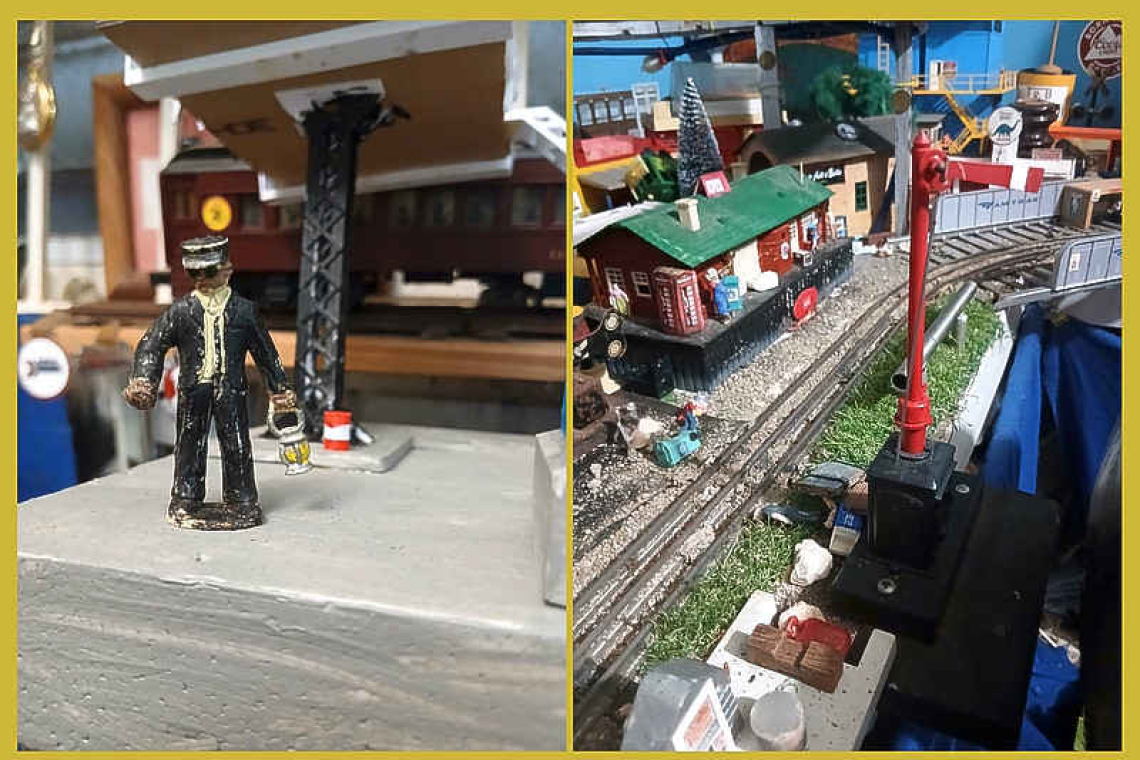
To make the passing siding locks functional, you will need either signals or lights at both ends of the track. You will also need a watchtower for the railroad employee charged with watching the clock and having the switches set in the right direction. As the slower train nears the passing siding, a signal will be given to either enter the passing area or proceed if no other traffic is approaching.
If a fast train is coming, first set the red flag in his direction so that if he arrives early, he knows to stop. Next, throw the switch to allow the slow train entry to the loop and then signal the slow train to proceed. At the end of the passing lane, he sees a red signal. It remains red until the fast train passes. Once the slow train has cleared the main line, the entry switch is closed. Give the fast train a green light.
If space is a concern, you can set up the siding as a single entry and exit point. After the fast train passes, the slower one just backs out of the siding and continues on its way. To avoid derailment, you must remember to check the switch positions before moving a train. Passing lanes are a lot of fun; they add a little extra work but allow two trains to operate at the same time.
Until next time, I hope to see you from the siding, flying around the tracks as you pass me.