





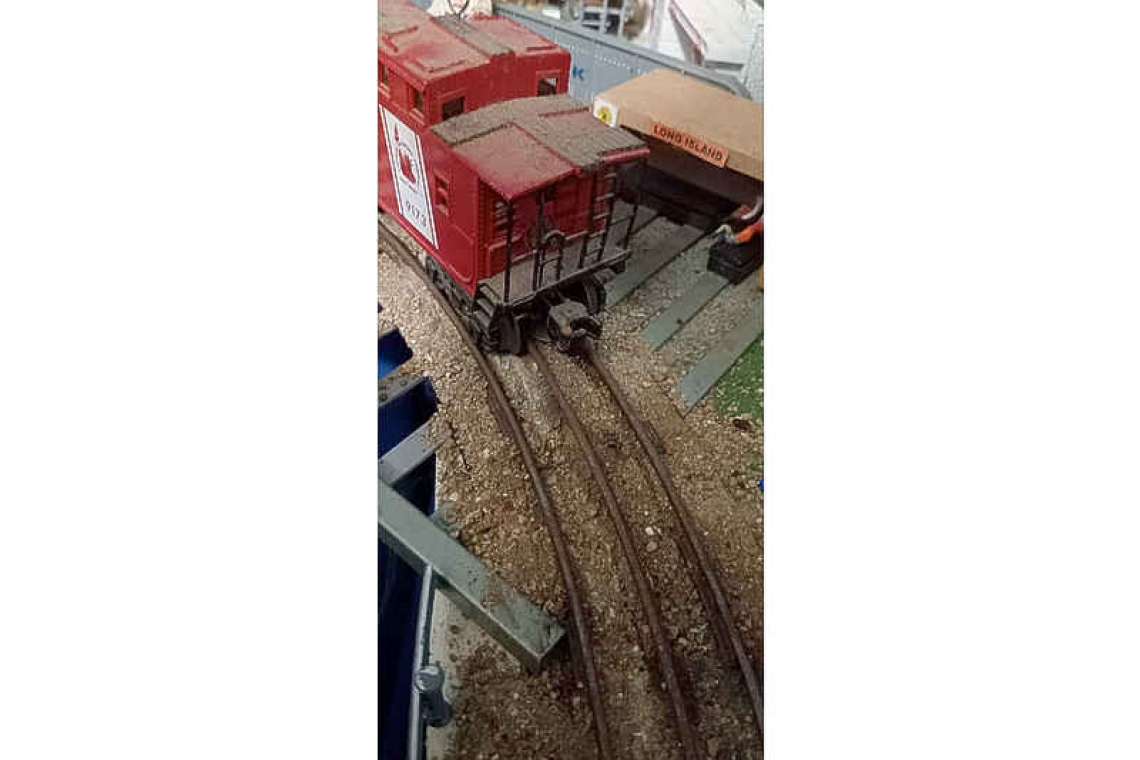
Have you ever noticed real railroad tracks sit on a layer of crushed rock? The stones are called ballast.
They are critical. They actually not only provide stability and help hold the wood ties in place, but aid in drainage. The ballast also helps with load distribution and deters plant growth around the rails.
Ballasting your track can be fun but it can also be quite messy. First lay the track out. Then slowly lift a section up, spread white glue under the track. Lay the track down and then spread you ballast material. Note, if you just pour the glue from the top, the ballast material will stick to the ties and hide them.
You can purchase special ballast material which appears to look like rocks. I have seen other modellers use the stones that are used in the bottom of aquariums and still others just use sand.
The key is as you spread the ballast, brush off the excess material so you can still see the ties. You can pour the ballast between the track and then on both sides of the track and spread it with an old paint brush. Then using white glue, secure the ballast in place. Make sure to not get any glue on the rails as it can mess with the running of the trains.
But, there is an easier slightly less messy method. Several companies have a clear plastic box-like device. You load it with sand or what ever ballast material you choose, and run it down the track. It spreads the sand between the ties creating a ballast look. Manual spreaders start at US $9. You can of course spend up to US $40 for a spreader that allows you to adjust the amount of ballast you use and as it has an electric motor, you can run it around the entire layout including those hard to reach places.
You then use more white glue on top of the ballast to lock the sand in place so it does not shift with the weight of your train rolling past. Most spreaders can be loaded with glue to make the process a bit easier. Just remember, as soon as you are finished to wash the spreader before the glue dries and clogs it.
Even easier is “Fast Track.” You can purchase track that comes with a gray plastic base designed to look like ballast. This track you just lay down, wire it up and you are good to go. Personally I like the look of the sand ballast.
It does not matter what method you use. It is all a matter of personal choice and what you think looks best.
Until next time hope to see you Around the Tracks.