





By Dr. Colin Michie FRCPCH
Do you imagine a fictional world – a sci-fi fantasy, perhaps under the seas, or out in space? Yet just under our consciousness, we are all surrounded by a little-known personal aura of scents. It may attract colleagues, friends, lovers.
In just under a square inch of the upper nose, about 400 different receptors look out for tiny numbers of odour molecules. Scent receptors connect directly into the brain so new smells are signalled in milliseconds. Olfactory receptors work in teams to tell apart many millions of scents. Like most mammals, we use the right nostril – and so the right brain – to sniff and pick up novel scents. Olfactory messages feed directly to our brain memory circuits. Because of this, some scents can tip us unexpectedly into our past, triggering deeply embedded memories of places, people or situations.
Our noses start work before birth. Infants know their mothers by smell from her chemical signatures in amniotic fluids. Infant-mother olfactory connections support bonding and breastfeeding and reduce stress responses into childhood. Body odours remain below active attention, although they contribute to non-verbal social interactions and show on measures of neural network activity. Anthropologists suggest face-touching may be a subconscious self-inspection habit we use to monitor our body odours. We lack the words, verbal communications or even chemical identifications to describe the many molecules that make up our auras, particularly in western cultures. However, we may select extrinsic odorants and fragrances to complement our intrinsic, implicit ones. Cultural choices, fashions and styles could enhance and become part of our body auras.
Sweat glands produce odours rapidly in response to emotions. Sweaty stress signals are found in cinema air, for instance, during scary movies. Volatile compounds including ketone bodies released from armpits and groins share harm avoidance messages with the audience. We can smell fear in animals, including horses – just as they can detect ours. Skin glands are important, and skin bacteria ferment their products, but other bodily fluids contribute to our “diplomatic” personal aura. This olfactory fingerprint can advertise subconscious information relating to our age, diet, gender, health and ovulation status (in women). Although we do not mark trees with our backs or chests as do some mammals, our volatilome influences the behaviours of others close to us.
Fashionable westernised bodies in indoor environments are often washed, cleaned, anointed with hygiene products and fragrances, then bathed in air conditioning. Over time, these treatments desensitise noses. Smelling skills are less important and perhaps rarely employed. Routine levels of attention to auras in these situations are probably low: It is not clear how the subconscious works in the office! Studies of socially integrated groups of individuals show improved olfactory focus and awareness of one another: Does this – could this – togetherness be developed to support community cohesion, team building, a portal to the subconscious?
Scent receptors on locust antennae provide sensitive potential noses. Connected to detectors, these identify compounds in human breath to assist diagnose lung cancer, look for signs of fungal infection in foods or risky chemical leaks in a factory. Insect targeting of human auras is well developed in blood-suckers. St Maarten’s mosquitoes need no directions to zoom into our auras. Should we be infected with a flavivirus (such as dengue fever) we become even more attractive to these little hunters, making it easier for them to spread disease.
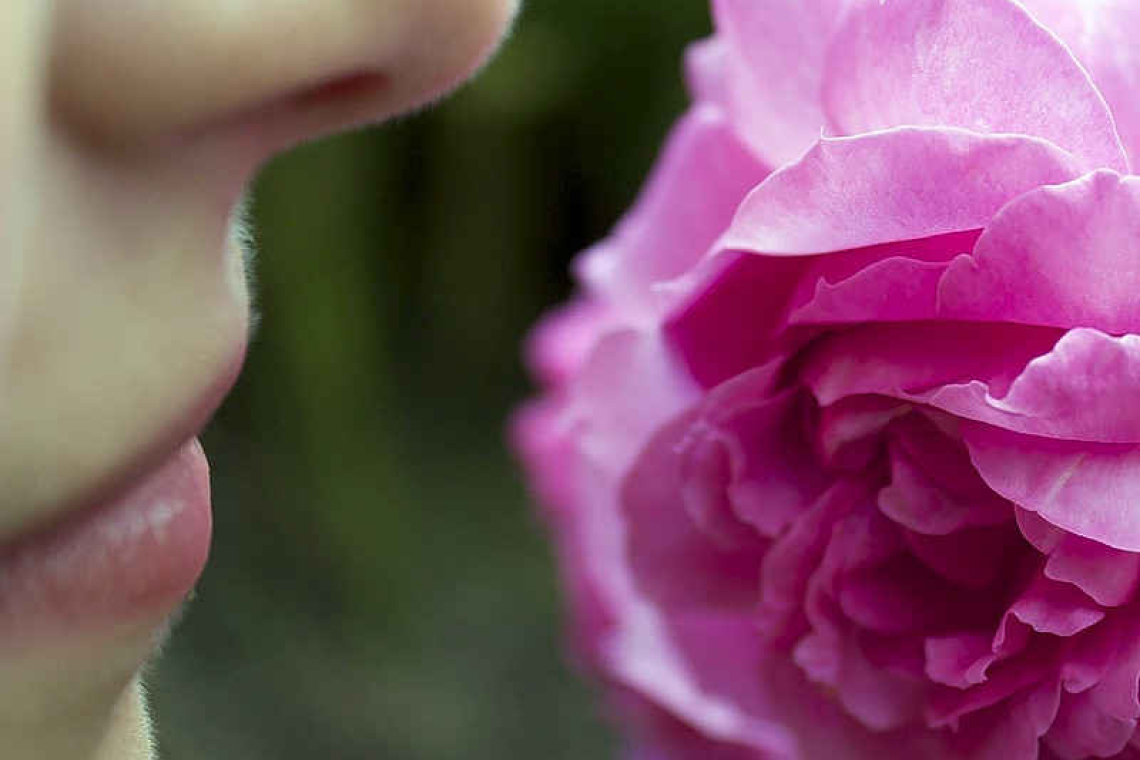
Scents provide us with important and very conscious hedonism – excitement, happiness, relaxation, satisfaction. Those joys of food and beverages! Coffee, spicy vanilla or nutmeg, along with morning bread or pastries energise. Fresh, flowery and herbal scents in a garden may relax us; enticing sweetness, citrus, ginger or rosemary alters our mood and mental focus. Some scents can calm and prepare us for sleep. Aromatherapies have supportive values in wellness – in commercial spaces are used to encourage shopping!
The sense of smell is absent in an estimated 12% of people, and in over half of those aged over 65 years. Loss most often follows inflammation. Influenza and Covid (in particular the Delta variant) damage nasal linings, as do allergies, smoking tobacco and poor air quality. Nerve degeneration in Alzheimer’s or Parkinson’s diseases and some cytotoxic chemotherapies may damage the sense of smell. Olfactory nerves are special because they can repair themselves, so a sense of smell may be regenerated. Therapies include a supplement of omega-3 fatty acids along with twice daily sniffing exercises. These employ 15-second exposures to various non-aura scents and scent memories, typically rose, eucalyptus, lemon and clove, followed by menthol, thyme, tangerine and jasmine.
We all communicate subconsciously through body odours – a superpower that is poorly understood. Exploring and possibly naming our musks may improve our awareness of the powers within our skins.
Dr. Colin Michie specializes in paediatrics, nutrition, and immunology. Michie has worked in the UK, southern Africa and Gaza as a paediatrician and educator and was the associate Academic Dean for the American University of the Caribbean Medical School in Sint Maarten a few years ago.