





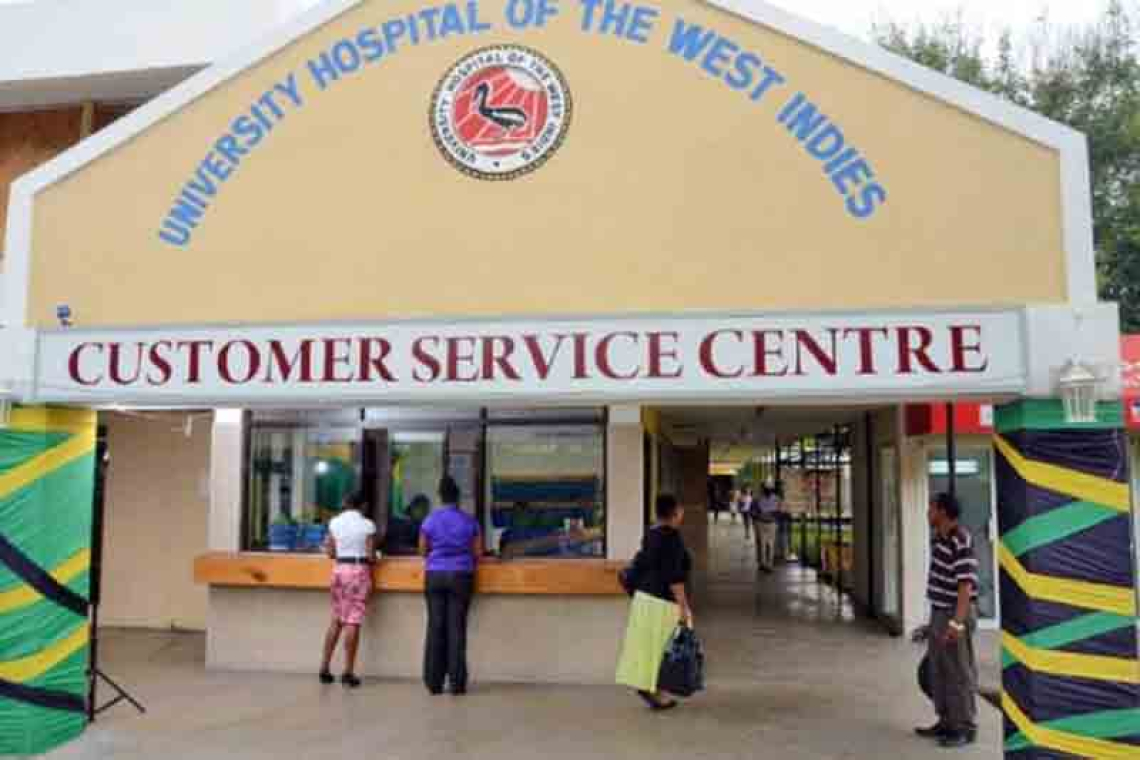
The University Hospital of the West Indies (UHWI).
KINGSTON--The University Hospital of the West Indies (UHWI) has been ordered to pay more than J$9 million in damages, plus US$8,000 for an expert report, after Jamaica’s Supreme Court found that the hospital breached its duty of care to a 16-year-old girl who died in 2018.
Justice Anne-Marie Nembhard concluded that the hospital fell below the required standard of care during the six days between the teenager’s admission and her death. Her parents brought the civil claim against the hospital’s board in 2021, alleging failures in the investigation, diagnosis, management and treatment of their daughter.
The girl, a fifth-form Campion College student preparing for Caribbean Secondary Education Certificate examinations, developed a persistent headache on March 27, 2018. A family doctor prescribed medication, but she later became weak and continued to complain of pain. Her parents took her to UHWI on March 30 and told staff that she had previously been diagnosed with meningitis at the age of eight.
Hospital staff took blood samples and conducted a CT scan. An attempt at a lumbar puncture was unsuccessful and was to be repeated, according to the evidence reported in the case. The parents were subsequently told that their daughter had a hemiplegic migraine.
Her condition deteriorated sharply. She suffered about 18 seizures and two heart attacks, was placed on life support and was pronounced dead on April 5, 2018.
Two medical witnesses called by UHWI maintained that the teams involved had acted in keeping with standard medical practice and that the hospital had not been negligent. The court, however, accepted the evidence of an expert engaged by the parents.
Justice Nembhard found that UHWI had failed to use the usual diagnostic aids needed to rule out meningitis. The judgment noted that meningitis was identified as a condition to be excluded on three occasions, yet no further lumbar puncture was attempted. The judge also found that there was no clear treatment and escalation plan as the teenager rapidly declined, and that the hospital failed to recognise brain death at 11 p.m. on April 1.
The court found that an accurate diagnosis could have been reached through a lumbar puncture. Its criticism therefore centred not simply on the eventual outcome but on the failure to complete an investigation that clinicians had themselves identified as necessary.
The awards include J$1,687,380.19 for pain and suffering, J$344,127.70 for loss of expectation of life, J$6 million for lost earnings before trial and J$975,573.41 in special damages. Interest applies to two parts of the award, and the hospital must also pay US$8,000 for the expert report.
The loss-of-expectation award carries annual interest of three per cent from April 15, 2021, to July 31, 2026. The same rate applies to the special damages from the date of the teenager’s death until the judgment.
Evidence before the court described the teenager as a high-achieving student and polyglot who hoped to become a scientist or medical researcher. Her name was withheld in the published report because she was a minor.