





~ NPO Spotlight ~
By Foresee Foundation
Alongside volunteering, further research is needed to understand how the NPO sector is funded and what must change. For one young volunteer, this need inspired academic research into development funding and how it can better support the growth of St. Maarten’s NGO sector.
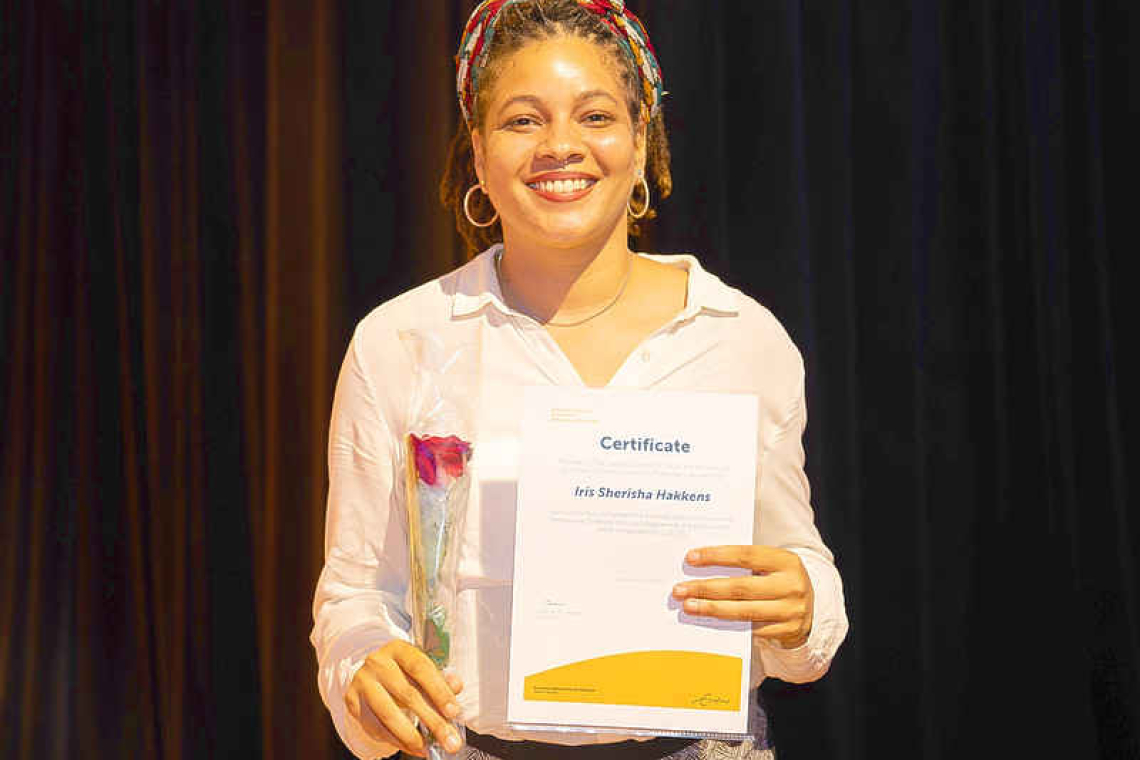
Born and raised on St. Maarten, Iris has immense “Soualigan” pride in her heritage. Through organizations including Nature Foundation, Teen Times, and Youth Parliament, she became involved in community work around age 12. These experiences showed her both the challenges of life on a small island and the opportunities to make a difference, eventually inspiring her to pursue a career as a project manager in social development.
In 2023, Iris paused her career to continue her studies at Erasmus University, intending to return home better equipped to create a greater impact in the social sector. Her bachelor’s thesis allowed her to contribute to socially relevant debates while abroad. With input from colleagues across the islands, she identified development funding as a priority. Their conversations revealed how each island’s position within the Kingdom, either as a special municipality or autonomous Caribbean country, affects how development funding works in practice.
Her research asked: “How do donor-recipient power dynamics shape agenda-setting and policy design of development funding structures within the Kingdom of the Netherlands, according to Caribbean development actors?”
The findings show that donors, government agencies, and NGO funding bodies, largely based in the Netherlands, often determine priorities, solutions and which information matters in funding decisions. These power dynamics are linked to financial resources and historically distrustful colonial relationships. Consequently, development-funding agendas often include limited input from Caribbean actors, extensive administrative and financial reporting requirements, and strict restrictions on how funds may be spent. These conditions are seen as ineffective because they do not adequately consider organizational capacity or sustainability.
Through her research, Iris documented in academic terms what civil-society professionals across the islands experience and recommend. By supporting their insights with research, she sought to strengthen the case for funding approaches that reflect local realities in a format funders recognize.
The process also taught her that institutions are still determining what the different legal statuses of the BES and CAS islands mean in practice, especially given differences in capacity. At the same time, funders are showing increased interest in adapting and innovating.
For St. Maarten, Iris emphasizes that funders must recognize how young the country is. While Aruba became autonomous in 1986, and Curaçao inherited institutions from the former Netherlands Antilles, St. Maarten had to build a new country administration as one of the Kingdom’s smallest countries. Responsibilities typically assigned to government are often carried by civil society, creating very different processes and funding needs. St. Maarten’s NGOs have therefore developed invaluable knowledge of their communities and earned their seat at the table.